Hungarian Perspectives on the Russian Invasion of Ukraine
Posted Tuesday, 1 Mar 2022 by Júlia Palik
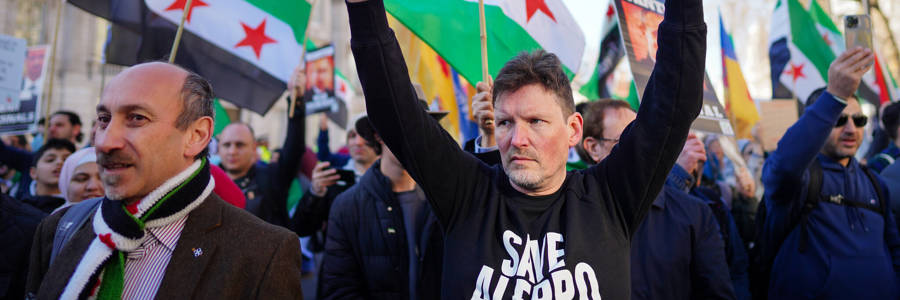
鈥楻ussians go home!鈥� (Ruszkik haza!), one of the many slogans of the 1956 revolution against the Soviet occupation, is a familiar term for every Hungarian.
66 years later, the same sentence was gathered in front of the Russian Embassy in Hungary to oppose President Putin鈥檚 decision to invade Ukraine. The 1956 Hungarian revolution did not succeed, in large part due to the West鈥檚 inaction, and Ukraine鈥檚 faith is changing hour by hour.
Hungary shares a 133 km long border with Ukraine, substantially smaller than the Polish-Ukrainian or the Romanian-Ukrainian border, and approximately 150,000 ethnic Hungarians are living in the Zakarpattya (Transcarpathia) region.
Recent relations between Hungary and Ukraine have not been without problems: The over what Hungary says are curbs on the rights of ethnic Hungarians to use their native tongue in Ukraine, a complaint originating from a 2017 law restricting the use of minority languages in Ukrainian schools. The Hungarian government responded by between Ukraine and NATO.
When it comes to Russia, time is a tricky phenomenon: In 1989, Viktor Orb谩n made his name by demanding that the Soviet troops leave Hungary, and by 2022 Orb谩n has developed a reputation as Putin鈥檚 closest ally in the EU. The list of Hungarian-Russian economic and political ties has substantially deepened in the past 12 years. In 2021, the Hungarian Foreign Minister P茅ter Szijj谩rt贸 received the award from Sergei Lavrov in Moscow; Hungary is dependent on Russian gas; Budapest has been amongst the first to purchase the Russian covid-19 vaccine, Sputnik V; and there is a long-delayed nuclear power plant investment in the making.
Building on years of closer and closer cooperation, on 1 February, Orb谩n and met with Putin to reiterate that sanctions against Russia are ineffective and crucially that there is a 鈥楬ungarian way鈥� of doing politics: be a NATO and EU member, but still have excellent relations with Russia. The current conflict in Ukraine is the real test of the Hungarian way.
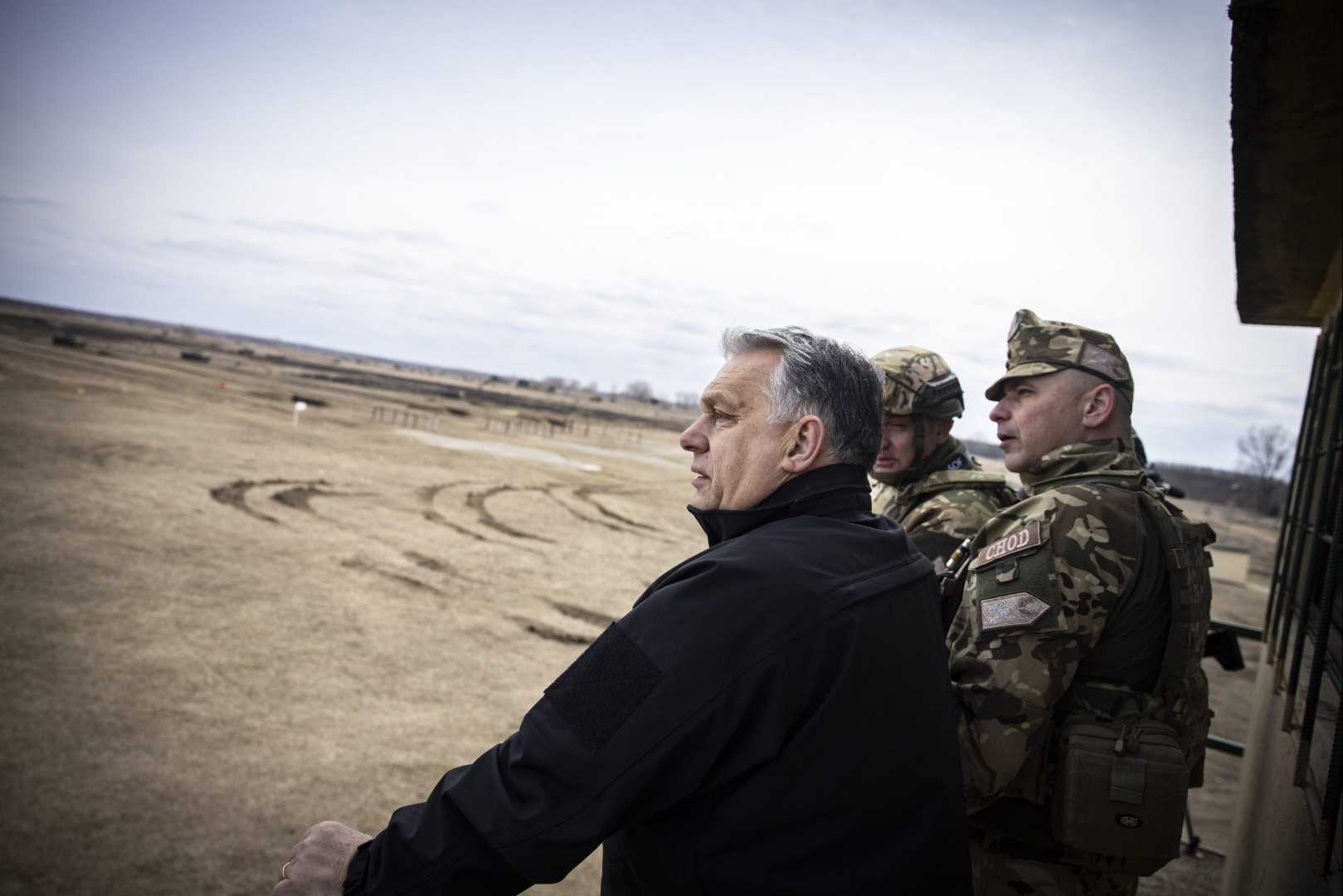
Make no mistake, Hungary of Ukraine and laid down Hungary鈥檚 position towards the conflict: 鈥榃e have to stay out of this war.鈥� And what this 鈥榮taying out鈥� means is summarized well by the , which opens with a picture of Prime Minister Orb谩n and his colleagues from the military and defense industry (only men, of course) accompanied by the following sentences: 鈥楬ungarian people鈥檚 safety is the most important鈥� and 鈥榳e provide safety for people coming from Ukraine鈥�.
Ensuring the safety of Hungarians comes in different, primarily non-military forms: Hungary has offered to . The government announced that it is to Ukraine. It will and sanctions regarding the conflict, and it will for two reasons: to prevent the infiltration of armed elements, and to provide humanitarian assistance for Ukrainian refugees[1] who in Hungary will , a substantially different approach from the 2015 refugee crisis when Afghan and Syrian families tried to cross the border.
The border protection and the humanitarian assistance to the Ukrainians are to be ensured by the so-called . There were reports that, in the early days of the conflict, the Hungarian military to the eastern border region, and a few days later the Hungarian Defense Forces asked people 鈥� numbers and whereabouts. Most recently, on 28 February, while the government agreed to activate the so-called European Peace Facility, empowering the EU to deliver weapons to Ukraine, it decided destined for Ukraine to transit Hungarian territory because such deliveries might be targets of military actions.
Events in Ukraine are inseparable from the upcoming April election in Hungary. Opposition leader P茅ter M谩rki-Zay and argued that if he were to become the PM, he would support Ukraine鈥檚 bid to join NATO, and that if the military alliance allows it, Hungary would send weapons and soldiers to Ukraine, although he added that 鈥榮uch an issue is not on the table yet鈥�. The opposition leader鈥檚 words provided important political munition for the government, allowing it to portray Orb谩n as the peace-seeker and M谩rki-Zay as the war proponent.
Which narrative the Hungarian voters will get behind, and whether the 鈥楬ungarian way鈥� can be maintained in times of war, remain to be seen.
[1] As of 27 February, approximately 62,000 Ukrainians have arrived in Hungary, but the government expects some 600,000.
- J煤lia Palik is a Senior Researcher at 糖心网页版.
Related comments