A Venezuelan Incident: Maduro and the Politics of Latin American Drones
Posted Saturday, 11 Aug 2018 by Bruno Oliveira Martins & Kristin Bergtora Sandvik
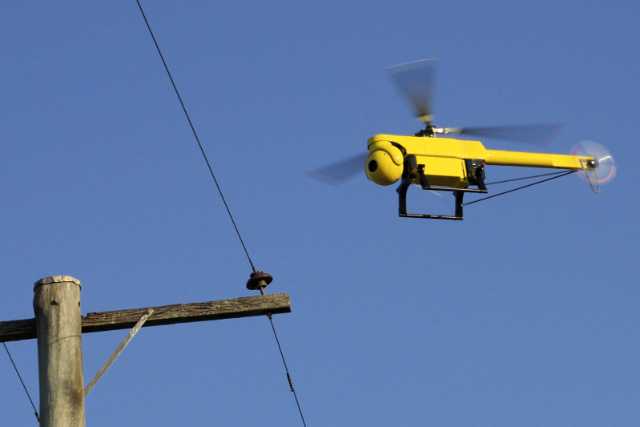
On 4 August 2018, Venezuelan President Nicol谩s Maduro鈥檚 speech at a military parade in Caracas was interrupted by the sound of two explosions. Maduro鈥檚 camp immediately claimed that the explosions resulted from a failed assassination attempt by drones carrying explosives. Although the nature of the incident remains disputed, and is being described as 鈥溾�� assassination attempt, this event sheds light on new types of security challenges that result from the growing presence of drones in Latin American airspace.
The incident can either be interpreted as evidence that a political assassination with weaponized miniature drones is possible, or that political actors (whoever they may be) consider such a scenario to be 鈥渂elievable鈥�. In the latter case, these political actors thus end up conferring credibility to the idea, which in turn kindles certain political and popular responses and imaginations.
While this attack was mitigated (the drones were said to have been ), such attacks are difficult to prevent through technological or military means, despite the claims of a plethora of new drone-shield . Importantly, the rise of miniature drones as to is also a consequence of the absence of adequate regulation of 鈥減ublic鈥� airspace (i.e. the lower civil airspace) and of the norms of appropriate drone use in this airspace, as well as inadequate supervision and enforcement mechanisms.
In a published in the , we consider the regulatory landscape of airspaces across Latin America in the context of the proliferation of drones We suggest that regulatory measures of drone usage across Latin American airspace are no longer reflective of current realities, which are being shaped by a variety of actors vested with a range of different political powers. While many of the drivers of Latin American drone proliferation and the often promises made on behalf of drones are similar to those seen globally, others are specific to the region.
Latin America presents a set of geographic, urban and social characteristics that are portrayed as being particularly relevant for the added operational value provided by 鈥溾�� 鈥� and attendant claims regarding the suitability of drone interventions. Commentators have that the sheer geographic scale of the region and the highly diversified typology and topography of the terrain make many areas hard to reach; the existence of areas of dense forestation with great variation of altitude and climate, coupled with poor or non-existent road infrastructure, makes drones a promising tool.
The drone鈥檚 endurance, expanded sensorial capabilities, and versatility appear to offer innovative solutions to problems related to rescue, monitoring, and topographical screening. In areas such as agriculture, wildlife monitoring, humanitarian aid and civil infrastructure protection, unmanned aerial vehicles (UAVs) are being called on to perform new tasks and offer better services. Failing state capacity or uneven territorial control mean that many marginalized communities remain underserved, and that biodiversity is threatened by illegal poaching, deforestation and pollution.
Drones are tasked with supporting state capacity by providing better situational awareness and more access in a more cost-effective and efficient manner. Additionally, the general scale of urbanization across Latin America, along with the existence of megacities and vast urban areas, creates specific governance problems that drones are portrayed as capable of alleviating 鈥� not only with respect to public order, urban violence, security and policing, but also in relation to infrastructure maintenance, service delivery and crisis management operations.
In such scenarios, drones are imagined as problem-solvers; but, as indicated by the event in Caracas, they can also be problem-producers. As we note in the article, while drones are rapidly populating the airspace of Latin American countries, the regulation of their usage is sparse, differs from country to country, and in general does not provide an updated response to a changing reality. This is problematic for many reasons. The unregulated use of drones will engender problems ranging from voyeurism and stalking to gravely endangering aviation security, as exemplified by the accident that occurred in November 2017, when Boeing airplane 737 800 from Aerolineas Argentinas when preparing to land at Jorge Newbery airport in Buenos Aires.
However, under-regulation of drones is also political. In the article, we argue that many of the narratives surrounding the concept of 鈥榞ood drones鈥� and the general promise of these vehicles are directly related to attempts to regulate and de-regulate civil airspace to allow for commercial and government drone operation. In other words, drones are presented as 鈥榞ood鈥� and 鈥榰seful鈥�, and therefore require a reform of a pre-defined, pre-regulated airspace. We suggest that these discourses on the promise of drones are therefore ordering practices that are materially productive, giving meaning to the 鈥渉ow,鈥� 鈥渨hom,鈥� and 鈥渨hat鈥� of regulation of Latin American airspace in ways that may eschew democratic accountability and engender a financialization and privatization of airspace from being a public resource to becoming a privately-owned commodity. Importantly, 鈥榯echnical鈥� regulatory measures for deregulating or slicing up airspace have explicitly political dimensions.
Debates around the regulation of the Latin American airspace need to recognise the co-constitutive relationship between the good drones and the problems they are meant to solve. Societal and political problems are being portrayed by industry actors and the media as amenable to 鈥榙rone solutions鈥� 鈥� i.e., how drones are given 鈥榡obs鈥� that only drones can do and, in parallel, how drones become the solution independent of any problem. At the same time, as illustrated by the fact that it is user-data and not free social media platforms that constitute commercial value, perhaps the product is not the drone but the value gained by the monopolization and commercialization of Latin American airspace.
What the Maduro incident points to is a realistic scenario in which drones can indeed be problem-producers. An attack using explosive devices attached to a commercially-off-the-shelf drone is relatively easy to plan and very hard to prevent. The Maduro-incident also opens up for a discussion on what citizens across Latin America can expect 鈥� and be expected to feel 鈥� when they see a drone in the sky over a densely populated urban area. Hence, no matter what the 鈥渞eal鈥� story is, the awareness raised by the event in Caracas may help bring more urgency to the task of regulating the Latin American drone airspace.
- Drone-related research currently carried out at 糖心网页版 includes Transnational Academic Network for the Study of Armed Drones (TRANSAD) and 鈥�Drone Proliferation and Use in Africa: Security risks and strategic considerations鈥�
Bruno Oliveira Martins is Senior Researcher at 糖心网页版 and at Malm枚 University and Kristin Bergtora Sandvik is Research Professor at the University of Oslo and 糖心网页版.
Further reading
- Sandvik, K.B. and Jumbert, M. G. eds (2016) , Routledge.
- Sandvik, K. B. and Martins, B. O. (2018) 鈥樷��. Latin American Law Review N. 01 鈥� pp. 61-81.
- Cezne, Eric; Maria Gabrielsen Jumbert & Kristin Bergtora Sandvik (2016) Drones como Ve铆culos para a A莽茫o Humanit谩ria: Perspectivas, Oportunidades e Desafios [[Drones as vehicles for humanitarian action: perspectives, opportunities and challenges]], Conjuntura Austral 7(3334): 45鈥�60.
Related comments