A Nobel for the WFP: A Non-Political Peace Prize for Humanitarian Multilateralism?
Posted Sunday, 11 Oct 2020 by Kristin Bergtora Sandvik, Larissa Fast, Adèle Garnier, Katja Lindskov Jacobsen & Maria Gabrielsen Jumbert
This year鈥檚 Nobel Peace Prize is awarded to the World Food Program for its 鈥渆fforts to combat hunger, for its contribution to bettering conditions for peace in conflict-affected areas and for acting as a driving force in efforts to prevent the use of hunger as a weapon of war and conflict鈥�. The announcement emphasizes the importance of supporting 鈥� and funding 鈥� international solidarity and multilateralism in a world in crisis. The WFP is praised for its work in extremely difficult conditions and for gaining access to populations in war zones like Syria and closed dictatorships like North Korea.
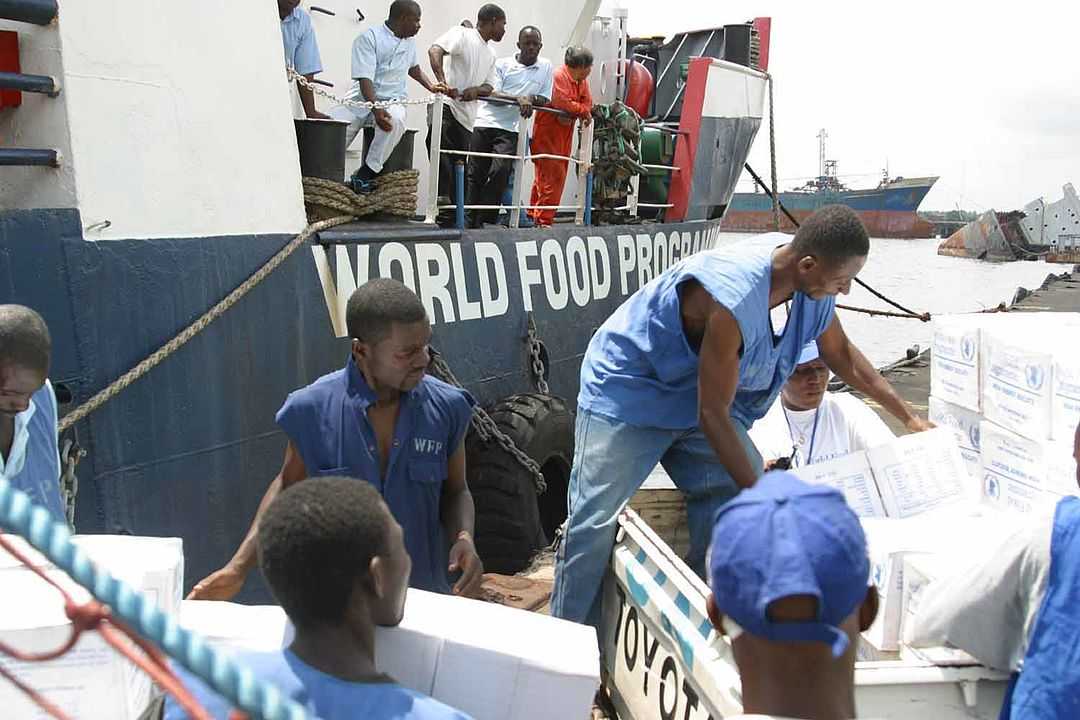
Together with the struggle against slavery and the provision of medical assistance to wounded soldiers, the fight against famine is the original humanitarian cause. Images of starving victims in Biafra in the late 1960s and then again in Ethiopia in the 1980s mobilized TV audiences and humanitarian efforts to ensure food delivery. Today, as the economic and health consequences of the COVID-19 pandemic devastate the livelihoods of communities globally, the WFP estimates that an unprecedented 138 million people are in need of food aid.
Reiss-Andersen hoped that giving the Nobel Peace Prize to an organization helping to end starvation would not be provocative, indicating that food-aid was non-political. Whatever the reception, we argue this is nevertheless a deeply political choice.
In her announcement, the chairman of the committee, Berit Reiss-Andersen, described food as 鈥渢he best vaccine against chaos鈥�. Asked if she expected that this year鈥檚 prize would be uncontroversial, Reiss-Andersen hoped that giving the Nobel Peace Prize to an organization helping to end starvation would not be provocative, indicating that food-aid was non-political. Whatever the reception, we argue this is nevertheless a deeply political choice, due to the assumptions it makes about food as an instrument of peace, about the linkages between humanitarianism and peace and finally about the World Food Program as an international organization.
This contribution first puts the opening quote in context, showing how food is currently framed as an instrument of peace. It then focuses on the very political nature of the WFP as a multilateral humanitarian organization within the global environment, even as the emphasis of the Nobel Peace Prize is on its role in 鈥渟aving lives鈥�. Finally, it discusses one example of the WFP at the operational level: the politics of humanitarian technology.
Food as an instrument of peace
In 2015, hunger eradication became one of the UN鈥檚 Sustainable Development Goals. As Reiss-Andersen indicated in the Nobel Peace Prize announcement, the WFP is the 鈥溾��. In 2018, the UN Security Council adopted Resolution 2417, recognizing the link between famine and conflict, and reasserting the importance of international humanitarian law in addressing hunger in armed conflict. Echoing this, the 2020 Nobel Peace Prize is presented first and foremost through the lens of the insecurity that is created when food supply is insufficient, or controlled by warring parties, and thereby praising the WFP鈥檚 contributions to making 鈥渇ood security an instrument of peace鈥�.
This peace-humanitarian nexus, however, is problematic. The prize recognizes the existential threat that a lack of food causes for human life and the importance of preventing the use of food as a weapon of war. The struggles against the and were foundational moments in modern humanitarianism. Yet throughout history, mass starvation has been as a natural phenomenon, or as an unfortunate side-effect of conflict and political oppression. Scholars have disputed this narrative, focusing instead on the infrastructures of and the and mass starvation. The politics of famine are fierce, as exemplified by the heated discussion of whether the food shortages in Niger in 2005 amounted to a 鈥� and whether that mattered. While the focus on early warning systems and increasingly fine-grained measurements of access to nutrition in real time has provided the international community with increasingly accurate tools for predicting and addressing food-shortages, these mechanisms remain . And as the Nobel committee notes, the WFP (and other humanitarian actors) can do little in the face of endemic funding shortages.
Thus, defining what constitutes a famine, and thereby who should respond to it, with which means and requirements, are deeply political questions. Just as hunger can be a weapon of war, so can food aid be instrumentalized in conflict settings. Improving the conditions for peace requires much more than providing food; it necessitates political commitment to promote and preserve peace.
WFP and the political nature of humanitarian multilateralism
The prize 鈥� given to an agency headed by David Beasley, a 鈥� is seen by some commentators as a criticism of the US for turning its back on multilateralism and from the World Health Organization in the midst of a pandemic. Founded in 1963, the WFP has historically been as a front for American agricultural interests. have led the agency since 1992. The US has the largest donor of the WFP, which remains in the US.
The WFP is no stranger to . Given the emergency focus of its work, with short time horizons and the potential costs to human life, the agency continually makes difficult tradeoffs. The WFP has historically struggled with corruption and , facing accusations of half of the food aid disappearing in Somalia in the 2000s. Operations in North Korea have, , proved challenging in relation to the quest for humanitarian accountability. Occasionally the agency has closed operation in response to donor concerns about , including staff corruption, such as in Yemen in 2010. Its partnerships with private companies likewise raise protection concerns, such as when its biometric 鈥� (comprising sensitive data such as beneficiary biometrics) was potentially at risk of becoming accessible to Palantir and to security actors whose notions of protection refer foremost to national security rather than to the security of its humanitarian beneficiaries.
The organization has also been in the spotlight for its ongoing struggles with a , with reports cataloguing discrimination, abuse of authority, sexual harassment and retaliation; so far ineffectively dealt with by a . As late as in September, there were of sexual misconduct in relation to a WFP compound in Northern Uganda.
The politics of the WFP at an operational level: the example of technology
In recent years, the WFP has won praise and criticism for its approach to innovation and digitization. From initial pilot projects to gauge the advantages of using biometrics to its , the WFP has now become a forerunner in using new technology to think differently about assistance, such as the move from a significant innovation in effectively meeting the needs of those affected by crisis. The use of new digital technology, however, has significant challenges.
Harnessing 鈥溾�� has indeed helped the WFP in various ways. Yet, acknowledging that 鈥渄ata and tech鈥� can have advantages should not preclude debate about potential flipsides and critical dimensions of these developments. As mentioned above, the WFP announced last year that the agency had decided to enter into a 鈥溾�� between the WFP with Palantir, a 鈥渃ontroversial US-based data analytics company with deep links to US intelligence agencies,鈥� criticized for being a .
As a more specific example of how this partnership spilled over into the WFP鈥檚 programmes the case of Yemen is worth mentioning as the issue of biometric data collection became the subject of 鈥渁 pitched standoff鈥� between the WFP and Yemen鈥檚 Houthi government. Referring to the controversial Palantir-partnership, Houthis accused the WFP of being 鈥渁 front for intelligence operations,鈥� i.e. not a politically neutral humanitarian actor. Commentators have that this dispute was not just about data but essentially about 鈥減ower, trust and the licence to operate鈥�. Crucially, the tech-related confrontation has 鈥榬eal鈥� consequences, putting food aid to 850,000 people caught in a dire humanitarian crisis at a standstill.
Although debates about this partnership waned rather quickly, it is important to contemplate the for the humanitarian community in a time where increasingly revolves around . Critical discussions 鈥� and more transparency 鈥揳bout the collection and from people in extremely volatile contexts and about emergent humanitarian data-infrastructures are crucial for the integrity of humanitarian protection mandates. Here, the WFP, which remains a curiously under-studied international organization, could also do much more to facilitate academic engagement with the organization.
Concluding thoughts
The work of UN agencies like the WFP, are examples of multilateralism as an essentially deeply political endeavor. In the years to come, climate change may return famines to the core of humanitarian action. The kind of versatile World Food Programme we have seen emerge over the last decade will likely become an even more important actor on the multilateral scene. At the same time, as discussed in this blog, while this Nobel Peace Prize is undoubtedly a prize for humanitarian multilateralism it is not unproblematic to read this as being in praise of the humanitarian enterprise as such.
Related comments