Russia Breaks the Partnership with Turkey – but Builds a New One with Iran
Posted Thursday, 26 Nov 2015 by Pavel K. Baev & Joakim Brattvoll
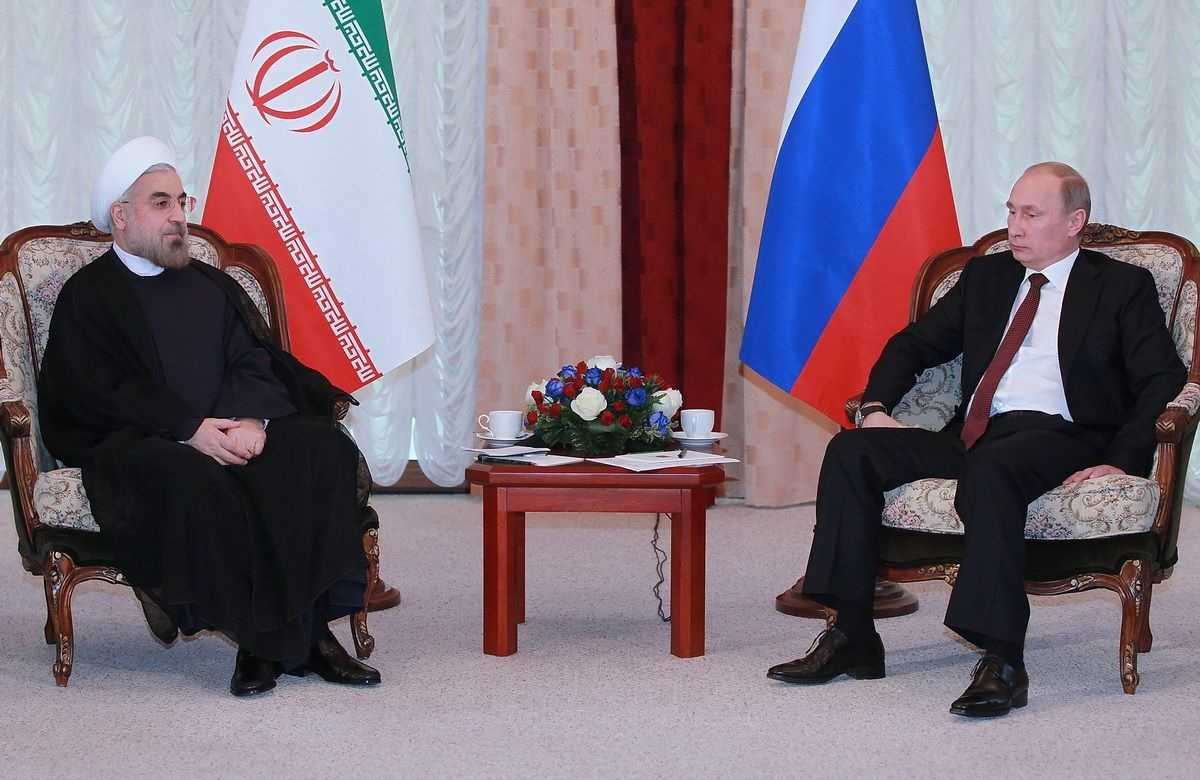
De-escalation of the crisis between Russia and Turkey, caused by the first ever air fight between them resulting in a destruction of a Russian Su-24, has suddenly become the hottest issue in global affairs. What has been overshadowed by this clash of military missions and political ambitions is the strengthening of ties between Russia and Iran achieved in the course of President Vladimir Putin鈥檚 on 23 November 2015. This partnership-building may be of importance for the Syrian war, for the wider Middle East and beyond.
All war trails lead to Damascus
Since the start of Russian military intervention in Syria on 30 September 2015, Russia and Iran have to all intents and purposes become military allies. The scale of Iranian direct involvement in this convoluted civil war is unclear, but the track record of sustained support from Iran to the al-Assad regime is beyond doubt. One perfect illustration of the newly-achieved brotherhood-in-arms was the by Iranian F-14s of Russian strategic bombers Tu-95MS, when the latter delivered a cruise missile strike on targets in Syria last week. Turkish hit on the Russian Su-24 this Monday has brought into a sharp focus the fact that the main target of Russian air campaign is not ISIS (or Daesh) forces but various other rebel groups, including for that matter the Turkomans. US President Barack Obama tried to explain to Putin the imperative to make a 鈥溾�� and French President Francois Hollande travels to Moscow with the message of to Daesh 鈥� but it is hard to expect now that Moscow would swallow the insult of Turkish attack and discover the benefit of joining the US-led anti-ISIS coalition.
The hard fact on the Syrian battleground is that Russia is a party to a different coalition that includes Iran, Hezbollah and the forces of the al-Assad regime 鈥� and has the rescue of the latter as its main goal. In the last couple of weeks, Moscow has been showing a degree of flexibility 鈥� particularly in the diplomatic dance of the Vienna talks 鈥� regarding the possibility of Bashar al-Assad from power, and Tehran has also to consider his departure. The problem now is that Putin feels the need to show toughness rather than flexibility. A deeper problem is that Russian and Iranian interests in Syria are far from perfectly compatible. Tehran is committed to the Hezbollah and the Alawite community, while Moscow has a grand strategy of opposing revolutions and a particular desire to keep the naval base in Tartus, so it has even tried to without asking Iran鈥檚 opinion on such manoeuvre.
Slim chance for a 鈥渂eautiful friendship鈥�
Syria is certainly only a useful playground on the global map of Russian ambitions, but the relations with Iran are of major and increasing importance. In the preparation to the visit to Tehran, Putin had made sure that the old contract on selling to Iran the S-300 surface-to-air missiles (interrupted in the course of the crisis centered on the Iranian nuclear program) was in early 2016. And the main topic of his exchanges with the Iranian leaders was in fact the expansion of economic ties 鈥� and even Iran鈥檚 possible inclusion into a with the Eurasian Economic Union (consisting of Armenia, Belarus, Kazakhstan, Kyrgyzstan, and Russia). His offer of a credit for $US 5 billion for in Iran was neither generous nor reliable given the deepening crisis in Russia鈥檚 economy, but the Iranians had good reasons to appreciate it 鈥� as a signal to other potential investors to hurry with their long-postponed propositions.
The prospect of Iran opening for business after the lifting of sanctions as stipulated by the agreement reached in the P5+1 format this July constitutes a challenge to Russia鈥檚 habitual pretending of being its 鈥渂est friend鈥�, while generally following the sanctions regime. Putin certainly understands that the time for investing in building a new partnership is now because in a few months Tehran will be full of visitors competing for opportunities in the potentially lucrative market. There is a bit of irony in the fact that the occasion for Putin鈥檚 trip to Tehran was the meeting of the , because , both because it could push oil prices down and threaten Gazprom鈥檚 positions on its vital European market.
He had probably planned to compensate for the slight estrangement with Turkey ( in the lukewarm meeting with Erdogan in Baku last June) with a warmer embrace of Iran, but the downing of Su-24 鈥� which was a disaster waiting to strike 鈥� has upset this balancing. Politically and economically Turkey is a far more important country for Moscow that Iran could ever possibly become; suffice to say that Russia鈥檚 trade with Iran is a fraction of the $US 30 billion . A strategic issue of crucial importance is Turkey鈥檚 control over the Straights, through which goes the key supply line to the Russian grouping in Syria, and Moscow has been about Ankara鈥檚 position regarding the Montreux Convention (1936).
A full-scale Russian rapprochement with Iran remains a hypothetic proposition 鈥� very much unlike the conflict with Turkey 鈥� but it can seriously upset Russia鈥檚 relations with many Arab states, and irritate Israel as well. Putin is known for smart tactical moves, but neither the pledge of 鈥渟erious consequences鈥� for Turkey, nor the alliance-building with Iran could qualify as one.
Related comments


Posted by


All tags
