National Dialogues as Self-Mediation Mechanisms
Posted Wednesday, 9 Dec 2015 by Hannes Siebert
In the last century, peace was far more likely the product of victory on the battlefield than a negotiated settlement. From 1940 until 2002, the world witnessed more than 370 state-based conflicts. At any point in time over the last decade, the world hosted nearly 30 armed conflicts simultaneously 鈥� many of them 鈥渃heck book wars,鈥� with external powers funding and supplying arms to different internal factions in order to enhance their access to the beleaguered state鈥檚 resources.
In this 鈥減ost-post-colonial鈥� era we are witnessing the post-colonial government incarnations of the colonial 鈥渟trong man鈥� being replaced by new democratic forces. These new movements are re-defining democracy; they are innovating new forms of representative government; and many are re-considering the nation-state concept. As each of these countries attempts to cut the umbilical cords from their former colonial powers, we see a reduction in external foreign mediation and an increase in mass people鈥檚 movements and national dialogues as tools of political transformation. With these significant phenomena, local and national peacemakers and concerned parties work together to resolve their conflict through the creation of joint 鈥渟elf-mediation鈥� instruments, different types of national dialogues and various forms of supporting peace infrastructures that emerge out of these local contexts.
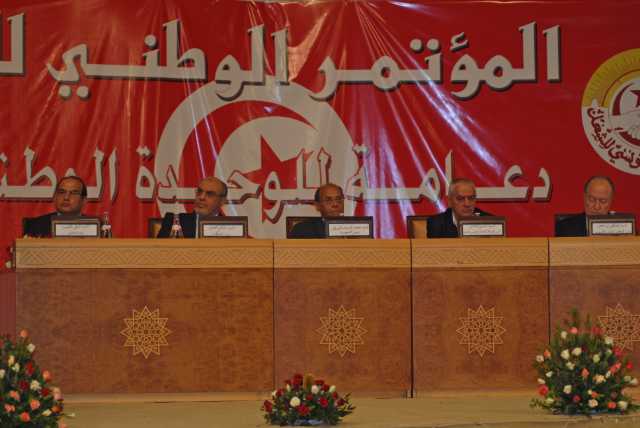
National Dialogues have become a common part of many post-conflict and post-crisis transition processes. These broad-based stakeholder dialogues are usually mandated to define key aspects of the political or constitutional future of a country and are commonly the center-piece of post crisis transitions. In countries with multiple political, non-state and governing stakeholders 鈥� varying between 7 and 94 in number 鈥� national dialogues are emerging as the only mechanism that can manage and facilitate large complex political transformations and change processes. Some are supported by the United Nations and regional organisations, but most formally mandated National Dialogues have been designed, managed and implemented by the national stakeholders themselves 鈥� such as in South Africa, Nepal, Tunisia, Lebanon and Burma.
The composition and management of National Dialogues present extraordinary complex challenges in terms of constructing and managing dialogue between multiple delegations representing a variety of social formations. Their development and design is determined by the dynamics of the past conflict, the depth of the broken relations between groups, the multiple layers of inequality and loss of human dignity, and the failures of existing constitutional and governing instruments.
If one takes a closer look at the change narratives or agenda of their committees and structures, these mandated dialogue structures not only provided new constitutional frameworks, addressing the root causes of the conflict or constitutional failures; they served a much broader function. They also served as spaces and instruments for reconciliation, developing joint visions between former enemies, and slowly evolving an understanding of the needs, perceptions and perspectives of the 鈥渙ther鈥�.
As change and 鈥渟elf-mediation鈥� processes, National Dialogues have been highly undervalued, mainly because they are often insulated from the outside (and less susceptible to international intervention), and also because they usually take an extraordinary amount of time and effort. National Dialogues are also less directed towards the conclusion of agreements (only) than is international mediation. Rather, they aim at establishing an environment for long-term stability, improved relations between state, community and non-state actors, and open communication between all of a society鈥檚 major actors on issues that divide them or are of common national interest. The strength of National Dialogues is that they establish a consistent structure deeply rooted in that society that becomes the mechanism to address and agree on fundamental structural change.
Related comments


