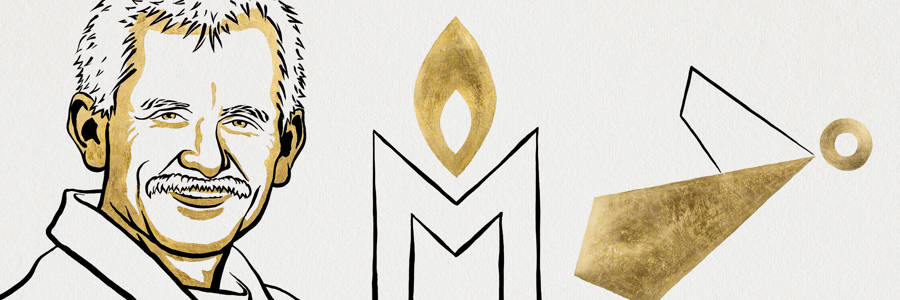
María Corina Machado’s Nobel Peace Prize captures the spirit of our age
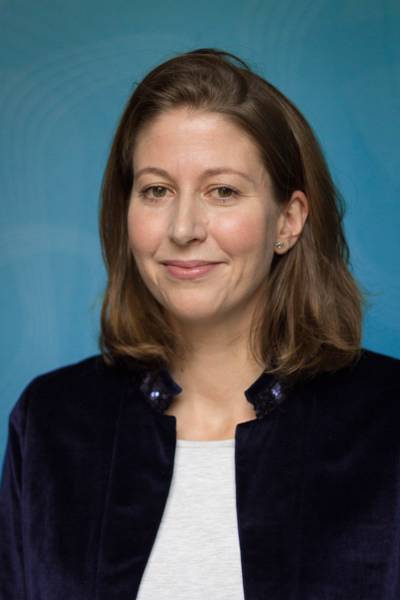
Posted Monday, 13 Oct 2025 by Marianne Dahl

This year’s Nobel Peace Prize is a reminder that the future of democracy rests on those who dare to protest without violence.
MarÃa Corina Machado has been awarded the Nobel Peace Prize – a choice that both captures the spirit of our age and underscores one of its defining challenges:  across the globe. The prize honours Machado’s tireless struggle for democratic rights in Venezuela, at a moment of profound political darkness for her country politically.
Back in the 1990s, Since then, however, the country has lurched dramatically towards authoritarianism. Under Hugo Chávez – and more recently Nicolás Maduro – the regime has concentrated power by tightening its control over the country’s courts, electoral authorities, and security forces.
Venezuela’s trajectory reflects a broader global pattern: the resurgence of autocratic governance . The politicization of judicial systems, the undermining of institutional independence and prosecutions of political opponents have characterized developments in a number of countries, including Hungary and, increasingly, the United States.
In Venezuela, these developments have led not only to the dismantling of democracy, but also the establishment of a personalist form of government. Power is not exercised through formal institutions, but through bonds of loyalty to Maduro and his inner circle. Research shows that personalist regimes are particularly dysfunctional. They perform worse than other types of government across a range of indicators: they have ; provide the population with poorer ; are ; and have a higher risk of armed conflict.
Venezuela is no exception. Although poverty was almost halved between 2002 and 2012, an abrupt reversal has occurred since that period.
Ordinary Venezuelans have many valid reasons for protesting. And they have done so.
The regime’s response has been brutal oppression.
In the midst of these developments, MarÃa Corina Machado has become a unifying figure for the opposition. After winning the opposition’s primary elections with an overwhelming 93-percent share of the vote in 2023, she was blocked from running for president – a move that illustrates the regime’s desire to eliminate any real political challenge. Despite significant persecution, she led non-violent protests against electoral fraud.
Civil resistance has long been central to Venezuelans’ struggle for democracy. Ìý²¹²Ô»åÌý. The forms of resistance have varied, from large-scale , but the goal has remained constant: the reinstatement of democracy.
A broad body of research – to which researchers at both ÌÇÐÄÍøÒ³°æ and the University of Oslo have also contributed – shows that this kind of non-violent mobilization has high potential for success. When large numbers of citizens from diverse groups participate,  significantly greater. In particular, campaigns with expressly democratic goals, which combine Ìý·É¾±³Ù³óÌý and the support ofÌý²¹²Ô»åÌý are most likely to succeed and to foster lasting democratic change.
Unfortunately, . The breakthroughs following the Velvet Revolution of 1989, Portugal’s Carnation Revolution, and the flower and tulip revolutions of the 2000s are now well in the past. The hopes ignited by the Arab Spring have largely faded, extinguished by authoritarian resurgence and renewed repression. We still do not fully know why such mass movements have become less successful. Researchers point to several possible explanations, including the profound impact of social media on the dynamics of resistance campaigns. Social media platforms facilitate rapid mobilization but simultaneously undermine the close organizational bonds that may be necessary for maintaining pressure over time. In addition, authoritarian regimes have become more efficient at monitoring, polarizing and splitting resistance movements from within.
Machado is by no means an uncontroversial figure. But that, too, is unsurprising. Few leaders of democratic movements escape controversy. Also former Nobel laureate Martin Luther King Jr. faced criticism, including from within his own ranks. The hope, however, is that this year’s Peace Prize will help further unify Venezuela’s opposition.
- Marianne Dahl is Research Director at ÌÇÐÄÍøÒ³°æ
- This text was first published in Norwegian as an op ed in
- Translation from Norwegian: Fidotext
Related comments