Confronting and engaging Russia in the Arctic takes resolve and patience
Posted Wednesday, 30 Oct 2019 by Pavel K. Baev
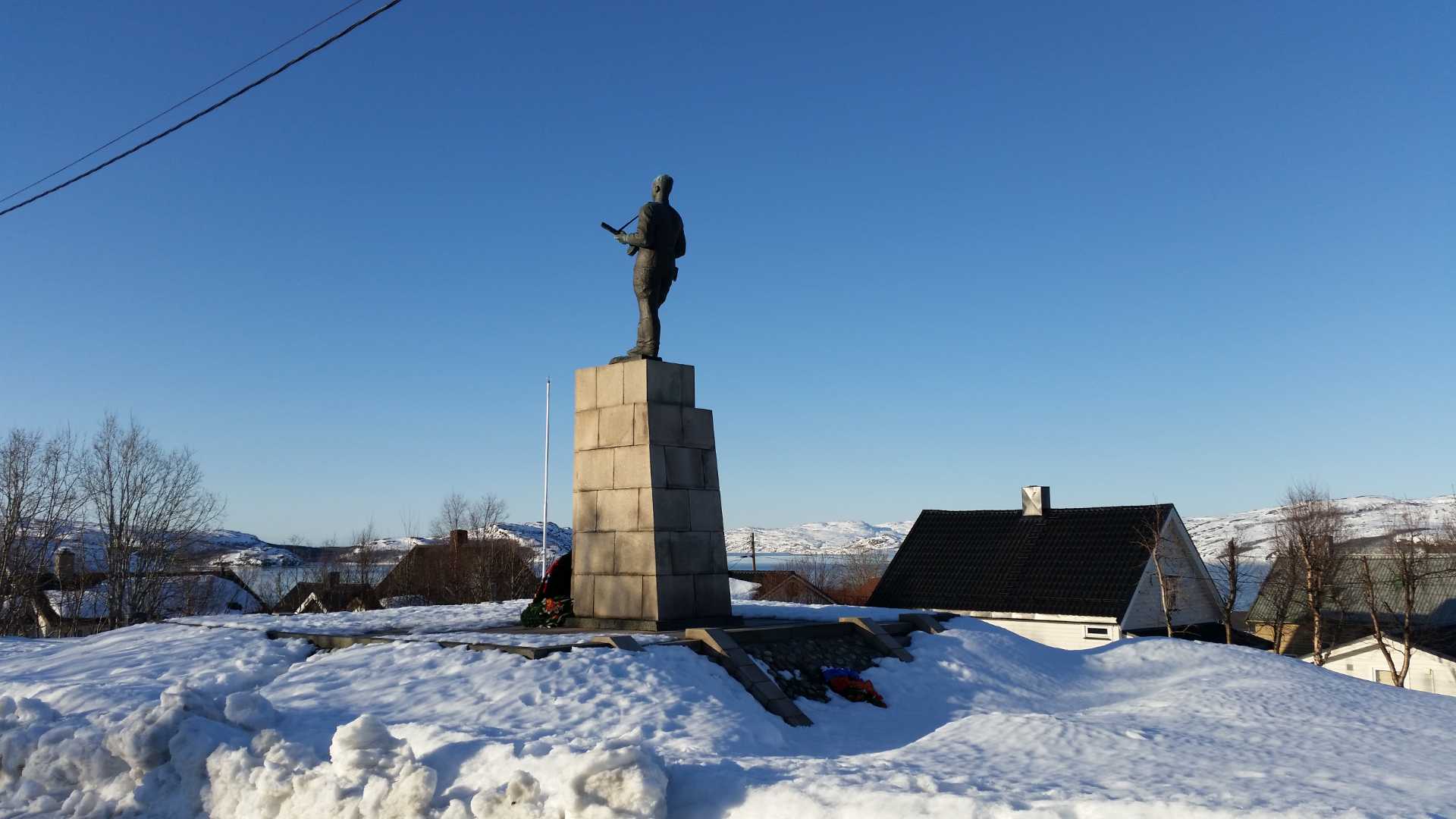
The celebration of the anniversary of liberation of Kirkenes by a Russian operation (called the 鈥淭enth Stalin鈥檚 shock鈥�) was properly solemn and impeccably good-neighborly, even if Russian Foreign Minister Sergei Lavrov found it necessary of Norwegian policy. Russia also found it opportune to stage a of the Northern Fleet submarines to mark this anniversary. This combination of dialogue and deterrence is a difficult political act to perform, and my in the PONARS Eurasia Memo series published by the George Washington University examines the challenges inherent to this fluid interaction. The analysis starts with this proposition:
Russia鈥檚 claims to 鈥淕reat Power鈥� status may be overblown and even preposterous, but the country is, without a doubt, a great Arctic power. It has more coastline in the Arctic Ocean than any other state and has a larger population living north of the Arctic Circle than all other seven members of the combined. It launches energy projects in severe High North weather conditions on a scale that the United States or Canada would classify as economic utopian, and deploys more nuclear warheads on the Kola Peninsula than China has in its entire arsenal. It routinely inflicts devastating damage to the fragile environment and indifferently allows wildfires to destroy millions of hectares of northern forest (taiga) while shrugging off the on the global climate. Its utilitarian attitude to Arctic wildlife is illustrated by the case of one lucky Beluga whale that from a military training program and found a new home in the Norwegian fjords. It became a darling of local environmentalists who christened him (鈥渉val鈥� for 鈥渨hale鈥� plus 鈥淰ladimir鈥�), though the Russians never explained the purpose of the trained animal that was wearing a camera harness marked 鈥淪t. Petersburg.鈥� Security comes first in Russia鈥檚 Arctic policy, and attempts to cultivate cross-border ties often hit the wall of secretive military preparations. China tries to dissuade Russia from prioritizing military build-up in the High North, but in U.S. strategic thinking, China is defined as a major security challenger in the Arctic, on par with Russia.
Preserving the Remnants of Cooperation
Commitment to developing international cooperation in the Arctic is not merely a camouflage of Russian militarization. It makes sense, but a different kind of sense than making this region a better place for inhabitants and preserving its unique value for our planet, the goal that continues to inspire many Western politicians and Russian activists. For Moscow, international relations are first and foremost a means for asserting its sovereignty over the vast area of land, islands, and waters beyond the Arctic circle. One of the key issues here is the internationally recognized expansion of the continental shelf between the Lomonosov and Mendeleev underwater ridges, so the diplomatic efforts in the Arctic Council has focused on sorting out the problems of with and , which would make it possible for the UN Commission on the Limits of the Continental Shelf (UN CLCS) to make a formal recommendation. Elaborating and tightening the rules of navigation on the (NSR or 厂别惫尘辞谤辫耻迟鈥�) also serves the purpose of reinforcing Russia鈥檚 sovereignty over this international maritime avenue.
Addressing the 2019 International Arctic Forum in St. Petersburg, President Vladimir Putin presented an ambitious plan for upgrading the NSR and foreign investors to partake as minor partners. He did not, however, address most of the concerns of Russia鈥檚 Arctic neighbors, including the protection of investor鈥檚 rights, climate change, and restrictions on NGO work. His concerns are clearly focused on the damage from Western sanctions that target specifically joint oil-and-gas projects in the Arctic that brought in the Kara Sea to a standstill. While the sanctions regime keeps expanding, there are expectations in Moscow that it can also be fine-tuned so that Arctic cooperation would be exempted. Nevertheless, there are few signs that the Russian authorities aim at stimulating the non-profit directions in this cooperation by, for instance, removing restrictions on scientific interactions or the red tape that impedes ties between universities.
For more, click .
Related comments