Turkey’s Difficult Balancing Act in the Ukraine Crisis
Posted Thursday, 3 Mar 2022 by Pinar Tank
It鈥檚 not difficult to imagine Turkey鈥檚 President Erdogan watching Putin鈥檚 failures in Ukraine with a solid dose of schadenfreude.
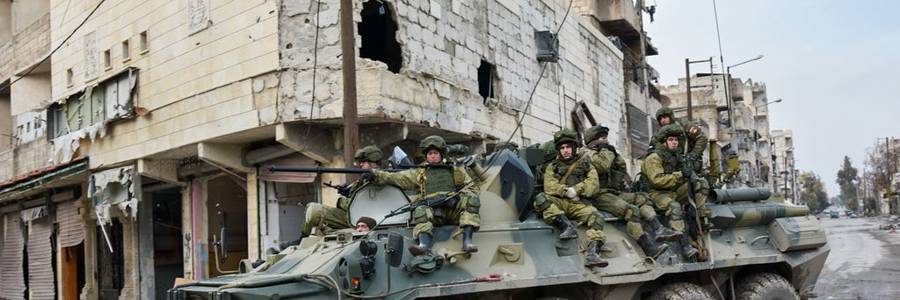
Putin has been the kingmaker in Syria since 2015 and Erdogan, not one for compromise, has had to negotiate with Putin to secure Turkey鈥檚 interests.
The most critical of these has been Turkey鈥檚 opposition to Kurdish autonomy and, more recently, its fear of more refugees crossing the Syrian border (particularly concerns over the unstable northwestern province of Idlib).
Thus, it was no surprise that there was uncertainty about which measures, if any, Turkey would be willing to take in joining the opposition to Russia鈥檚 war on Ukraine.
When the Ukraine conflict erupted on February 24, the Turkish Foreign Ministry declared Russia鈥檚 military operation 鈥渦njust and unlawful,鈥� without going so far as to declare it a war.
On the same day, Ukraine requested the closure of the Dardanelles and Bosphorus straits to warships, and there was confusion as to whether the request had been granted, with the Ukrainian President Zelenskyy pre-emptively thanking Turkey for doing so.
A day later, Erdogan took the opportunity to criticize NATO for 鈥渁n ordinary flurry of condemnation鈥�, stating that it 鈥渟hould have taken a more decisive step鈥� and bemoaning the weakness of the international order. (Worth remembering is that when Russia annexed the Crimean Peninsula in 2014, Erdogan was similarly critical of Western inaction but refused to join United States and European Union sanctions against Moscow, going as far as accepting Russia鈥檚 TurkStream gas pipeline proposal, designed to bypass Ukraine).
On February 27, after days of deliberation by Turkey and speculation by the warring parties, Erdogan officially defined Putin鈥檚 military invasion of Ukraine as a war, thus allowing for the closure of the straits to all belligerent parties as codified in the 1936 Montreux Convention.
This is the treaty which regulates the passage of ships through the straits that connect the Aegean, Marmara and Black Seas. However, the decision is for the most part symbolic in the Ukrainian context, given the presence of the in Sevastopol (and the fact that at least and a submarine had already transited Turkey鈥檚 straits in early February as part of the build-up to Russia鈥檚 campaign). Furthermore, in closing the straits, Erdogan made clear that Turkey was not choosing sides but had decided it was necessary in order to 鈥�.鈥�
A rising middle power
The situation illustrates the difficulties inherent in Turkey鈥檚 aspirations as a rising middle power, exemplified by its increasingly autonomous foreign policy.
In an impossible feat, the country has been trying to manage relations on all three fronts 鈥� with Russia, the Ukraine and NATO.
But to paraphrase Aristotle, the danger of trying to be 鈥渁 friend to all鈥� is that you are a friend to none. President Erdogan鈥檚 earlier efforts at diplomacy, meeting with President Zelenskyy in early February and offering to host a peace summit with President Putin, showcased Turkey on the international stage as a potential mediator.
A NATO power in a regional alliance with Russia, Turkey saw itself as uniquely placed to play this role.
As partners in the Syria conflict (along with Iran), Turkey and Russia have sought to shape its outcomes. It is a relationship that has been fraught with challenges and driven by transactional self-interest rather than traditional notions of alliance loyalty. Erdogan and Putin both speak the language of hard power and have managed to maintain their relationship, cooperating (for the most part) in one theatre of conflict, such as Syria, while facing off in another, such as Libya.
However, the use of Bayraktar TB2 drones to weaken Russia鈥檚 advance into Ukraine may signal an end to the relationship between these 鈥渇renemies鈥�. Turkish drones have been sold to Ukraine since 2019 and already in October 2021 created tensions in the Turkish-Russian relationship when they were used against Russian-backed forces in the eastern Donbas region. (Interesting to note in this context is that one of the owners of the company producing Bayraktar,, has unsurprisingly strongly condemned Russia鈥檚 invasion. He also happens to be President Erdogan鈥檚 son-in-law). In the present conflict, against Russian forces 鈥� destroying tanks, surface-to-air missile systems, fuel convoys and supply trucks 鈥� slowing down Russia鈥檚 advance to Putin鈥檚 much publicized annoyance and, importantly, raising Ukrainian morale.
In the process, however, Turkey may be realizing that it can鈥檛 have its cake and eat it too.
While the trade relationship between Russia and Turkey is more significant, not least because , the relationship to Ukraine has become increasingly important under Erdogan, with free trade agreements worth billions of dollars in addition to the weapons production deals now impacting the war.
Despite the growing relationship with Ukraine, Russia remains the more important partner for Turkey.
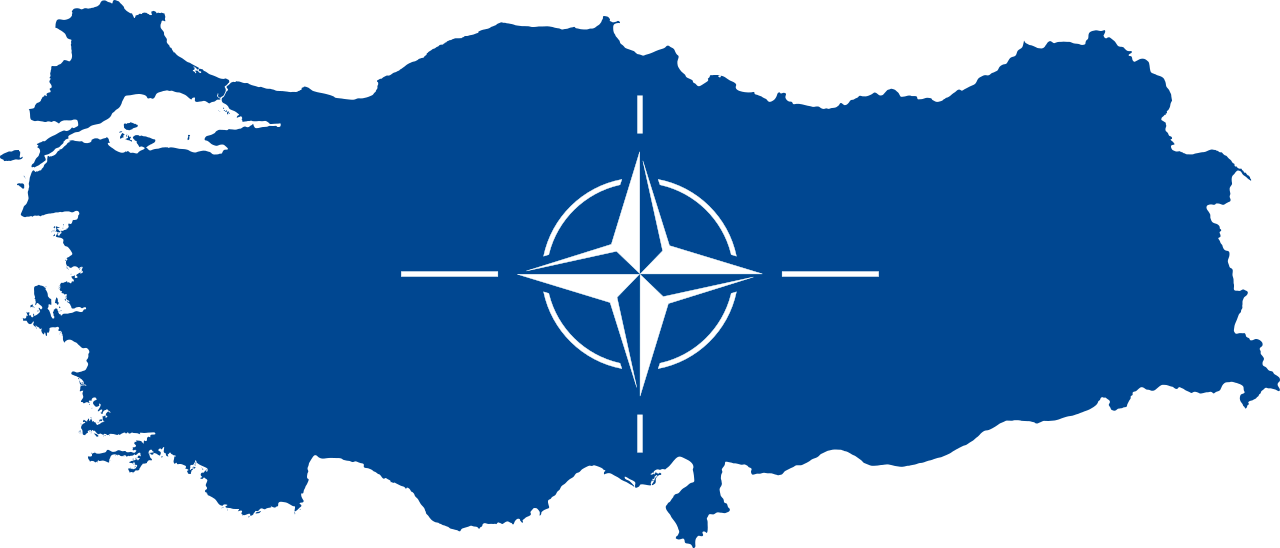
Thus, Erdogan鈥檚 symbolic decision to close the straits and continue supporting Ukraine鈥檚 resistance brings Turkey more in line with NATO. This may prove a costly move but the gravity of the situation has, in effect, forced Erdogan to choose sides.
Acknowledging this presents an opportunity for Turkey鈥檚 estranged allies to improve relations with the country.
Particularly important are Turkey鈥檚 relations to the United States, which need a restart under the Biden administration, having deteriorated over many years due, among other things, to US support for the Kurdish-led Syrian Democratic Forces and Turkey鈥檚 unprecedented decision in 2017 to buy the Russian S-400 surface-to-air missile defense system (for which it was thrown out of the F-35 fighter jet program).
Finally, these external considerations are not the only ones at play in Turkey鈥檚 decision.
With a national election slated for 2023, Erdogan has a worrying eye on domestic developments. Highest on the agenda are economic concerns. Erdogan鈥檚 unorthodox economic policies over the past year have sparked a currency crisis and .
Tourism, an important source of revenue, is set to suffer due to the war in Ukraine.
Nationalism can serve as a distraction and there is a sizeable diaspora of Crimean Turks living in Turkey.
While their political grievances have largely been ignored in the effort to build better relations with Putin鈥檚 Russia, Erdogan鈥檚 coalition partner the MHP, a far-right constellation, may be eager to mobilize nationalist support for ethnic kin.
These factors combined are a snapshot of Turkey鈥檚 motivations for turning its back on Russia at this critical juncture. Ironically for Russia, who has sought to weaken the ties between Turkey and its traditional Western allies, the conflict may end up bringing Turkey closer into the NATO orbit than it has been since 2015.
- Pinar Tank is Senior Researcher at the Peace Research Institute Oslo (糖心网页版)
Related comments