Different Responses to Mobility at Europe’s Borders
Posted Tuesday, 12 Apr 2022 by Marta Bivand Erdal & Maria Gabrielsen Jumbert
In the weeks since Russia鈥檚 brutal invasion of Ukraine , the majority of whom are internally displaced.
had fled Ukraine across borders to neighbouring countries: Poland (2 million in 3 weeks), Slovakia, Hungary, Romania and Moldova (some reportedly to Russia).
In this blog post, we aim to contribute to the ongoing on the European Union鈥檚 response to sudden and large-scale arrivals of people across its borders, in 2015 and now.
Does it make sense to compare 2015 to today?
Against the backdrop of Russia鈥檚 war in Ukraine, some to Europe鈥檚 , while others underscore Europe鈥檚 particular responsibilities 鈥榓t home鈥�. Affirmations of racism abound, of racist behaviour while escaping Ukraine, but also by the repeated , and at .
So, does it make sense to compare the arrival of more than a million people at Europe鈥檚 southern borders in 2015, with the arrival of more than 4 million between Eastern European countries in 2022 (so far)? And if so, what are ?
Timeframe
The war in Ukraine has produced an extremely compressed mass-displacement in 5-weeks so far. Seven years ago, more than a million refugees and other migrants arrived in southern Europe and moved north during the summer and autumn of 2015. Yet, this is an ongoing crisis.
The temporal dimensions challenge comparison. The war in Ukraine is unfolding with shocking speed. This time frame lies in that tens of thousands of refugees and other migrants are stuck in for years in camps in Greece, Italy or France. There, due to failing migration management, closely related to (see also , and ), people wait.
Geography
Beyond internal displacement, neighbouring countries are the main receivers of refugees. People who fled Syria went to Jordan, Lebanon and Turkey, before heading to Europe. People who are leaving Ukraine go to EU countries: Poland, Slovakia, Hungary, Romania, and non-EU member, Moldova. Proximity to conflict affects neighbouring countries: shelling can sometimes be heard across borders. Evidence suggests that Ukraine鈥檚 neighbours, to an extent, feel , and arguably also how refugees are welcomed.
People escape bombing in Ukraine, as Syrians escaped a decade earlier. By 2015, some were moving on from a relatively safer neighbouring country, where the situation had by then become strained. The experiences of refugees from Syria and Ukraine reveal two different dimensions of protection: immediate (out of harm鈥檚 way, often in the first neighboring country) and beyond (either in the first country of reception, or in countries further away, through resettlement programs, or with individuals opting to move on).
Border crossing
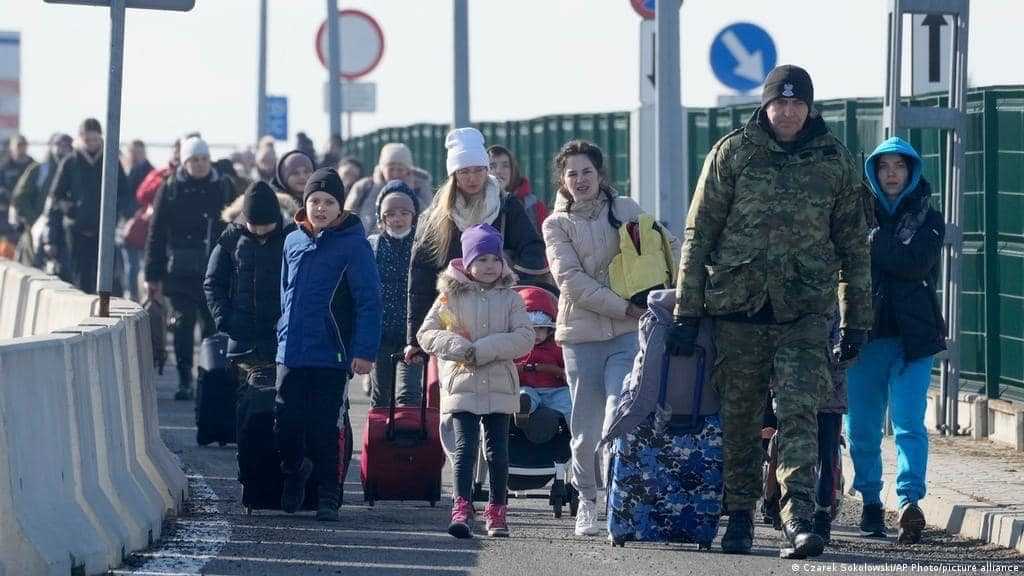
In 2022, insecurity and a rampage inside Ukraine. Crossing land borders occurs by car, train or on foot. Those escaping are traumatized by war. However, despite long queues, chaos and cold weather, because, in stark contrast to those who arrived in 2015, border crossing is both overseen and facilitated by border guards.
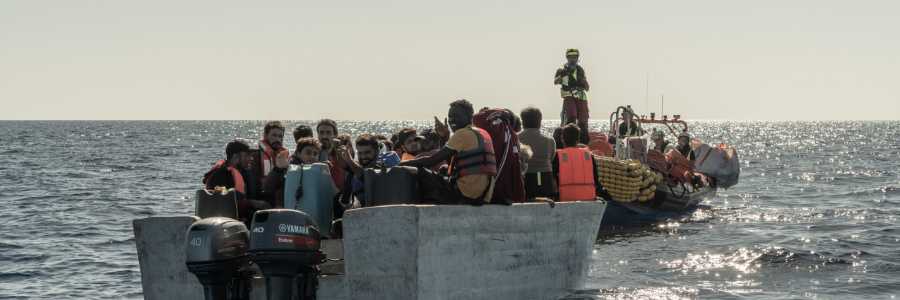
In 2015, people sought to reach Europe by sea: from Turkey to Greek islands, or from Libya to Italy. The lack of legal routes into Europe for those without visas, e.g. asylum seekers, turned . Their border crossing was and remains actively prevented by reinforced surveillance. Nonetheless, : in 2021, some 1838 migrants in the Mediterranean. The is another site where . In both instances, migrants at an EU border 鈥� 鈥� have a right to dignified treatment and to seek asylum.
Refuge in Europe 鈥� open for some, closed for the rest?
Questions about unequal treatment at the EU鈥檚 borders and the that causes it . Recent examples include . How can we compare the experience of at the Poland-Belarus border, who was aided by volunteers, but was unable to apply for asylum, with that of Ukrainians who receive temporary protection upon arrival in European countries?
The question of refuge in Europe in other words, unveils dilemmas about where protection is granted, and for whom. These questions link to the rights and material benefits associated with international protection, which differ radically depending on where someone seeks asylum. While it is easy to identify examples confirming Europe鈥檚 鈥榙ouble-standards鈥�, we argue that this is not enough. Rather, we need to face the dilemmas that failing systems of global protection keep producing.
Refugees and other migrants
People fleeing Ukraine are referred to as refugees. In Europe in 2015, for a while, Syrians were also referred to as refugees. Others arriving in Europe in 2015 were referred to as 鈥渕igrants鈥� with an implicit assumption that they were distinct from 鈥渞efugees鈥� and that therefore their presence was illegitimate.
A debate about whether Europe faced crisis , disregarding the fact that all , and all migrants have the right to dignified treatment. And at the border, all have the right to apply for asylum.
The distinction drawn between refugees and migrants is prone to dangerous misuse. Furthermore, blindly , is problematic and inaccurate. To exemplify: should a Syrian person arriving in Europe to study be considered a refugee or a student migrant? Would a Ukrainian on a work permit in Poland before this war, who is now unable to return be referred to as a refugee or a migrant worker?
What can we learn?
The fact that more than 4 million people have been able to flee Ukraine (largely) across EU borders, in a few weeks, shows that much is possible. So, what can we learn?
- The civil society response to people fleeing Ukraine in neighbouring countries underscores the need for good collaboration between state and civil society. States should take systemic responsibility, such as for the right to dignified health care and education, but also acknowledge the role of civil society actors, which have enabled the current refugee response along Ukraine鈥檚 borders.
- Both states and civil society should recognize refugees鈥� agency, whether they mobilize their networks, granting them the right to work, or include them as volunteers, where relevant. This should apply across refugee reception in EU states, shielding people from passive and destructive waiting, while slow-grinding bureaucracies do their work.
- The current situation shows how border management matters. The EU鈥檚 violent borders (for some, but not others) are a fact. The reality that 4 million people could cross EU countries鈥� borders (and Moldova鈥檚) in weeks, without casualties, is telling.
- Despite incredibly high numbers of people having left Ukraine, even more people remain affected by conflict internally. Any response to refugees from Ukraine, must also be seen in conjunction with continued humanitarian relief there. And this is true for all conflicts.
What will happen next remains unclear, but there is always a risk that crisis mobilization mode fades; both and in other neighbouring countries, and among EU states, which have yet to receive significant numbers of refugees.
But when this happens, how will neighbouring countries cope? The EU is offering support funds for countries aiding refugees, but long-term details remain to be specified. The current response to refugees in Europe should be considered an opportunity to address questions of protection for people globally, as it demonstrates what necessity and urgency can enable.
- Marta Bivand Erdal (Research Professor and Co-Director of 糖心网页版鈥檚 Migration Center) and Maria Gabrielsen Jumbert (Research Director, 糖心网页版 and co-Director of the Norwegian Centre for Humanitarian Studies).
- This was first published by the Oxford blog
Related comments