Monks and Militias in Myanmar
Posted Wednesday, 15 Mar 2023 by Amara Thiha & Marte Nilsen
The political implications of ultra-nationalist Buddhist monks and ideologies in Myanmar received much attention in the years before the 2021 military takeover.
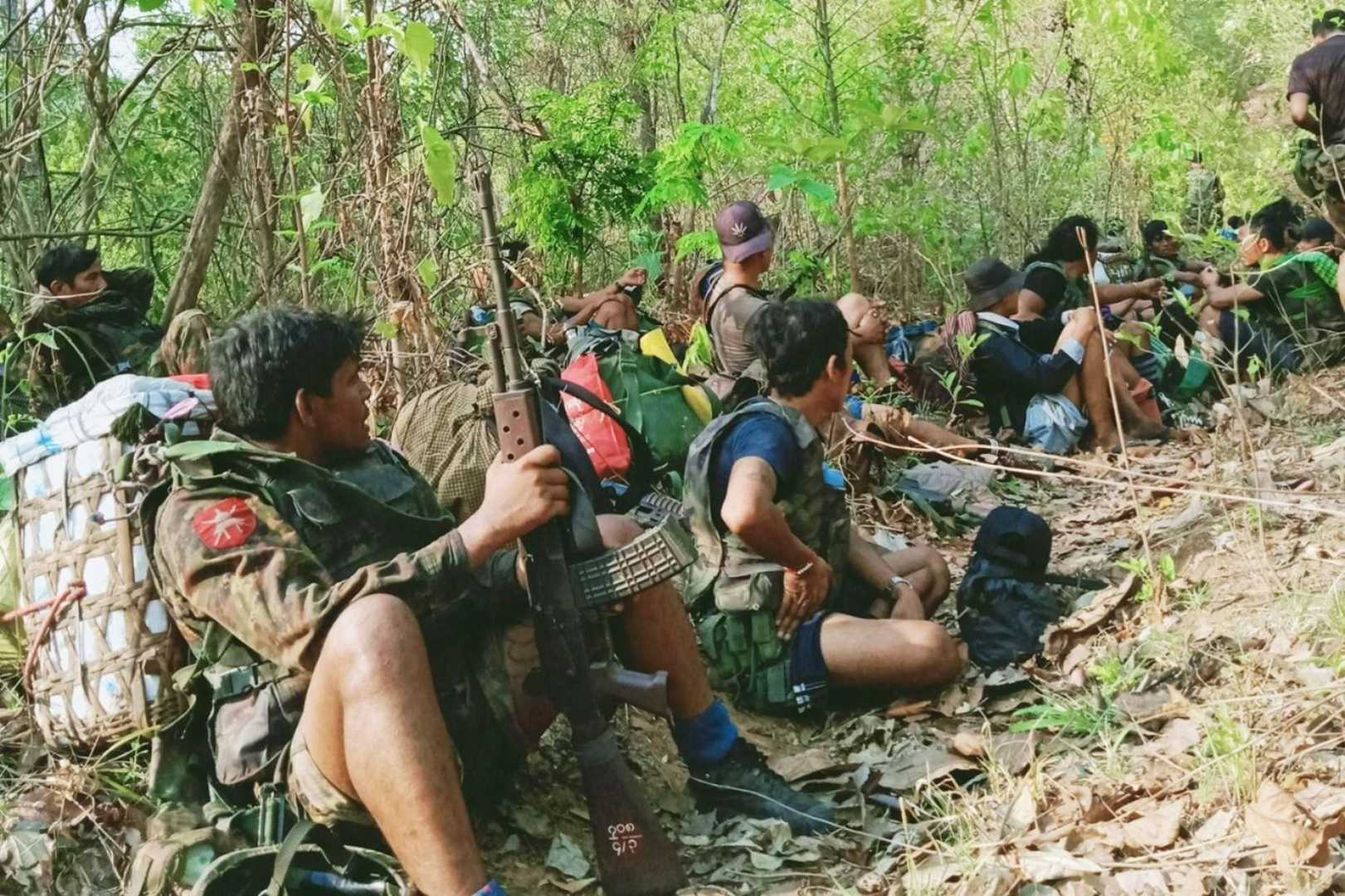
As Myanmar has turned more violent since the coup, ultra-nationalist monks have been radicalised further.
- What role are these monks playing in the political landscape of Myanmar today?
- And what is their rationale for supporting the military?
The coup leader, Commander-in-Chief of the Tatmadaw (Armed Forces of Myanmar) Min Aung Hlaing, marked Myanmar’s on 4 January 2023 by honouring hundreds of individuals, including the notorious ultra-nationalist monk U Wirathu who received a . But similar recognition was absent for U Wirathu’s fellow ultra-nationalist monk, U Warthawa.
The army’s dirty work
U Warthawa has been instrumental in pro-junta militias in the , an ultra-nationalist organisation comprised of local supporters of the military’s USDP party and trained by military veterans. These militias are increasingly doing the Tatmadaw’s dirty work in fighting the resistance from the , particularly in the restive Sagaing Region.
In March 2021, the Pyu Saw Htee group headquarters as people’s militias to protect the villages, following nationwide resistance against the coup. But by early 2022, the militias were armed with rifles to support military columns and , organised under the patronage of monks like U Warthawa.
Symbolic names
The name Pyu Saw Htee refers to a . The first Pyu Saw Htee militia that supported the government was formed in 1955 as a people’s militia to fight insurgent groups, though that group was dissolved two years later.
The symbolism behind the name refers to the elimination of threats to the capital and is not historically associated with Buddhism or monks. But a year after the coup, the concept re-emerged to describe the network of ultra-nationalists countering the anti-coup resistance. The logo of today’s Pyu Saw Htee group depicts the Sasana flag — the flag of the Buddhist religion — with the image of King Pyu Saw Htee standing on the dead bodies of the enemies of Bagan.
One of our interviewees, a self-described ‘nationalist monk’, said that the term Pyu Saw Htee is used to honour militant efforts, acting as ‘guidelines [which] will help them win against all threats’. He explained that while monks are not meant to participate directly in the militias, they should provide the right guidance ‘for the heroes who protect the family, the village, the society and Buddhism from threats’.
Not only anti-muslim
While in Myanmar are mainly associated with , at least three additional key factors contribute to their involvement in the politics of Myanmar.
- First, many monks believe that the Buddhist religion is facing an existential threat from external forces. Islam is one part of this perceived threat, but so too is secularisation, modernisation and democracy. The monks see it as their responsibility to preserve what they understand to be the original form of Buddhism.
- Second, during the reform period of 2011–2020, the rise of civil society also challenged traditional authority in Myanmar, further threatening the elevated role of the monks as trusted leaders in society.
- Third, changes within the relationship between monks and administrators have also shaped ultra-nationalist monks’ involvement in politics. Experiences from the reform period have led these monks to doubt that a civilian administration can protect the Buddhist religion and community and they see themselves as obliged to step in and guide society. As ultra-nationalist monks see the military as closer to the traditional rule of the Buddhist kings than other players in the politics of Myanmar, their agenda is to ensure that the Tatmadaw maintains its role as the protector of the nation, race and religion.
Two years after the 2021 coup, the Tatmadaw is facing its greatest challenge in recent history. The against the junta has to their limits. The military’s preferred strategy is to rely on vigilante groups and armed militias to carry some of the load.
The ultra-nationalist monks not only represent religious authority, but they also serve as protectors of legendary King Pyu Saw Htee’s legacy, securing for the military regime. As this religious and spiritual justification of violence is highly valuable to the Tatmadaw, the influence of ultra-nationalist monks will likely continue to impact the political landscape in post-coup Myanmar.
- Amara Thiha is a PhD Candidate at the University of Coimbra, Portugal and a Doctoral Researcher at the Peace Research Institute Oslo (ÌÇÐÄÍøÒ³°æ).
- Marte Nilsen is a Senior Researcher at the Peace Research Institute Oslo (ÌÇÐÄÍøÒ³°æ).
- This text was first published by the 10 March 2023
Related comments