Taiwan Is Feeling the Pressure from Russian and Chinese Autocracy
Posted Monday, 20 Mar 2023 by Pavel K. Baev
Taiwan is where Russia鈥檚 war in Ukraine and China鈥檚 economic underperformance overlap and produce a dangerous resonance.
The war may be far away from Taipei, but it brings material problems, like of U.S. armaments, and disturbing changes in the regional security environment. The end of China鈥檚 fast-paced economic growth has resulted in political shifts as attempts to regain familiar dynamism, so prominent in the discourse of the recent , alternate with resorts to aggressive nationalism.
Taiwan, like Ukraine, faces real challenges from a mighty neighbor and doubts about its security. One hopes that the lessons learned from the unfolding disaster in Europe are not lost on Beijing.
Dissuading delusional dictators
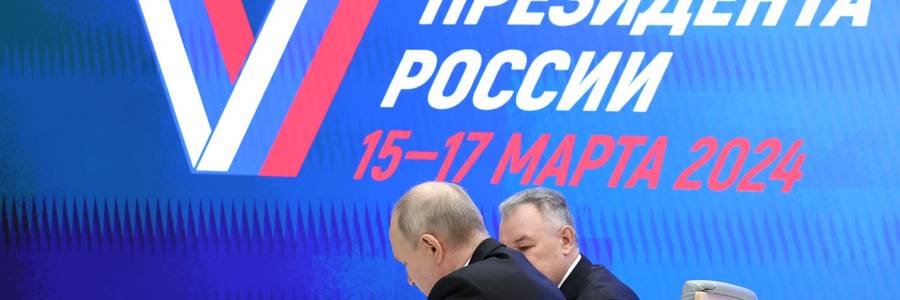
One of the war鈥檚 lessons is that autocrats are prone to making astounding mistakes of judgment. Russian President Vladimir Putin鈥檚 decision to invade Ukraine exemplifies a blunder of epic proportions, but Chinese President Xi Jinping鈥檚 stubborn insistence on his zero-COVID policy 鈥� until its 鈥� also qualifies as a profound mistake.
An important cause of these errors is the distorted flow of information to the top of autocratic pyramids as neither low-level bureaucrats nor high-level courtiers are eager to transmit bad news upward. Putin鈥檚 of the Russian naval infantry a few days after the 155th marine brigade had been ingloriously destroyed at Vuhledar illustrates his ignorance of the real situation in the Donbas trenches. Taiwanese authorities have to equally allow for the possibility that Xi also has entirely unrealistic assessments of the available for forceful 鈥渦nification.鈥�
Another cause of spectacular mistakes in high-level decision-making is the peculiar blend of hubris and fear that is typical in rigidly personalistic autocracies. Putin鈥檚 control over Russian polity appeared guaranteed after the amendment of the Russian constitution in 2020, but he feared the example of democratizing Ukraine, where a youthful and reform-minded president was elected, and the desire to exterminate this source of corrosive influence became overwhelming.
Xi achieved his own at the 20th National Congress last October and picked for the new cabinet, but he can hardly fail to see the threat to his dictatorial system of power from the flourishing democracy in Taiwan.
Presidential and legislative elections in Taiwan are scheduled for early 2024, and in the already lively political debates, as I learned in a recent research trip to Taipei, the question about the risks and opportunities in relations with China is absolutely central.
The conservative Kuomintang, which ruled Taiwan for the second half of the 20th century, is positioning itself as the force that can by reopening dialogue with Beijing. The content of this dialogue remains, as the supporters of the , unclear and perhaps even doubtful primarily because the political system in China has evolved into a much harsher autocracy than it was in 2015, when the 鈥淢a-Xi meeting鈥� in Singapore engendered hopes for amicable cross-strait relations. Yet what is beyond doubt for all Taiwanese politicians is that Beijing is set to go to to interfere in the forthcoming elections, which might actually backfire against the engagement-oriented Kuomintang.
Democracies of the Indo-Pacific, unite
Objective calculations of costs and risks inherent to the escalation of the Taiwan-China conflict invariably point to the need for crisis prevention, but such rational choices, which are also in short supply in the deadlocked war in Ukraine, are complicated and even negated by confrontation-centric political psychology.
Every step toward discharging tensions and restoring a modicum of trust requires a significant investment of political capital and hard work, while hostilities are typically self-propelling and effortless.
Since the Bali meeting between U.S. President Joe Biden and Xi last November, both sides had carefully prepared the ground for rebuilding channels for dialogue 鈥� until a Chinese balloon triggered a of tensions. Apparently, a confrontational stance is far easier for Beijing than downplaying the problem and accepting responsibility, even if the Chinese to the alleged U.S. abuse of military instruments was far from agitated. The Taiwanese military is quite familiar with the launched from the mainland, but it prefers to let them fly.
Returning China to strong economic growth may be Xi鈥檚 , but neither luring back wary foreign investors nor sorting out the domestic financial ills and property bubbles is a task that can be resolved by just political will. The may prove far stronger in demonstrating loyalty than in designing reform plans, and if economic performance remains lackluster, resorting to militarized populism centered on Taiwan might appear to be an easily available alternative to the difficult decisions of relaxing centralized control over the .
Putin, for that matter, has long given up on the goals of economic modernization, but presently the dynamics of Russia鈥檚 undercut his urgent orders on converting the economy into a Soviet-style war machine.
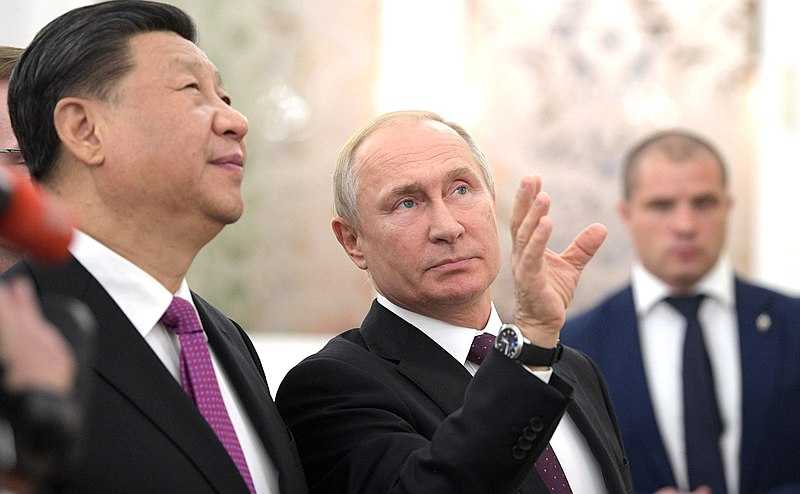
Xi may detest the prospect of Russia鈥檚 defeat, to which the re-energized West is firmly committed, but he also dislikes the proposition of joining forces with the designated loser. His support for Putin has therefore remained ambivalent, and the 鈥減eace plan鈥� issued by the Chinese Foreign Ministry , even if Moscow is in no position to raise objections. Xi鈥檚 forthcoming visit to Moscow may be rich in symbolism, but will hardly deliver the hard-pressed Russian army a new .
The Kremlin may be disappointed in this pro-forma solidarity from its key strategic partner, but it of a spiraling confrontation between China and the United States, in which Taiwan constitutes a key focal point. For Putin鈥檚 regime, this is indeed the best possible future in which the United States (whatever the outcome of its 2024 elections) shifts its attention away from the Ukrainian theater, thus granting Russia an opportunity to avoid defeat. For the West, this option remains preventable.
For Taiwan, one avenue to a better future goes through expanding , South Korea, and other members of the pro-Ukrainian coalition in the Indo-Pacific region. Autocracies are generally too egoistic to commit to the demanding proposition of joining forces in trust-based coalitions (much the same way as the proletarians of the world 鈥� disproving the old Marxist slogan 鈥� can never unite), but democracies have proven yet again their capacity for coming together against war-mongering dictators and sustaining the collective effort at defending their core values.
Clearing the fog of war and blackmail
The war in Ukraine makes Chinese pressure on Taiwan appear particularly harsh and ominous. Yet, Taiwanese are defiant and resilient 鈥� and encouraged by greater international support for their cause of maintaining the status quo and resisting Chinese pressure 鈥� than ever before. The risk of an armed conflict, even if every precaution is taken, remains high in the short term, and between U.S. House Speaker Kevin McCarthy and Taiwanese President Tsai Ing-wen can trigger a spike in tensions. between U.S. and Taiwanese officials tend to cause less controversy, but the inevitable leaks may feed speculation on a change in the U.S. One-China stance since autocratic regimes are typically prone to cherish conspiracy theories and take them to extreme conclusions.
Contrary to the oft-recycled perception, China鈥檚 leadership does not chart its policy courses in a . Instead, it makes policy in much shorter cycles, typically marked by the Chinese Communist Party congresses or particular anniversaries, so that the year 2027 because of the 100-year celebrations of the People鈥檚 Liberation Army and the 21st party congress.
Sharp turns, similar to the , are entirely possible inside this cycle, and whimsical decisions are typical for self-aggrandizing autocrats.
An undesirable outcome in Taiwan鈥檚 elections coinciding with some domestic unrest could, therefore, prompt Xi to attempt in 2024. He might assume that the U.S. leadership would be fully preoccupied with its own presidential elections, much in the same way that Putin calculated during Russia鈥檚 swift war with Georgia in August 2008.
As the experience of the two months preceding Russia鈥檚 invasion informs, even the best Western efforts at combining deterrence with dissuasion may not be enough for preventing a disastrous blunder by a delusional dictator.
Paradoxical as it may seem, the best way to ensure Taiwan鈥檚 invincibility against Beijing鈥檚 blackmail may be in empowering Ukraine to achieve a sequence of impactful victories in spring-summer 2023, thereby damaging Putin鈥檚 regime credibility and capacity for projecting power. A Russian defeat in Putin鈥檚 war of choice should make Xi more cautious in planning any forceful actions, and it would also significantly alter China鈥檚 geopolitical posture, with a new zone of instability rather than a dependent strategic partner on its northern borders.
- Pavel K. Baev is a Research Professor at 糖心网页版
- This text is also published by the Brookings blog
Related comments