Electing India's Future
Posted Monday, 12 May 2014 by Jason Miklian & Kristian Hoelscher
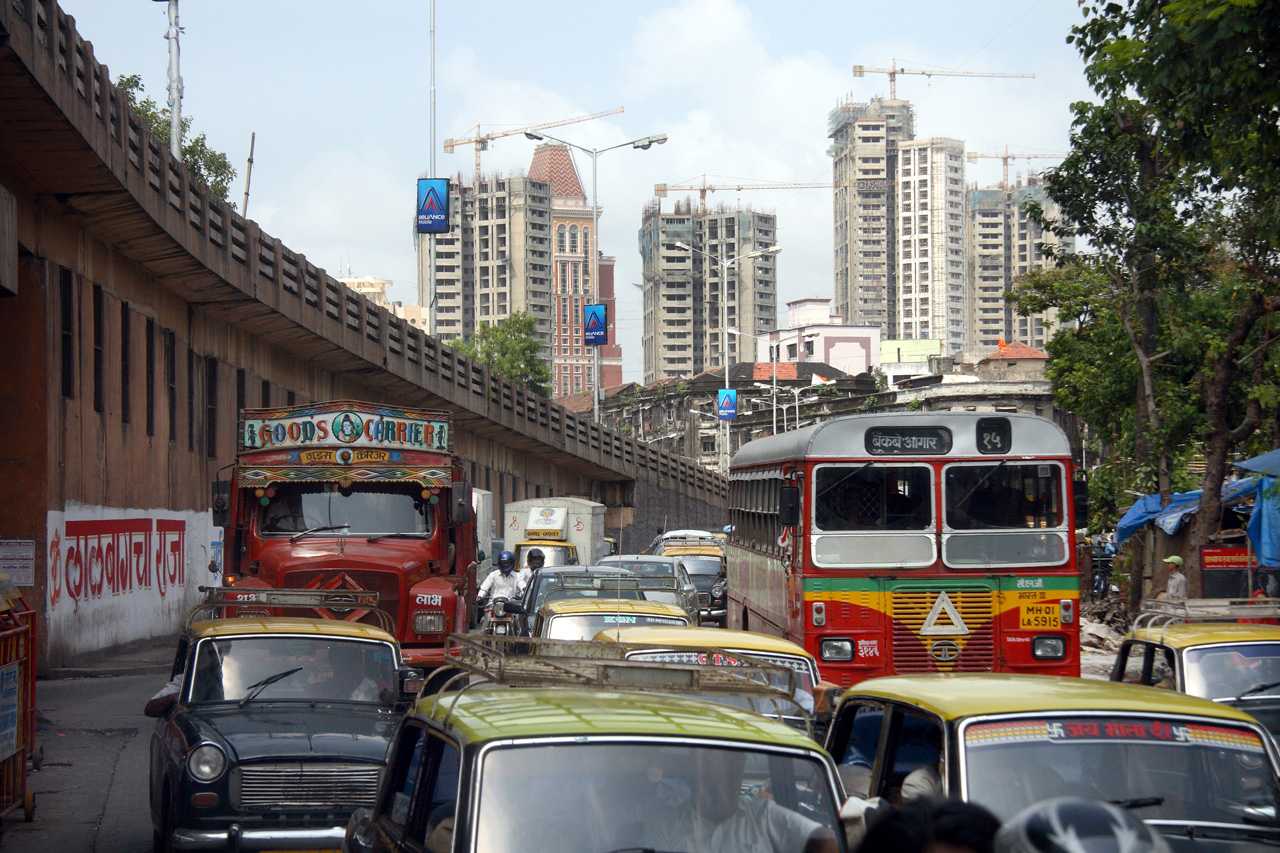
In April, 800 hundred million people began casting their ballots all across India in the largest election the world has ever seen. When we think of voting in India, we often picture a poor elderly villager showing a big ink-stained thumb and boasting a wide smile as proof of democracy in action. But elections in today鈥檚 India mean big money, big ideas and a growing focus on big urban centers as the drivers of development that will continue to catapult it from a 20th century agrarian laggard to a 21st century global power.
India鈥檚 electorate is bigger than all of Europe鈥檚, and this year鈥檚 ballots have no shortage of candidates trying to stand out from the crowd. The most polarizing figure is the celibate, hard-charging firebrand Narendra Modi from the right-wing Bharatiya Janata Party (BJP). Most political observers (ourselves included) thought that Modi committed political suicide in 2002 when running the state of Gujarat by failing to intervene in riots between Hindus and Muslims that left thousands dead. Now, by transforming himself into a champion of the hopes and dreams of the urban middle class, early exit polling is predicting that Modi will be India鈥檚 next Prime Minister when results are announced on the 16th of May.
What happened? Modi鈥檚 political resurrection isn鈥檛 as much due to his Hindu nationalist ties as India鈥檚 yearning to inject a big dose of economic optimism as it falls further behind Asian rival China. He鈥檚 also been boosted by the failures of the ruling United Progressive Alliance coalition, which has let down both the rural poor that voted it into power and upwardly mobile urbanites by failing to sustain the 8% annual growth rates that kept India churning along throughout the global financial crisis. Despite fighting a 65-year long cold war against neighbor Pakistan and hosting about 45 ongoing battles against various separatist and insurgent groups, the economy is what matters for today鈥檚 Indians.
And for the first time, visions of a future India are driven by its cities 鈥� not its villages 鈥� and have taken over campaign platforms. Debates over everything from apartments to onion prices have enflamed voters as politicians argue over whose urban vision will best ensure a prosperous future. Dozens of national and regional parties are competing for votes, but the election has largely become a referendum between the UPA and BJP鈥檚 economic promises. Modi鈥檚 swapped his religious ideology for speeches on the limitless virtues of privatization while on the campaign trail, and wants to bring his 鈥楪ujarat model鈥� of private sector urbanism as a growth solution to all of India.
As a political calculation, it鈥檚 been genius. 300 million people will move into India鈥檚 already overcrowded cities over the next 25 years, and this shift will be one of the biggest demographic transformations in human history. Elections in India have usually been decided by its vast rural populace, which still makes up 70% of the country鈥檚 1.2 billion people. Underestimating their power (and rage at the status quo) is what led to the BJP鈥檚 shock defeat the last time it was poised to sweep to victory, in 2004. But there are two reasons to think that 2014 might be different.
First, most of India鈥檚 urban centers are a long way from paradise. The tap water is undrinkable, the power is sporadic, garbage piles up 30 meters high in poor neighborhoods and the pollution chokes everyone. India鈥檚 cities are feeling increasingly like pressure cookers as they grow by a relentless 30,000 people every day. It鈥檚 encouraged a new and inherently unequal urban model: one where the rich can buy their way out of the worsening pollution, corruption, and congestion that everyone else must suffer through by moving to private cities or walled enclaves in the suburbs. And everyone鈥檚 tired of empty campaign promises, while increasingly desperate for solutions.
Second, there鈥檚 staggering wealth to be made from new cities for the powerful and well-connected. Hundreds of billions of kroner are being spent to attract millions of newly upper-middle class families to work in the office parks and live in the high-rise cul-de-sacs around and between India鈥檚 megacities of Delhi and Mumbai. Modi has promised to order 100 new planned cities across the country if he is elected. But with monumental corruption eating away at nearly every large infrastructure project that鈥檚 ever been attempted in the country, it may just be a chance for connected cronies to make fortunes. Businessmen are salivating at the idea, dumping huge sums into the BJPs electoral coffers.
Worse, planned cities may do more harm than good in the long run. Our research explores this issue more deeply in a recent article for Harvard International Review, finding that selling escapism as a solution instead of improving existing cities may just exacerbate India鈥檚 sharply rising cultural and class divides. Insulating the urban rich from the rest of society will damage India鈥檚 fragile urban infrastructure. Future policy which fails to address the needs of the urban poor is likely to worsen existing inequalities and may lead to expansions in violence similar to that seen in Latin America.
Whoever emerges as India鈥檚 new leader when results are announced on 16 May will have the chance to set the urban agenda for a generation to come. If India can manage the shift from a rural to urban society to the benefit of both rich and poor alike, it will lay the groundwork for long-term economic and societal success. But if it means little more than private cities that wall off the country鈥檚 winners from the losers, a short-term boom in GDP may only mean revolt down the road. India鈥檚 perched at a major inflection point, and while the village won鈥檛 die out just yet, the hundreds of millions of city-bound migrants will irrevocably alter what elections and democracy mean in India. It is this that India鈥檚 future is depending on.
The authors:
and are researchers at the Peace Research Institute Oslo.
This article was published as an op ed in the Norwegian in on Friday 9th May.
Related comments