On becoming Norwegian
Posted Thursday, 28 May 2015 by Marta Bivand Erdal & Rojan Tordhol Ezzati
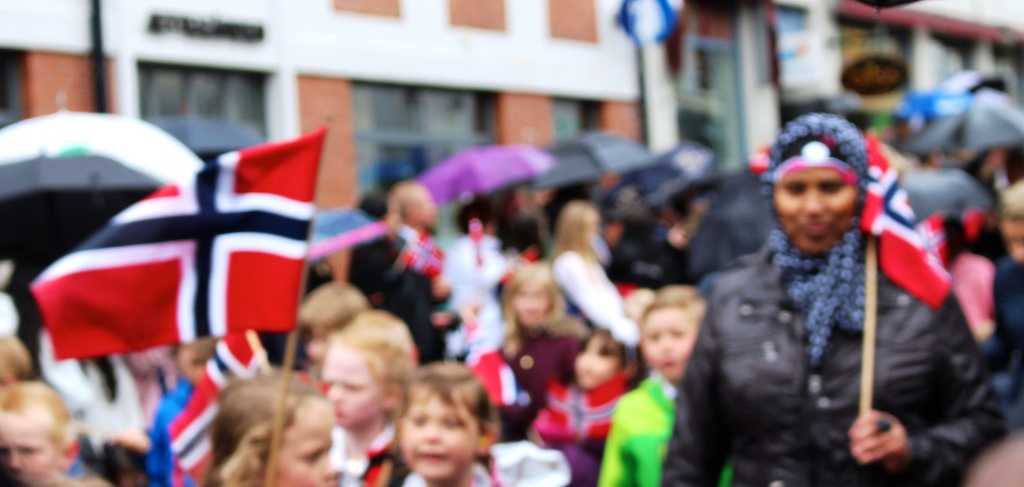
In May 2015, one of Norway鈥檚 leading daily newspapers, Aftenposten, launched a series of profiles titled (#IAmNorwegian). One is of , who has made his everyday life easier by changing his name to Stian. Another is of , who feels at her least Norwegian on Norway鈥檚 national day, when 鈥� with her immigrant background and lack of the traditional Norwegian costume 鈥� she senses that other people do not see her as Norwegian. Finally there is , who is frustrated about depictions in the Norwegian media of immigrants and Muslims.
Each of these young people, in his or her own way, addresses the issue of what it takes to gain acceptance. Given their immigrant backgrounds, this involves asking what it means to be Norwegian, and whether it is possible to become Norwegian.
Throughout Europe, national identity is now central to public debates on immigration and integration. As these debates show, dealing with increasing societal diversity has become a highly politicized issue, where concerns about security and migration are often conflated. Norway is a case in point. In this blog post we discuss national identity by looking at various factors that may suggest inclusion 鈥� or exclusion.
National identity, or in this case 鈥淣orwegian-ness鈥�, is determined mainly by geography and politics, although history and traditions also play a part, along with religion. All these factors evolve over time: through changes in a nation state鈥檚 borders; through changes in its citizenship laws, which determine membership of its political community; and through the writing and rewriting of its history.
Ancestral roots
Norwegian-ness may be seen as a proactive state, rather than as something that is adopted passively. Many Norwegian-Americans, for example, choose actively to assert the Norwegian aspect of their identity. Although in many cases this identity has been diluted, the idea of having ancestral roots in several places simultaneously is real and important for the individuals in question.
Many people, with or without immigrant backgrounds, have family histories that encompass ancestral roots, experiences and memories from outside Norway. While conducting our research, we have spoken to nearly 200 people with immigrant backgrounds about these topics in the past few years. And while many of the people we spoke to consider these historical factors to be an important part of their identity, this is far from true for everyone.
Based on the assumption that identities are in a state of evolution, in this blog post we ask: When does one become Norwegian? Below we discuss four of the many possible responses to this question.
Citizenship
One possible response is that one becomes Norwegian 鈥渁fter seven years鈥�. In other words, once one has satisfied the residency requirement to apply for Norwegian citizenship. A person who becomes a citizen and a member of the nation鈥檚 political community is legally Norwegian, and has the same rights and obligations as all other Norwegian citizens.
The rules on citizenship define membership of the political community that is the basis of the the nation-state. This community includes some people and excludes others. It is also an explicit goal of Norway鈥檚 integration policy that most immigrants should acquire Norwegian citizenship as part of the process of integration into Norwegian society. In many ways, this makes it illogical to ask to what extent a Norwegian citizen 鈥渋s Norwegian鈥�.
Language
Another response is 鈥渨hen you speak Norwegian鈥�, which will depend, among other factors, on a person鈥檚 age on arrival in Norway and his or her linguistic aptitude. Obviously, knowledge of Norwegian is necessary in order to communicate. But simply communicating is not enough 鈥� the ideal for many people is to speak Norwegian with no trace of a foreign accent. Otherwise a person鈥檚 Norwegian-ness will come under scrutiny, and they will be asked 鈥渨here are you really from鈥�, with the underlying assumption that they are not Norwegian. Additionally, many people are pleasantly surprised if you speak Norwegian in a slightly broad regional dialect.
Birthplace
A third response is 鈥渋t depends where you were born鈥�. The idea that one鈥檚 birthplace is the decisive factor alludes to the idea of personal roots 鈥� one鈥檚 own, one鈥檚 parents and one鈥檚 ancestors. Heritage and family background are important to people鈥檚 sense of identity, and will often be important in different ways at different times of life. This response suggests that if you were not born in Norway, you can never become Norwegian. Such a focus on roots may easily overshadow the fact that not only roots, but also feet, are important. Human beings are not like plants. We are mobile and can choose to relocate, either within national borders or internationally. And we can put down new roots, while still retaining roots elsewhere.
Appearance
A fourth response is 鈥渋f you look Norwegian鈥�. This suggests that it鈥檚 impossible to become Norwegian if you have dark skin, black hair and brown eyes. According to our informants, many people with immigrant backgrounds see appearance as a prerequisite for Norwegian-ness. But this way of thinking could just as well rule out people who were adopted or people who have one fair-skinned and one dark-skinned parent.
Community
When does one become Norwegian? Each of the factors discussed above 鈥� citizenship, language, birthplace and appearance 鈥� provides a different answer. The first two are by no means unambiguous, but even so it is true that a person can acquire citizenship and can learn the language. Accordingly a person can become Norwegian. A person can鈥檛 change their birthplace and genes, however. So an approach that takes into account both a person鈥檚 roots, and their ability 鈥渢o use their feet鈥�, regardless of appearance, will include many more people within the category 鈥淣orwegian鈥�. Applying this approach, a person can be considered Norwegian whether they have long-established or recent roots in Norway.
The young people featured in #JegErNorsk and their efforts to gain acceptance highlight the relational nature of identity. Identity is created through encounters with other people. Can I be Norwegian if other people don鈥檛 see me as Norwegian? The experience of being accepted is essential for feeling a sense of belonging both locally and nationally. Using language in a way that supports a sense of belonging also helps build a sense of community. The City of Oslo鈥檚 focus on diversity as a strength is an example of this. This focus is expressed among other in the city council鈥檚 recycling adverts and in how the Police approaches young people in Oslo.
The answer to the question of when one becomes Norwegian also depends on the type of Norwegian-ness being referred to. For many people with immigrant backgrounds, people and places outside Norway are a natural part of their lives. This situation brings with it, among other things, a complexity and multilingualism that may contribute to the evolution of Norwegian identity; a concept of Norwegian identity that accepts that everyone鈥檚 identity comprises dimensions that are in a continual state of flux: being a daughter and a mother; a teacher and a keen amateur cook; a devout person and a footballer; a Norwegian and a Tamil.
Recognition of multi-dimensional identities in practice would bring about a broader approach to integration than that only applying to the immigrant population. Such an approach is about what society at large is doing to ensure that everyone, regardless of skin colour, religion or political opinions, feels part of the national community. And it鈥檚 also about what each individual can contribute to this national community 鈥� whether it is in Norway, the United Kingdom, or the Philippines.
Related comments