Cracking the Glass Ceiling: Hillary Rodham Clinton and U.S. presidential politics
Posted Wednesday, 26 Aug 2015 by Hilde E. Restad
In a now legendary 2008 Saturday Night Live skit, comedians Amy Poehler and Tina Fey opened the show by imitating Republican vice presidential candidate Sarah Palin and unsuccessful Democratic contender for the nomination Hillary Clinton, respectively. The could have been a harmless imitation game, with Fey and Poehler simply doing their brilliant impressions of each candidate鈥檚 personalities. Instead, it was an extended comment by two female comedians on what they saw as the unacceptable sexism in the 2008 campaign. As Fey wrote in her memoirs Bossypants:
鈥淭his sketch easily could have been a dumb catfight between two female candidates. What Seth [Meyers] and Amy [Poehler] wrote, however, was two women speaking out together against sexism in the campaign鈥� you all watched a sketch about feminism and you didn鈥檛 even realize it because of all the jokes. [鈥 Suckers!鈥� (2012: 216-17)
That the 2008 presidential cycle was 鈥渞ife with overt [gender] bias,鈥� as political scientist Jennifer Lawless has written should not be a controversial claim (2009: 71). If you think it is, then I invite you to have a look at this rather shocking of TV clips that the Women鈥檚 Media Center made in 2008. The compilation shows established TV news anchors focusing on Hillary Clinton鈥檚 clothes, hair and style rather than on her position on the issues.
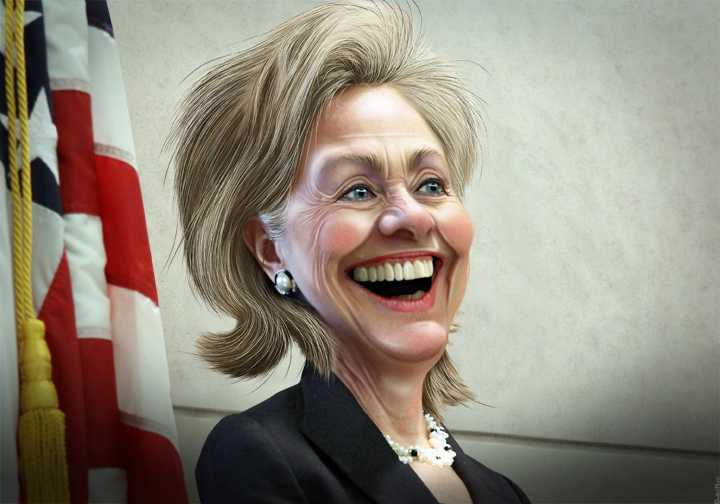
Indeed, Clinton鈥檚 own campaign for the Democratic nomination was an (inadvertent?) admittance of the realities of operating in a gendered electoral environment. Refusing to run as a historic candidate (being the 鈥漟irst鈥� female to run for president) [1] Clinton insisted she was simply the most qualified candidate vying for the nomination who happened to be female. The campaign strategy was to focus on experience and competence, contrasting Clinton鈥檚 many years of service on the national level with contender Barack Obama鈥檚 rather slim national political CV. Her perhaps most famous TV ad, was a good example of this. In this ad, Clinton is seen answering the phone in the White House in the middle of the night, taking care of business and dealing with whatever crises are happening around the world. The message: Clinton is experienced and will be 鈥漴eady on day one鈥� to govern as the Clinton campaign was fond of saying 鈥� as opposed to that newcomer Obama, who had no idea what he was doing.
Despite Clinton鈥檚 focus on her competency, she was navigating an electoral environment that exhibited specific gender dynamics. As Lawless argues, female candidates for office in the United States have to clear gendered hurdles that their male competitors do not. Perhaps the most obvious one was the rather hostile media environment, which frequently focused on style over substance; on Clinton鈥檚 clothing, body issues, hair, rather than her political program (Lawless, 2009; Carlin & Winfrey, 2009). As the Women鈥檚 Media Center鈥檚 video compilation shows, this was not a partisan problem. This was not simply an issue of conservative commentators being biased toward a Democratic candidate, Rush Limbaugh鈥檚 infamous comment on people not wanting to 鈥渟ee a woman age in front of their very eyes鈥� in the White House notwithstanding. Rather, journalists on the left and the right had a clear tendency to focus on all things style, which had a negative connotation with regards to Clinton.
This, of course, was also a dynamic that Palin had to face. Whereas Clinton was categorized in the typical gender stereotype of the 鈥漣ron maiden鈥� (Kanter, 1977), i.e. the too strong woman who was not feminine enough, Palin fell into the gender stereotype often called 鈥漵ex object鈥� as well as 鈥漰et/mascot鈥� where the focus was on her good looks and perceived lack of brains. She was often portrayed as the good-looking mascot attached to the McCain campaign (Carlin & Winfrey, 2009: 331).
Both Clinton and Palin were faced with the so-called 鈥漝ouble bind鈥�: If you are too feminine, you are judged incompetent; if you are competent, you aren鈥檛 seen as feminine enough (Jamieson, 1995; Carlin & Winfrey, 2009). In 2008, Clinton seemed to struggle to find the right balance between competence/experience and feminine likability. Her main competitor, Obama, made this especially difficult because he was widely regarded as likable and charming. Indeed, Clinton鈥檚 perceived lack of personal charm came up during the in New Hampshire in January 2008, when she was asked by the debate moderator how she responded to the fact that many people did not view her as likable (yet did find her competent to be president). Her answer was excellent, responding that this hurt her feelings, but that she鈥檇 鈥漷ry to go on,鈥� eliciting sympathetic laughs from the audience. Obama鈥檚 response was one of the few comments he was during the campaign, saying: 鈥淵ou鈥檙e likable enough, Hillary鈥︹�� While Clinton鈥檚 reaction was to thank him and smile 鈥� seemingly genuinely 鈥� Obama鈥檚 comment was seen as condescending and indeed playing into the 鈥渄ouble bind鈥� gender dynamic (Cohen, 2008).
Does this mean that Hillary Clinton lost the nomination in 2008 because of sexism? Hardly. Obama clearly ran a better campaign than both Clinton and the McCain/Palin ticket. But the 2008 cycle does provide a harrowing example of the kind of hostile environment female political candidates must navigate in order to make it into office.
The question then becomes: what, if anything, will be different in the 2016 cycle? So far, the media seems to have gotten over the fact that Clinton is a woman running for president. Indeed, Clinton herself seems to have gotten over this fact, and is now much more comfortable with this role. Instead of focusing on only her experience, she is now embracing her historic persona, releasing ads that . She is also focusing explicitly on gender issues, as seen in her TV ad where the Republican candidates鈥� positions on 鈥渨omen鈥檚 issues鈥� such as abortion, equal pay and paid sick leave are criticized. The video ends with Clinton saying (at first imitating Republicans), 鈥淭here she goes again with the 鈥榳omen鈥檚 issues.鈥� Well I am not going to stop, so get ready for a long campaign鈥�.
Clinton鈥檚 strategy is in some respects being , Senator Bernie Sanders (VT), who has refused to comment on questions from the media about Clinton鈥檚 style, rather changing the subject to substance, such as policy differences.
What will happen in the Republican nomination race may a different story, however. We鈥檙e far, far away from the nomination and even further away from the general election, and yet there are already shocking examples of unacceptable behavior such as Donald Trump鈥檚 comments regarding FOX News anchor Megyn Kelly, calling her a 鈥渓ightweight,鈥� saying he has no respect for her, . These comments came the day after the first GOP nomination debate, held on August 6th, where if his previous comments about women 鈥� such as calling women he didn鈥檛 like 鈥渇at pigs, slobs, dogs, and disgusting animals鈥� were appropriate for a presidential candidate. Trump鈥檚 initial answer 鈥� 鈥淥nly Rosie O鈥橠onnell鈥� 鈥� elicited laughs from the debate audience.
It seems safe to conclude that the last sexist word of the 2016 cycle has not been uttered.
References
Carlin, Diana B. & Kelly L. Winfrey. 鈥淗ave You Come a Long Way, Baby? Hillary Clinton, Sarah Palin, and Sexism in 2008 Campaign Coverage,鈥� Communication Studies 60:4 (2009): 326-343.
Fey, Tina. Bossypants. 2011. London, UK: Sphere, 2012.
Lawless, Jennifer. 鈥淪exism and Gender Bias in Election 2008: A More Complex Path for Women,鈥� Politics and Gender 5:1 (2009): 70-80.
Phillip, Abby. 鈥淏ernie Sanders is not impressed with your questions about Hillary Clinton鈥檚 hair,鈥� Washington Post, August 17, 2015. URL:
[1] Which is incorrect, as there have been several women that have run for the presidency. Clinton鈥檚 candidacy was seen as historic, however, because of its perceived viability relative to her predecessors鈥�. (Blakemore, 2015)
Related comments


