Refugees are Also Migrants. And All Migrants Matter
Posted Monday, 7 Sep 2015 by Jørgen Carling
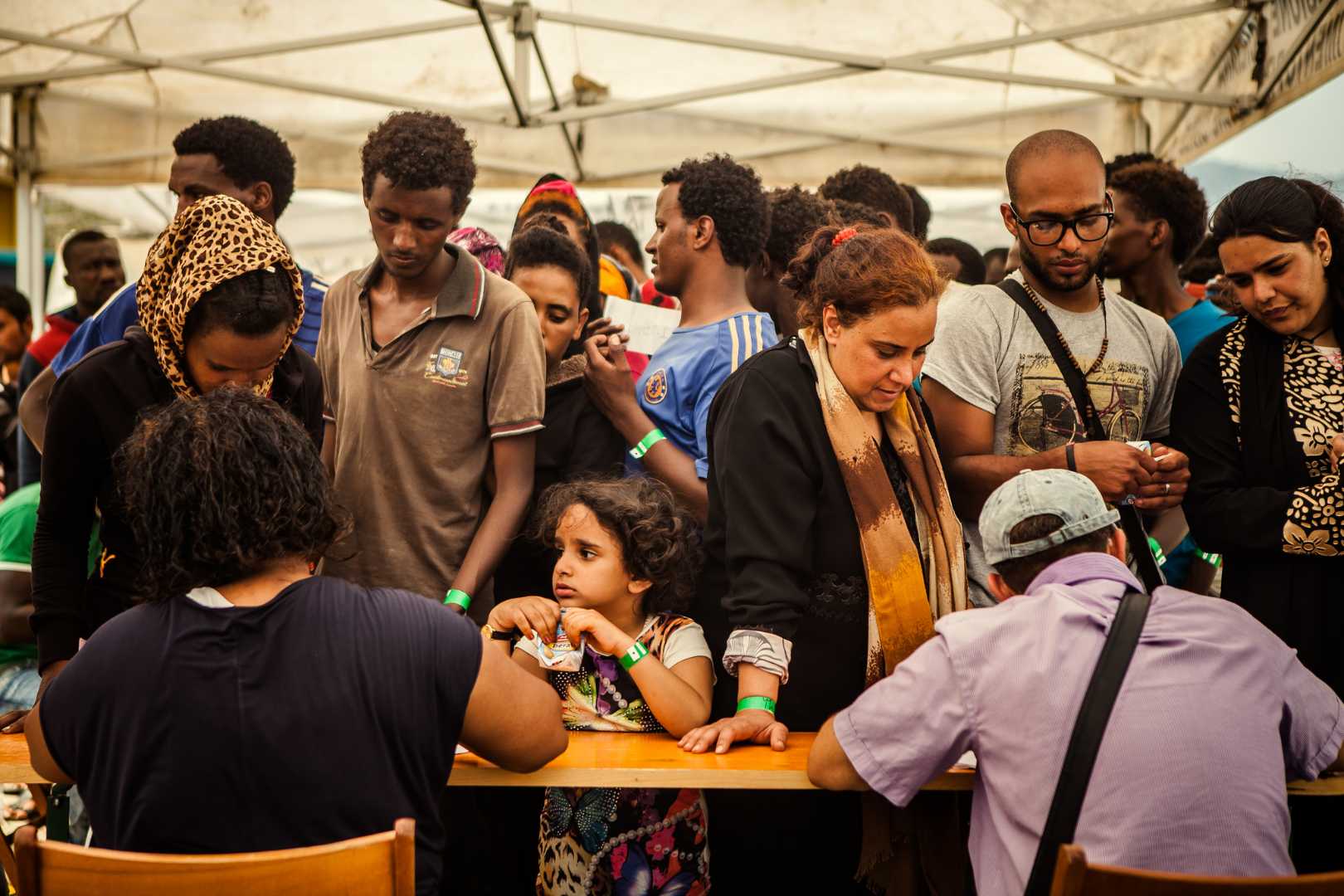
The recent debate over word choice has taken turns that undermine humanitarian principles and cloud the view of how migration is unfolding. The , the , the , the , and others have examined the usage of ā€˜refugeesā€™ versus ā€˜migrantsā€™ over the past week. The general impression is that ā€˜migrantsā€™ are being thrown to the wolves. The most insidious contribution, sadly, comes from the United Nations High Commissioner for Refugees (UNHCR).
But first, the origins of the current debate: in mid-August 2015, Al Jazeera that the network will no longer refer to ā€˜migrantsā€™ in the Mediterranean. This word, an online editor argued, has become ā€˜a tool that dehumanises and distances, a blunt pejorative.ā€™ The networkā€™s solution is to drop ā€˜migrantsā€™ and instead use ā€˜refugees.ā€™ The announcement was met with a groundswell of cheering in social media.
The essence of Al Jazeeraā€™s argument is that if we sympathise with people, we should call them refugees in order to humanize them. But, as Judith Vonberg argued in her lone and brave , ā€˜Al Jazeera gives credence to the illiberal voices telling us that migrants are not worthy of our compassion.ā€™
A few days after Al Jazeeraā€™s announcement, the UNHCR published a on its website, entitled ā€˜ā€œRefugeeā€ or ā€œmigrantā€ā€“Which is right?ā€™ To encourage dissemination through social media, the article was accompanied by an image of a distressed mother and two children, with the words ā€˜Refugee or Migrant? Word choice mattersā€™ superimposed.
The UNHCR doesnā€™t call for dropping migrants, but asks that the people crossing the Mediterranean be labelled ā€˜refugees and migrants.ā€™ This stance appears to be a reasonable compromise, but is equally unsettling. It reflects the agencyā€™s insistence that refugees and migrants are ā€˜ā€™ from each other.
The refugee agency makes the case that a specific usage is correct, and that anyone who refers to the people who cross the Mediterranean by boat as ā€˜migrantsā€™ either doesnā€™t realize that ā€˜word choice mattersā€™ or has a political interest in denying protection. In an with the New York Times, the agency argued that since countries are free to deport undocumented migrants, but not refugees, ā€˜it is not surprising that many politicians in Europe prefer to refer to everyone fleeing to the continent as migrants.ā€™
But such claims about politically motivated rhetoric can also be turned around. The UNHCR is an agency that strives for influence in a crowded landscape of humanitarian and migration actors. It makes perfect sense to launch a campaign that presents a black-and-white world with two kinds of people: the special peopleā€”our people, refugeesā€”and the other people, migrants.
The ā€˜two kinds of peopleā€™ rhetoric is troubling on many levels. First of all, it undermines the humanitarian principles that should guide our response to emergencies. When people drown at sea or suffocate in lorries, our first question should not be ā€˜so, which kind were they, refugees or migrants?ā€™ Narratives about ā€˜two kinds of people,ā€™ are, paradoxically, a central ingredient in many of the conflicts that thousands are forced to flee.
The UNHCR has no monopoly on defining ā€˜migrants.ā€™ In fact, there is no universally accepted definition, and abound. The UNHCRā€™s approach reflects the agencyā€™s own perspective: migrants, in their view, are the residual after refugees have been identified.
By contrast, the United Nationsā€™ on migration statistics define an international migrant as ā€˜any person who changes his or her country of usual residence.ā€™ Understood in this way, migrants are people who move under different circumstances and for a variety of reasonsā€”including fear of persecution. It corresponds to current usage by many academics, media organizations, and governments. While Al Jazeera discredits the word ā€˜migrantā€™ for being an umbrella term, thatā€™s exactly why itā€™s valuable.
People on the move are in limbo between two possible approaches to labelling. First, their reasons for departure can be used to make distinctions. Fleeing a war, seeking employment, or reuniting with family, for instance, are commonly understood motivations for migration. The challenge, of course, is that motivations can be blurred and overlapping, defying neat categorization.
The other approach to labelling starts from the bureaucratic apparatus that migrants enter. Unlike motivations, immigration legislation is clear-cut. Some individuals are recognized as refugees, for instance, while others are given residence permits as labour migrants and yet others enter on student visas.
When someone risks their life to cross the Mediterranean on a boat, we donā€™t know exactly what made them leave, whether they will apply for asylum, or what will be the outcome of their case. The UNHCR is right in emphasizing diversity, but wrong in insisting on a black-and-white picture. Even in retrospect, when cases have been processed, the grey area is large: more than a third of Somalis and Afghans who last year were neither recognized as refugees nor deemed to have the possibility of safe return.
The distinction between refugees and other migrants is often couched in terms of ā€˜having to moveā€™ versus ā€˜choosing to move.ā€™ Over the past few decades, researchers have made headway towards . All prospective migrants face a mix of opportunities and constraints, and make decisions that reflect multi-faceted considerations. What differs is the nature of this mix; for some, the choices are few and frightening.
In a recent about debates over terminology, Loren Landau said that his extensive research in Southern Africa ā€˜suggests that people who claim asylum or become refugees are, for the most part, little different in experiences or needs from those who donā€™t.ā€™ Saying so publicly is difficult, he added, because itā€™s seen to support the case for placing more limits on asylum.
But perhaps itā€™s rather the UNHCRā€™s rhetoric that is undermining the right to seek asylum. The agency chooses to promote a definition of migrants that rules out protection needs, or, as Alexander Betts , the view that ā€˜migrantā€™ means ā€˜not a refugee.ā€™ What we need, however, is a migration policy that takes the starting point that migrants may or may not have well-founded fears of persecution.
Determining refugee status can be a messy and unpredictable process. Caseworkers who handle applications for asylum frequently lack the resources or information to make decisions with confidence and the applicants often dispute the outcome. Many asylum seekers are denied protection in Europe, but still have a genuine fear of returning to their own country. We have no better alternative than to uphold the and examine individual cases with care, but itā€™s unhelpful to insist that refugees and other migrants are fundamentally distinct. ā€˜Mixed migrationā€™ is not a checkerboard of black and white, but a jumble of different histories, resources, and entitlements.
The ā€˜two kinds of peopleā€™ argument is further undermined by the drawn-out trajectories of many current migrants. A Nigerian arriving in Italy might have left Nigeria for reasons other than a fear of persecution, but ended up fleeing in Libya. Conversely, a Syrian might have crossed into Jordan and found safety from the war, but been prompted by the bleak prospects of indeterminate camp life to make the onward journey to Europe. Regardless of the legal status that each one obtains in Europe, they are both migrants who have made difficult decisions, who deserve our compassion, and whose rights need to be ensured.
The controversy over migrants versus refugees comes only a few months after another debate on terminology swept through social media: why, , are white migrants distinguished as ā€˜expatsā€™? The debates, then and now, reflect hierarchies that cast ā€˜migrantsā€™ as undesirable leftovers.
We need to embrace the inclusive meaning of ā€˜migrantsā€™ as persons who migrate but may have little else in common. In that way, we respect both the uniqueness of each individual and the human worth of all.
This post was on the Border Criminologies blog, based at the University of Oxford.
Related comments