Pakistan’s Crippling Energy Crisis and Increasing Remittances
Posted Thursday, 1 Oct 2015 by Marta Bivand Erdal & Zain Ul Abdin
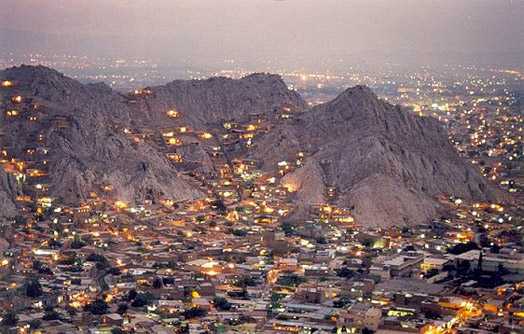
Deadly heat exposes Pakistan鈥檚 power problems.
This summer CNBC run a report titled after more than a thousand people died during heatwaves during the first days of Ramadan. Insufficient preparedness for the heatwave is largely seen as the cause of deaths, yet the context of the protracted electricity crisis in Pakistan is also during this summer鈥檚 heatwave. Pakistan鈥檚 energy crisis has worsened over the past few years, with increasing gaps between electricity supply and demand in the country. The crisis has been reported on for several years, and future solutions have recently been examined by the and the (NOREF). According to Pakistani daily The Dawn, however, 鈥樷��. Future scenarios seem rather bleak, as private electricity providers are blamed for the current critical situation, together with the Government of Pakistan.
Seventh largest remittance receiver in the world
Pakistan received more than 18 billion USD in remittances in the financial year 2014-2015. This represents a continued increase from previous years in registered international remittances. , and remittances are equivalent to 6 per cent of GDP. The continued growth in registered remittances to Pakistan throughout the Global Financial Crisis is partly connected with the , run jointly by the State Bank of Pakistan, the Ministry of Overseas Pakistanis and the Ministry of Finance. The PRI has contributed to the steady growth in remittances sent to Pakistan via channels that pass through the State Bank of Pakistan. As such, this policy measure must be seen as a success in serving the purpose of increasing remittances which pass through the banking system, and boost the potential for further future remittances to Pakistan. , which provides much needed financial resources to the country. This is a stark contrast to the effectiveness of policy measures put in place in relation to the protracted electricity crisis.
Implications of the electricity crisis for remittance-senders
The protracted nature of the Pakistani electricity crisis is taking its toll on industry and businesses, as well as ordinary people and their everyday lives. For migrants and their families, the electricity crisis also plays a role, both in securing livelihoods, and in opportunities for planning for a sustainable and economically viable future. Through , we understood the salience of the current electricity crisis for every aspect of remittance-sending. Whilst those migrants who could increase volumes of remittances to compensate for increasing costs did so, for others the only option remaining was diverting remittances from other purposes, in order to fund alternative electricity sources. The protracted nature of the electricity crisis also has implications for considerations about return migration, for the opportunities for international migration of further family members, as well as for perceptions of the investment climate in Pakistan, which is not seen favorable by migrants. Rather than investing in businesses, remittances are a way to mitigate the detrimental effects of the electricity crisis for the everyday lives of family members in Pakistan.
When crisis becomes normal
Power cuts and electricity shortages are commonplace in many developing countries, in particular during dry and hot summers. What makes the Pakistan situation into a crisis? Arguably, this is connected with the scope and duration of the electricity shortages. Whilst rural areas experience power outages of up to 20 hours per day, urban centers like Karachi may have power half the time. Power cuts are often unpredictable, and therefore impossible to plan around, further compounding the detrimental effects on Pakistani economic growth and local businesses. The gradual on-set of the critical power shortages in Pakistan entail a gradual slide into crisis in lieu of normality. Whilst advice about future solutions is rife, so is agreement that no quick-fixes are available. However, the fact that Pakistani authorities have been able to set up a joint inter-departmental initiative on remittances, should be seen as a sign that despite lacking measures to address the electricity crisis, future solutions might be possible.
This blog post is .
Related comments