Where are the Women in Peace Agreement Implementation?
Posted Monday, 29 Oct 2018 by Louise Olsson & Madhav Joshi
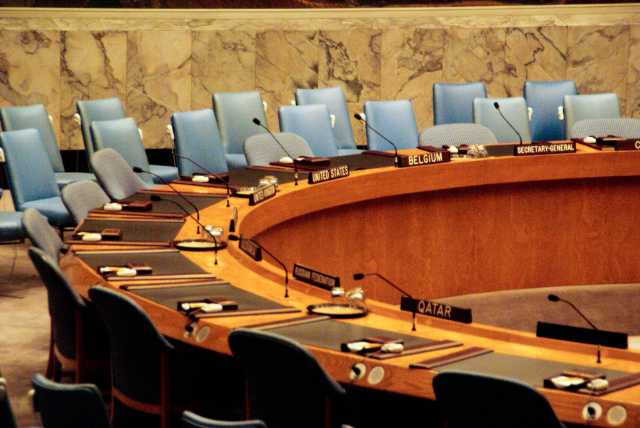
“In 2020, the United Nations, Members States, regional organizations and civil society will mark the 20th anniversary of resolution 1325 (2000). The lead up to this milestone and the anniversary itself, provide important opportunities to highlight and appraise progress and revise strategies…” (S/2018/900, 2018).
An upcoming event which sets the tone for this year’s Security Council Open Debate on Women, Peace, and Security is the quickly approaching 20th anniversary of , the first resolution on Women, Peace, and Security. Unfortunately, the UN will be able to report on in peace agreement negotiation and implementation. The Secretary General’s report is refreshingly frank in its description of the problem—“chilling reading” as observed by the Swedish Foreign Minister in her Open Debate statement on October 25th. Moving forward, the Secretary General has noted an important role for systematic research and names the as an example.
In fact, results from the Barometer Initiative—a mechanism for technical verification and monitoring of the implementation of the accord as called for in the Colombian Final Agreement (, page 223)—demonstrates that the implementation of stipulations focusing on women’s inclusion, security, and rights (i.e,. gender provisions/stipulations) require special attention. As argued by the UN Secretary General:
“To date, little attention has been paid to gendered provisions in monitoring arrangements and modalities for implementation of peace agreements. Even less attention has been paid to the inclusion and meaningful participation of women across each” (S/2018/900, 2018).
The Colombian Final Agreement is in many respects a model agreement—with 130 out of 578 stipulations recognizing gender differences—and has provided into how to strengthen the negotiation phase.
Nonetheless, as noted by the UN Secretary General: “Without implementation, the most well formulated provisions have no power” (S/2018/900,2018). Unfortunately, ourdata on accord implementation clearly demonstrates that the implementation of gender stipulations are lagging behind general implementation. As of July 2018, the Colombian Final Agreement had recorded some level of implementation for 66 percent of all stipulations. Nearly 32 percent of the 578 stipulations have either intermediate or full implementation status; however, more than 50% of those provisions which feature gender stipulations have yet to be initiated.
Our project also provides potential explanations for the meager success of implementation efforts thus far. First, translating stipulations into law—and then advancing implementation at the national and community levels—requires resources and capacity building. Low levels of capacity might be even more profound for implementing gender stipulations, and often highlights the need for capacity building—for example, training or expert functions—in order for institutions to effectively improve gender equality.
Second, the implementation gap on gender stipulations could be a matter of sequencing. With limited resources and institutional capacities, only a limited number of stipulations can be prioritized at any given time during the implementation process. If gender stipulations are considered to be less of a priority—which might often be the case—then these will be addressed later in the process, if at all.
The third possible explanation, also discussed in , underlines the role of power and hierarchies. Peace agreement implementation is a dynamic process that mobilizes social, economic, and political actors at the national, regional, and community levels. Women’s organizations and actors pushing for gender equality often start from a weaker power-base; in fact, resistance to gender stipulations in the peace agreement in Colombia became evident as early as 2016 in the political debate leading up to the referendum.
In sum, a dismal implementation outcome would affect not only national but also global debates in the process leading up to the 20th anniversary. But the opposite is also true. Strengthened efforts to realize the gender stipulations of the Peace Agreement can help set new standards for future peace processes elsewhere. As Resolution 1325 turns 20, Colombia could present a shining example of a state working productively—alongside civil society actors—to secure a more equal peace. As concluded by the Secretary General: “We face a true test of our commitments in the lead up to 2020” (S/2018/900,2018).
This piece is based on a policy brief authored by Rebecca Gindele, Madhav Joshi, Louise Olsson, Jason Quinn, Elise Ditta, and Rebecca Méndez, entitled Implementing the Final Colombian Peace Agreement, 2016–2018, GPS Policy Brief, 1. Oslo: ÌÇÐÄÍøҳ°æ.
Related comments
![Фото: Атлантический совет / Евразийский центр [text for the photo]. Atlantic Council / Eurasia Center](https://cdn.cloud.prio.org/images/2fdc5ace6a3c4e88bc368dba966c2858.jpg?x=900&y=300&m=AutomaticCover&hp=Center&vp=Leading&ho=0&vo=20&)