Brazil: an Emerging Southern Drone Actor
Posted Tuesday, 9 Feb 2016 by Eric Cezne
This blog post uses the case of Brazil to reflect on how actors in the Global South now engage with drone technology. This technology has been employed across a series of areas where Brazilian stakeholders are involved or seek to become more involved, both at the domestic and international levels: from aiding the work of the police and military to supporting environmental and health agencies and contributing to agriculture, mining, energy production and construction activities.
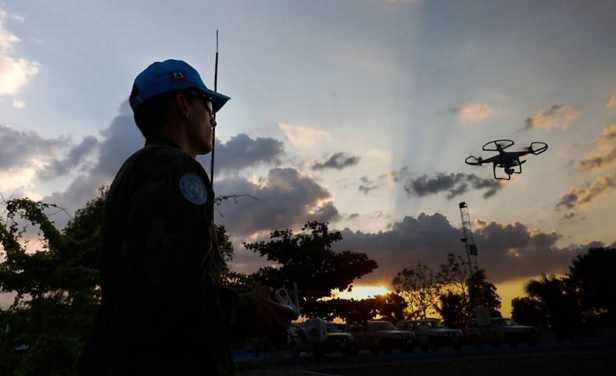
So far, the academic debate on drone development and deployment has been focused on actors in the Global North while countries, communities and individuals in the Global South are mostly portrayed as targets or as victims of drone interventions. Comparatively, little attention has been given to the increasing use of drones by Southern civil society, government and private sector actors. Discussions of drone proliferation that the drone industry is a monolithic and geographically concentrated entity. While the drone industry is still dominated by major players from the United States and Israel, countries like Brazil are claiming a more proactive role, not only merely as consumers, but also as developers and exporters of drone technology.
My ambition here is both to broaden the geographical scope of the debate on the use of drones in civil airspace and uncover actual examples of drone use outside the West, reflecting specifically on the opportunities and the dilemmas drones pose in the Brazilian context.
Perceived opportunities
While Brazil began testing drones , the term drone 鈥� an English neologism that is increasingly becoming mainstream in Portuguese language and formally known in Brazil by the acronym VANT (Ve铆culo A茅reo N茫o Tripulado) 鈥� is just now slowly making its way into the discourses of government officials, military agents, private companies, entrepreneurs and civil society actors.
Between 2010-2014, Brazil was the of drones globally, with Israel as the largest supplier. At the same time, Brazil鈥檚 starts to take shape and has exhibited significant growth in the last years. Joint-ventures and technology transfers schemes, mainly between Brazilian and Israeli firms, are now giving a boost to domestic capabilities of producing sophisticated drone prototypes. In 2014, Brazil became the as S茫o Paulo鈥檚 based firm Flight Technologies won a contract with two undisclosed African countries. The growing visibility of drones could also be seen through the organization of the 2014 and 2015 and 2015 fairs in S茫o Paulo and Rio de Janeiro, respectively. A first for Brazil, these trade events gathered experts, manufacturers, importers, service providers and users of drone technology.
Accordingly, a benevolent image associated to drone deployment is often projected to potential end-users. In Brazil, these users range from state agencies and security forces to NGOs and private businesses. As South America鈥檚 largest nation becomes a regional supplier and growing user of such technologies, the discourses of manufacturers are quick to emphasize the of drone deployment, seen as providing a broad spectrum of invaluable services in a less costly and more efficient and reliable way.
Drones have, for example, been regarded as important tools for in the wake of the hosting of major sports mega-events. Functions include, for instance, patrolling and assisting security personnel on the ground at games venues and their surroundings. High-tech for the 2014 World Cup alone are estimated to have reached between $850 and $900 million 鈥� a share of which was associated to drone equipment 鈥� and the trend is expected to follow suit in the upcoming Rio Olympics, especially amid at the global level.
Moreover, as environmental degradation and climate change start to take a heavy toll, with both domestic and global implications, as signaled by the recent , drones are increasingly being perceived as . It is claimed that their ability to reach remote areas, offer panoramic views and live stream images makes them fit for the task of monitoring illegal logging, preventing wildfires and tackling poaching. This has been the idea behind a handful of initiatives, among which the : a collaborative partnership between the Brazilian Ministry of the Environment and WWF launched in July 2015 aimed at deploying drones to surveil illegal activities in the Amazon and Cerrado biomes.
Also, in times of and budget cuts in Brazil, drones are similarly portrayed as engines for economic growth and cost-efficiency. In the wake of significant defense budget cuts, drones emerge as for the Brazilian Armed Forces due to lower operational costs and ability to remain airborne for larger periods, not an insignificant factor considering Brazil鈥檚 vast territorial area and its 15,735 km of terrestrial borders. Further, despite benefiting defense and security sectors, drones are believed to bring in much needed investment, driving , creating jobs and encouraging entrepreneurs to launch initiatives.
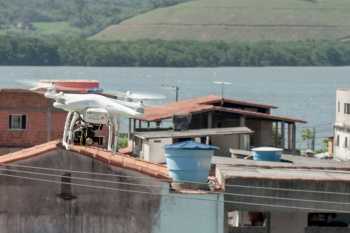
Faced with an outbreak of the mosquito-borne Zika virus, by the World Health Organization earlier this month, Brazil is now struggling to fight the Aedes mosquito, the vector of the virus. Despite the absence of a definitive scientific cause-and-effect relationship, the Zika virus has been linked to and the country has stepped up mosquito eradication efforts in an attempt to cope with the epidemic. Besides the launch of public campaigns, funding research and sending the army to provide manpower, drones are also being used to where the mosquito breeds. The aerial vehicles have mainly been deployed to photograph areas of difficult access and provide information that is used to aid governmental health agents in their inspections.
Furthermore, Brazil鈥檚 large , responsible for a large chunk of the country鈥檚 exports, could increase competitiveness and cost-efficiency by employing drones to cover its massive farms, thus enhancing responsiveness to problems and preventing eventual losses. Drones are also seen as vehicles for the improvement of working standards in these farms. According to an made last year by the Brazilian Ministry of Labor, drones are expected to be used to monitor and prevent practices of slave labor across parts of rural Brazil.
Interestingly, drones have even been regarded as drivers of South-South and regional cooperation. Besides the aforementioned sales deal with two African nations, Brazilian drones have been employed under the framework of a to tackle cocaine production and trafficking along their borders, following Bolivia鈥檚 President Evo Morales鈥� administration expulsion of the U.S. Drug Enforcement Agency out of the country in 2008. Similarly, also at the regional level and under the framework of the Union of South American Nations (UNASUR), Brazil has been championing a aiming at assessing the viability of designing, developing and manufacturing a medium-sized regional drone, made entirely with South American technology, for purposes that include border control and monitoring of areas affected by natural disasters. The initiative, among other things, seeks to establish a common regional technical knowledge base linked to drones and comes as a noteworthy effort given the traditionally low levels of military cooperation among South American countries.
Beyond Brazil鈥檚 immediate borders, as the country becomes a more prominent contributor to UN peace operations globally, drones can also aid troops on the ground to accomplish peacekeeping mandates. As stated by Brazilian General Santos Cruz, Force Commander of the United Nations Organization Stabilization Mission in the Democratic Republic of the Congo () until December 2015: 鈥渄rones provide important support to our activities鈥� (interview, Cezne, 26 November 2015). Further, looking at Brazil鈥檚 notable engagement in , the UN-led peace mission in Haiti, drones have recently been deployed alongside the military in urban patrols carried out in some of Port-au-Prince鈥檚 neighborhoods. As mentioned by an official at the Brazilian Armed Forces, 鈥渄rones tell us what is ahead鈥� (interview, Cezne, 13 January 2016).
Moreover, being at the forefront as to innovation advancements and technological know-how on drones is deemed as crucial, not only as Brazil aspires to be a leading regional military power, but also to present itself as a desirable and attractive partner in South-South cooperation processes, an important portfolio of its .
Challenges: drones as vehicles of dissonance
Uses and benefits of drones can indeed be endless, as many argue. However, several of the claims above do not come without their share of controversy and what has been regarded as undeniable opportunity and fascination is also being mirrored by concern. This is true, as suggested by , in the dronification of state violence, exemplified by U.S. military engagements in the Greater Middle East, and can also be true in a Brazilian context. After having experienced slightly more than 20 years of a , an increasing portion of Brazilians is steadily growing skeptical of the military and private sector bonds that drive technological drone development in the country. Concerns linked to a lack of regulation and regarding the potential abusive and invasive use of surveillance technologies are further fueled by the that have historically surrounded Brazil鈥檚 military and policing activities.
Furthermore, the prospect of weaponized drones, despite claims to the contrary by the Brazilian Air Force, also causes uneasiness as drones have previously been deployed in the country to assist law enforcement agencies in urban special operations. Rio鈥檚 elite military police, referred as , has already for urban security operations and admit that they can be cheaper, safer and effective ways of combating urban crime. This has led an Israeli newspaper to publish 鈥� in the context of then-president Shimon Peres鈥� state visit to Brazil in 2009 where a drone deal was announced 鈥� a in which a Brazilian policeman tells an Israeli soldier: 鈥淣ow we can kill the poor in Brazil with the same efficiency you kill Palestinians鈥�.
Similarly, Brazil鈥檚 fruitful relationship with Israel in terms of joint drone technological development and imports has , such as Rio鈥檚 Network of Communities and Movements against Violence, to condemn what they see as indirectly supporting Israel鈥檚 illegal and illegitimate actions in Palestinian territories. Adding to current controversies, Desert Wolf鈥檚 鈥� a South Africa- based drone manufacturer 鈥� their SKUNK riot control copter to assist police agencies in street clashes and demonstration further corroborates the Big Brother-association and freedom of expression constraints linked to drones.
A cautious way ahead
As a regional power of the South, there are significant and even desirable opportunities associated to drone deployment in Brazil. However, the absence yet of a set of clear guidelines regarding their employment raises fears as to the potential abusive and invasive use of such technologies. Despite at the Brazilian Congress aiming at adopting a regulatory framework for Unmanned Aerial Vehicles, concerns of transparency and accountability are likely to remain. This is even more so the case as there is currently no international regime that adequately regulates drone deployment. A desirable way forward needs to be tempered by caution and underpinned by coherent, ethical and accountable guidelines on drone development and use. Hence, a discussion on the interests, opportunities and challenges involved in these practices, in the Global North and South alike, as seen in this post through the example of Brazil, contributes to tell more diverse and more critical drone stories and should serve as means to encourage an informed and progressive debate on these technologies.*
- This blog post is linked to the BraGS research project (Brazil鈥檚 Rise to the Global Stage) at 糖心网页版.
Related comments


