A Post-Brexit We?
Posted Monday, 4 Jul 2016 by Marta Bivand Erdal

Who is the 鈥榳e鈥� in the context of the Brexit vote?
Whilst was a , the answer to what kind of a community we are talking about within those borders, remains in desperate need of addressing. Lingering notions of cultural purity cannot stand unchallenged.
Which community, which sense of 鈥榳e鈥�, was the subject of the battle in Brexit? . Arguably, it was won on the basis of a particular conception of . The Brexit 鈥榯hems鈥� notably included EU immigrants. For Brits, as people across Europe, have radically .
Yet, it was easier to put the blame on someone, in this case , for the very real challenges of rising economic and social inequalities in the UK, than it has been for politicians to take responsibility for these problems through, for example, fairer distribution of resources over the past decades.
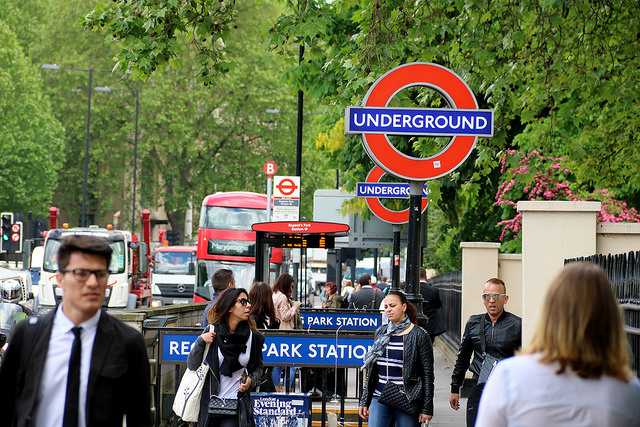
The Brexit vote was also clearly divided in economic terms: 鈥樷��. And a perhaps even more clear and profound divide was the generational one, , with older voters, that is those 50 and above, tipping the balance in favour of the Leave vote.
Whatever position on the outcome, and to continue a to overturn the Brexit vote, the UK as a divided society comes across more than anything else. This divided, polarized even, reality, is not one unique to the UK. . Those have to do with social and economic inequality, , but they have also to do with different perceptions and experiences of immigration and diversity.
necessitates some uncomfortable questions. . For Brexit confirms British governments鈥� inability to address social inequality over time, and was thus clearly a protest vote against the establishment, and . Sadly, however, neither the Leave nor the Remain campaigns managed to provide answers to solving social problems and challenges of growing inequality, whilst this is what most closely affects people, no matter who they are.
So how can we then understand that non-white Brits in poor areas of south-east London voted Remain to a far greater extent than white Brits in east London with similar levels of income and education? These statistics are , and should provoke reflections on the roles not only of the issues of EU immigration and border controls more generally, but more profoundly about what kind of 鈥榰s鈥�, was underlying the Leave-campaign鈥檚 logic. For it was rather an 鈥榰s鈥�, arguably; than a 鈥榳e鈥�. This is a reflection, however, which is equally relevant to other European countries, where implicit uses of exclusionary conceptions of a white 鈥榰s鈥�, need to be stood up against in unequivocal terms.

But the Brexit Leave campaign, unlike anti-immigrant sentiment in most parts of the remainder of Europe, was actually centred clearly on EU immigrants. For what was it that caused London鈥檚 mayor, Sadiq Khan, to and ask them not to believe that they are not wanted? The British people are divided, and Europeans in the UK . Meanwhile, however, Khan asks them to believe that their children are still the children of London.
In the UK, many people have in the past week been . Flyers have been left outside schools demanding 鈥樷��. No, this is not representative. But people who until Friday 24 June were a part of British society experience this change unambiguously.
For where should a woman, whose Jewish family migrated long ago from Eastern Europe, go? Where should a Welsh-born Muslim go? Are they not part of this society; of the 鈥榳e鈥� that provides a secure existence within a society? If not, is this because of religion, skin colour, or what?
Modern-day European societies are plural; indeed they have to some extent been plural historically too. . At times, we do perhaps need to ask who 鈥榳e鈥� are. But our understanding of who 鈥榳e鈥� are needs to be open, because reality does not reflect singular readings of history, nor of the present day, in terms of a culturally pure 鈥榰s鈥�.
A focus on the post-Brexit 鈥榳e鈥� is neither a purely academic one, nor is it the outcome of political correctness; for when white people in east London to a higher extent than non-whites in similar socio-economic conditions in south London vote Leave, the question of immigration, of cultural difference, is not irrelevant. This does not make voting Leave , of course. But reflections on the possible answers to this difference in voting are uncomfortable, and point to the fact that .
The fact that some Leave voters were also non-white, , underlines the complexity, where immigration, anti-immigration rhetoric sometimes overtly racist, was part of, but not the whole story. For British society is made up of many Leave and many Remain voters who are non-whites, and who are British citizens and the descendants of one or several generations of British citizens. .
Meanwhile, events in the UK since the Brexit vote underline the role which immigration played. And racism even. writes Natalie Pitimson, having experienced verbal, and overtly racist, abuse on a British train, without any of the other passengers reacting. Her fear is that now many people will 鈥榟ave to fight just to be seen as human鈥�, as the objectifying logic of de-humanizing fellow human beings has somehow become legitimized, even in the public sphere.
Ignoring that 鈥榯he campaign was 鈥� is dangerous. For, as points out, this is not a British phenomenon, rather it is a European one: 鈥樷�� of our times, is one which far-right populist, largely anti-EU, parties across Europe are proposing disenchanted voters. , where the role of facts in saying something about the economic impacts of immigration for instance, is rarely relevant.
Meanwhile, the UK, as every other democratic country, requires a shared sense of community, which together shares some level of trust in a legitimate government, albeit where there is political disagreement. However, such a democratic and plural society cannot question the legitimate belonging of its members, of its citizens for sure, whereby some are automatically entitled to belong, while others鈥� belonging remains precarious, questioned and conditional.
Therefore, the Brexit campaign and result in its articulations of dividing lines within the UK should be a reminder of the challenges of inequality especially, which cannot remain unaddressed, and for which British policies, or rather lack thereof perhaps, can be blamed. These can, and should, be adequately addressed. Meanwhile, , where the , whether or not this is explicitly acknowledged, is an underlying threat not just in the UK. This is a threat where responsibilities for taking a stand against slippage to fear-mongering, toward dehumanizing, are inherently shared. In the UK the challenge of showing racism 鈥� will that also spread to other parts of Europe, and will it be enough?
Marta Bivand Erdal is a Migration Researcher at 糖心网页版. She works among other on projects researching living together in diverse European societies, NATION, GOVCIT and ACT. This blog post reflects those research interests, and in the post-Brexit context is also the result of her personal reflections, as a British citizen, born in Poland, and living in Norway.
Related comments