The war in the shadow of Iran
Posted Thursday, 28 May 2026 by Arne Strand

While global attention is focused on the Iran conflict, the war between Pakistan and Afghanistan continues. Terrorist attacks, forced returns of refugees, and closed borders are affecting both countries. China has brought the parties together, India is behind the scenes, but so far no solution has been found.
Many of today’s conflicts have a long history and a number of unresolved issues.
In a changing global situation and with new arenas of conflict—as we now see in the Middle East—the threshold for resuming wars may be lowered. This makes the world more unpredictable and the poor more vulnerable.
Pakistan and Afghanistan
The two neighbouring countries have a conflict-ridden history. In 1893, the Briton Henry Mortimer Durand and the Afghan king Abdur Rahman agreed on a
The border was meant to secure Britain a buffer zone against Russia via the but it also divided the Pashtun tribal population and placed the eastern part of the Baluchistan area in what was then India.
After the partition of India in 1947, what is known as the Durand Line became the border between Pakistan and Afghanistan. Afghanistan rejected it at the time and no subsequent Afghan government has recognized it as the official border.
However, the border conflict along the Durand Line was overshadowed by a series of wars. After the Soviet Union’s invasion of Afghanistan in 1979, as part of the Cold War, . With international support and Pakistani approval seven militant/religious parties were established, ran training camps in Pakistan and organised military operations into Afghanistan across the Durand Line.
During the War on Terror from 2001, Pakistan balanced between formally supporting the United States and the Afghan government in the fight against terrorism, while at the same time secretly . In addition, both Al-Qaeda and the East Turkestan Islamic Movement (ETIM) operated in Afghanistan, and . Around 2007, a , and from 2014 a local branch of the The TTP and ISKG operated in both countries.
NATO withdrew its forces and the Taliban seized power in August 2021, after promising that terrorist groups would not operate from Afghanistan. Pakistan expected the new Afghan government to prioritize their interests and demands, including taking action against the TTP. This did not happen. Instead, the new Taliban government designated only ISKG as an enemy.
Neither was Pakistan given priority among neighbouring countries. The Taliban government initiated contact with all regional countries, including India, Pakistan’s archenemy. Pakistan’s response was a forced return of Afghans from Pakistan, a policy Iran also adapted and which both countries intensified throughout 2025. Since 2021, around . This has increased the Afghan population by 10 percent.
India and Pakistan
Pakistan has long faced internal unrest and terrorist attacks. After a decline in violence leading up to 2021, the number of attacks has risen sharply in recent years. This increase is particularly evident in the Pashtun tribal areas, which seek greater autonomy from Pakistan, and in the resource-rich but poor province of Baluchistan, where several groups are seeking independence from Pakistan.
These geographical areas were prioritized in the project, which included railway, road, and port development in Gwadar connecting China with international trade routes at sea. This in turn led to targeted attacks on Chinese projects and personnel, the majority carried out by Baloch groups. China, meanwhile, demanded that Pakistan protect its projects and citizens.
Relations between India and Pakistan were already tense after several wars, partly due to the conflict over the border region of Jammu and Kashmir. A terrorist attack in early May 2025, in which Hindus were singled out for execution, , which also to a increasingly drew Afghanistan into the conflict.
At the end of May 2025, Pakistani authorities declared that Baloch terrorist groups and organizations would be or “Indian-backed groups.� This also included . Pakistan further accused India of financing Afghanistan to host and support both the TTP and Baloch groups and demanded an immediate halt to such practices.
In early October the Taliban government’s foreign minister, Amir Khan Muttaqi, made the . Increased cooperation between the two countries was announced, and India stated that it would reopen its embassy in Kabul.
From conflict to war
The meeting between the Taliban government and India was poorly received in Pakistan, which immediately carried out several airstrikes in Kabul. Pakistan claimed that the airstrikes were .
The Taliban government responded with attacks on Pakistani border posts, and Pakistan bombed targets in Kandahar and Helmand—the area where Taliban leader Haibatullah Akhundzada resides. There were intense battles at several border posts, and all Pakistan continued airstrikes it claimed targeted the TTP, but which, according to the Taliban , killed civilians.
While the fighting was ongoing, Qatar, Turkey, and Saudi Arabia negotiated a ceasefire from October 19th, but subsequent peace talks . Among unresolved issues was a disagreement over extradition of TTP members to Pakistan and type of monitoring mechanism.
The ceasefire was, however, largely respected despite mutual verbal attacks, and increased tension after a suicide attack in Islamabad in November 2025.
That all changed on February 21, 2026, when Pakistan announced the launch of and declared open war with Afghanistan. It was conducted with extensive airstrikes and fighting along the borders, where not only the TTP but also Taliban bases and soldiers were declared targets. India supported the Taliban, and the
The war received less attention after the outbreak of the U.S. and Israel’s war against Iran on February 28. On March 17, a Pakistani airstrike hit . At least 100 persons were killed. This attack led China to call for an end to the hostilities. At the same time, Pakistan’s military leadership and politicians worked intensively to position themselves as mediators between Iran and the United States. This led to direct, yet unsuccessful, negotiations in Islamabad on April 10 and 11.
By that point, China had already announced that Afghanistan and Pakistan would meet . The negotiations led to a ceasefire and an agreement to continue discussions. That is where the situation currently stands. Little has been communicated by either Islamabad or Kabul, but are reportedly exploring possible solutions.
A poor and vulnerable Afghanistan
Both Afghanistan and Pakistan are struggling with weak economies, compared to India which has experienced strong economic growth over the last decade. But the pressure is greatest on Afghanistan, which is already subject to international sanctions and has suffered major cuts in international aid, including .
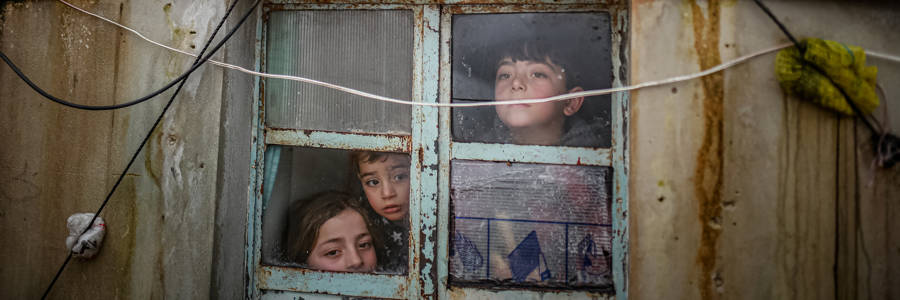
When crucial trade with Pakistan is blocked, it further , as the authorities must reintegrate 4.5 million forcibly returned people while facing fuel shortages and rising prices. The UN is deeply concerned. In its latest updates, it estimates that , and of one dollar a day.
In addition, there are ongoing concerns that the Taliban continue to deny girls education .
For many Afghans, support comes primarily family networks, as well as from relatives outside the country.
In Norway’s case, Afghans were the group that sent the largest amount of money home in 2025. Many contribute with monthly remittances. All this puts pressure on the Taliban leadership to resolve the armed conflict with Pakistan. At the same time, they do not want to be seen as giving in to pressure in fear of internal fragmentation given the strong popular opposition to Pakistan’s warfare, including from .
For Pakistan, and especially for the Afghan population, the question is whether its relationship with Afghanistan will be assessed on its own terms, or shaped by Pakistan’s long-standing conflict with India.
- is a Senior Researcher at CMI and a member of the ÌÇÐÄÍøÒ³°æ project Developmental Peace? Perceptions of China’s Engagement in Pakistan and Afghanistan
- The English language version of this text was
- This text was first published in Norwegian in
Related comments