How do women ambassadors reshape diplomacy at the UN Security Council?
Posted Tuesday, 24 Jun 2025 by Torunn L. Tryggestad, Anna Marie Obermeier & Asha Ali
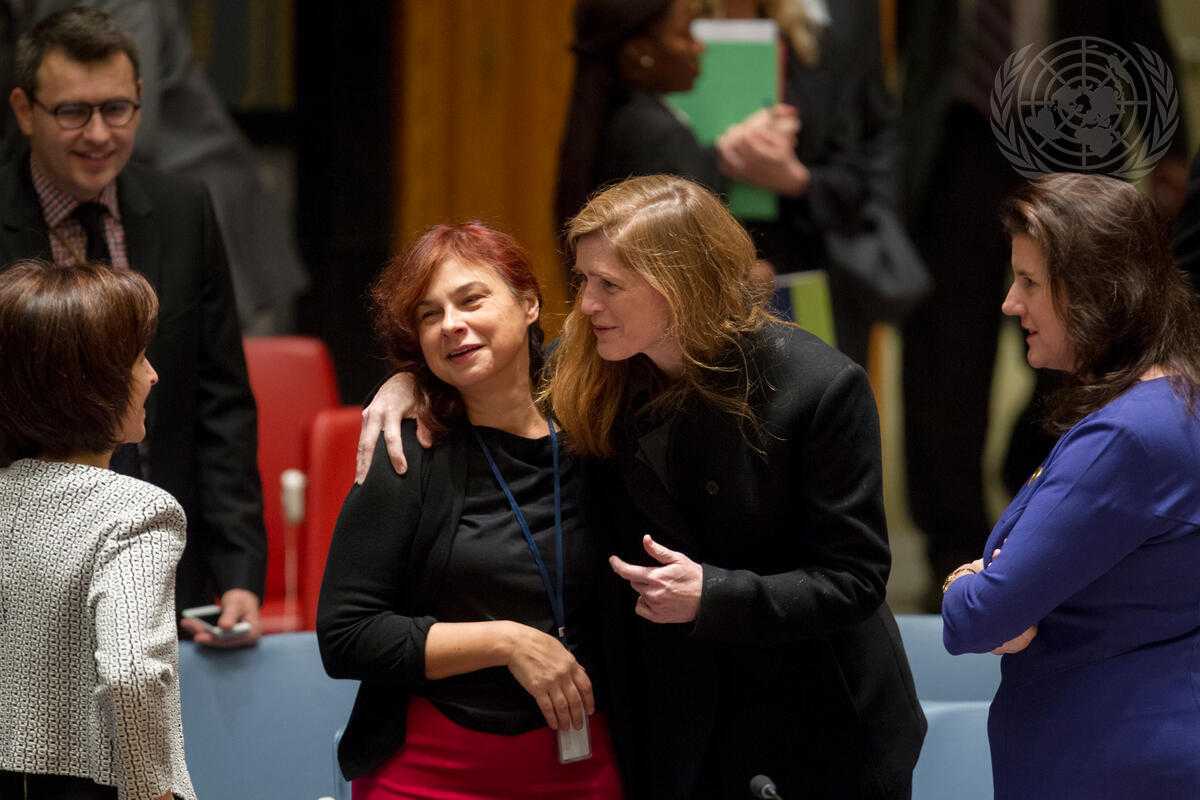
In 2014, the United Nations Security Council (UNSC) made headlines for an unprecedented reason: for the first time in history women made up 30% of its ambassadors (also referred to as ‘permanent representatives’). This milestone was hailed as a potential turning point for gender equality in diplomacy, as the UNSC up until then was known for its long-standing tradition of an all-male or one-female Council.
(2021-2024), women yet again made up a third of the Council’s permanent representatives (five women each year). This is quite a remarkable development from a gender equality perspective. But has this increase in women’s representation in any way changed how diplomacy is practiced at the UNSC?
This blog summarizes some key findings from the pilot project Women ambassadors in the UN Security Council: A Decade in Review.[1] Drawing on interviews with a group of women ambassadors and an original datasets on UNSC meetings from 2012 to 2022, the project explored how gender shapes diplomatic practice – not necessarily through policy outcomes, but through the subtler dynamics of workplace culture, communication, and inclusion.
Diplomacy’s gendered foundations
Diplomacy has long been a male-dominated field, shaped by norms that equate effective diplomacy with masculine-coded traits like rationality, assertiveness, and detachment. Women have historically been excluded from ambassadorial roles, and in 2023, they made up . This gender imbalance is not just a matter of representation – it influences how diplomacy is conducted.
Women entering these spaces as ambassadors must navigate norms and expectations that were not designed with them in mind. While the masculine culture of diplomacy is not inherent in the practice itself, masculine traits and norms have entrenched themselves in diplomatic practice, thereby also excluding women from the field. This raises critical questions: how do these gendered norms become embedded in diplomatic practices, and in what ways do they shape the day-to-day interactions between ambassadors?
The myth of the “softer” diplomat
One of the most persistent assumptions about women in diplomacy is that they will bring a “softer” agenda—prioritizing humanitarian issues, peacebuilding, or socio-economic issues. This assumption is primarily attributed to traditional depictions of women’s approaches to foreign policy as ‘dovish’ and men’s as ‘hawkish'. In doing so, this approach essentializes women and argues for their inclusion on the flawed assumption that they are inherently more peaceful. Further, it relies on the assumption that women are more empathetic, leading to promotion of the topics mentioned above. However, our research findings challenge this stereotype.
Our quantitative analysis of UNSC meeting topics shows no significant increase in so-called “women’s issues” during periods when women made up a critical mass of ambassadors. Even in 2014 and 2021 – years when women held 30% of the seats – there was no discernible shift in the Council’s thematic focus. As one of the ambassadors we interviewed put it, “The national interest has no gender.”
This reinforces a key point: ambassadors at this high level of global governance represent their governments, not their gender. Policy priorities are set in capitals, and diplomats are expected to advocate for them regardless of personal beliefs or identity. One could attribute this to the constraints of diplomatic agency – the fact that ambassadors rarely set their own policy agenda – as well as the rigid nature of the Security Council. But even in more flexible formats such as , there were no discernible changes in the topics discussed by Council members during the years with high representation of women.
The Limits of Critical Mass
,” suggests that any minority must reach a certain threshold—often cited as 30%—to influence institutional culture and policy outcomes. While this threshold was reached in the UNSC in 2014 and again in 2021–2023, we caution against expecting dramatic changes. For example, the years of 2014 and 2021 were no more likely to have thematic meetings on ‘soft issues’ or ‘women’s issues’ compared to years with a lower number of women ambassadors in the Security Council. Instead, we argue for a more nuanced understanding of how gender operates in diplomacy. Change is not always visible in resolutions or meeting agendas – it often unfolds in the margins, in the relationships built over lunch, the tone of a speech, or the decision to invite a new voice to the table. These are all essential traits to the practice of diplomacy – to which communication, together with negotiation, is a key component.
Subtle Shifts in Diplomatic Practice
While women ambassadors may not change the topics discussed at the UNSC, they do influence how diplomacy is practiced. We identified three key ways in which women ambassadors were reshaping the diplomatic practices in the Council:
- Promoting Inclusion: Women ambassadors often deliberately pushed for more diverse participation, including inviting female experts and civil society representatives to brief the Council, and not just on issues explicitly viewed as ‘women’s issues.’ This reflects a broader commitment to inclusive diplomacy. Other ÌÇÐÄÍøҳ°æ research has found a distinct shift in who is invited to speak at UNSC meetings since the adoption of UNSCR 1325, often due to the advocacy of women’s civil society groups and women ambassadors.
- Fostering Collegiality: The interviews revealed that women ambassadors frequently build strong interpersonal relationships with other women colleagues in the Council, creating informal support networks such as WhatsApp groups. These relationships help foster trust and collaboration, even across political divides. In 2014, Council relations were marked by challenging global events, including the aftermath of Russia’s annexation of Crimea, an Ebola virus outbreak, war in Gaza, and the height of the Syrian war. Still, the women ambassadors interviewed recalled a particularly collegial and supportive atmosphere. Despite the turbulent context, their relationships with one another contributed to a more encouraging working environment within the Council.
- Adopting a Different Communication Style: Another key aspect is changes in working methods characterized by interpersonal interactions, particularly when it comes to communication and collaborative style. For instance, women ambassadors took a lead in reorganizing the working methods of the subsidiary bodies of the Council, such as the sanctions committees. By inviting civil society briefers, committees were better informed, as they were able to hear the testimonies of those who were directly affected by the sanctions, and coordinated field trips for members of the committees. Many women ambassadors describe their approach as more empathetic, attentive, and bridge-building. They emphasize listening, referencing others’ statements (especially those of women colleagues and briefers), and engaging off-script – these subtle shifts can influence the tone and effectiveness of negotiations.
A Quiet Transformation
The increased representation of women in the UN Security Council may not have revolutionized global diplomacy yet, but it has begun to reshape its practice in subtle and meaningful ways. As one ambassador reflected, “We may not agree with each other... but we do understand each other in a way that’s slightly more insightful.”
This quiet transformation matters. It challenges the traditional, masculinized image of the diplomat and opens space for more inclusive, collegial, and collaborative forms of engagement. It also invites a broader reflection: are current diplomatic practices — and the assumptions about who diplomats are and how they should act — outdated? In a structure as rigid and formal as the UNSC, has it been able to keep up with changing norms in terms of representation and expertise?
As more women enter these historically male-dominated spaces, long-standing norms are being questioned. And as women challenge these conventions, men too may begin to unlearn gendered ideas of diplomacy. Our research suggest we may be approaching a critical juncture—one where entrenched, masculinized diplomatic practices are slowly being reimagined in favour of approaches that reflect the diverse and intersecting identities of today’s practitioners.
But this shift is not guaranteed. In an era of intensifying geopolitical tensions and institutional gridlock, there is also the risk of retreat — a return to tradition, to hardened hierarchies and old ways of doing diplomacy. Whether diplomacy continues to evolve — or stalls — will depend not just on who is at the table, but on how willing institutions are to embrace change.
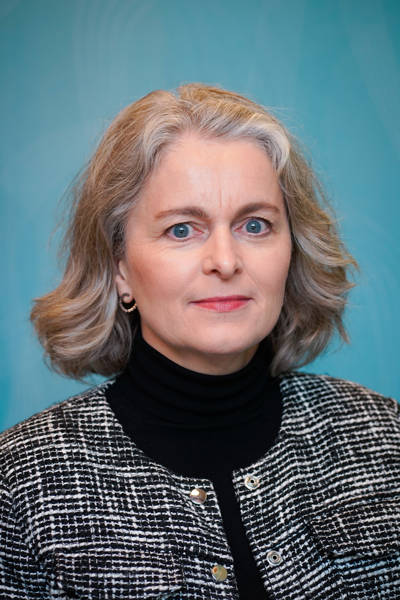
- Torunn L Tryggestad is Deputy Director of ÌÇÐÄÍøҳ°æ and Director of the
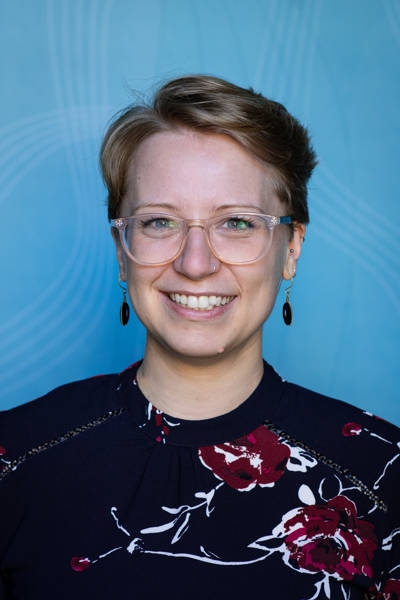
- is a PhD Research Fellow at the University of Bergen
- Asha Ali is the Coordinator of the
Read more about the International Day of Women in Diplomacy .
***
[1] See recent book chapter by Nora Kristine Stai, Torunn L. Tryggestad, Anna Marie Obermeier, and Kaja Sparre Bakke (2025). Women Ambassadors in the UN Security Council: Are They Shaping the Practice of Diplomacy? In Elise Stephenson and Kushi Singh Rathore [Eds.], Gender and Diplomacy: Critical Junctures, Innovations and Future Research Directions. Palgrave Macmillan. Available at:
Related comments
![Фото: Атлантический совет / Евразийский центр [text for the photo]. Atlantic Council / Eurasia Center](https://cdn.cloud.prio.org/images/2fdc5ace6a3c4e88bc368dba966c2858.jpg?x=900&y=300&m=AutomaticCover&hp=Center&vp=Leading&ho=0&vo=20&)
Posted by
All tags
