The Hype, Delusions and Risks of the Arctic Geopolitics
Posted Thursday, 24 Apr 2025 by Pavel K. Baev
The surge of political attention to the Arctic may appear counter-intuitive to the experts overtaxed with assessing the consequences of the global trade war, perplexed by the deadlock of the Ukraine War, and frustrated by the deepening indifference to the Gaza war.
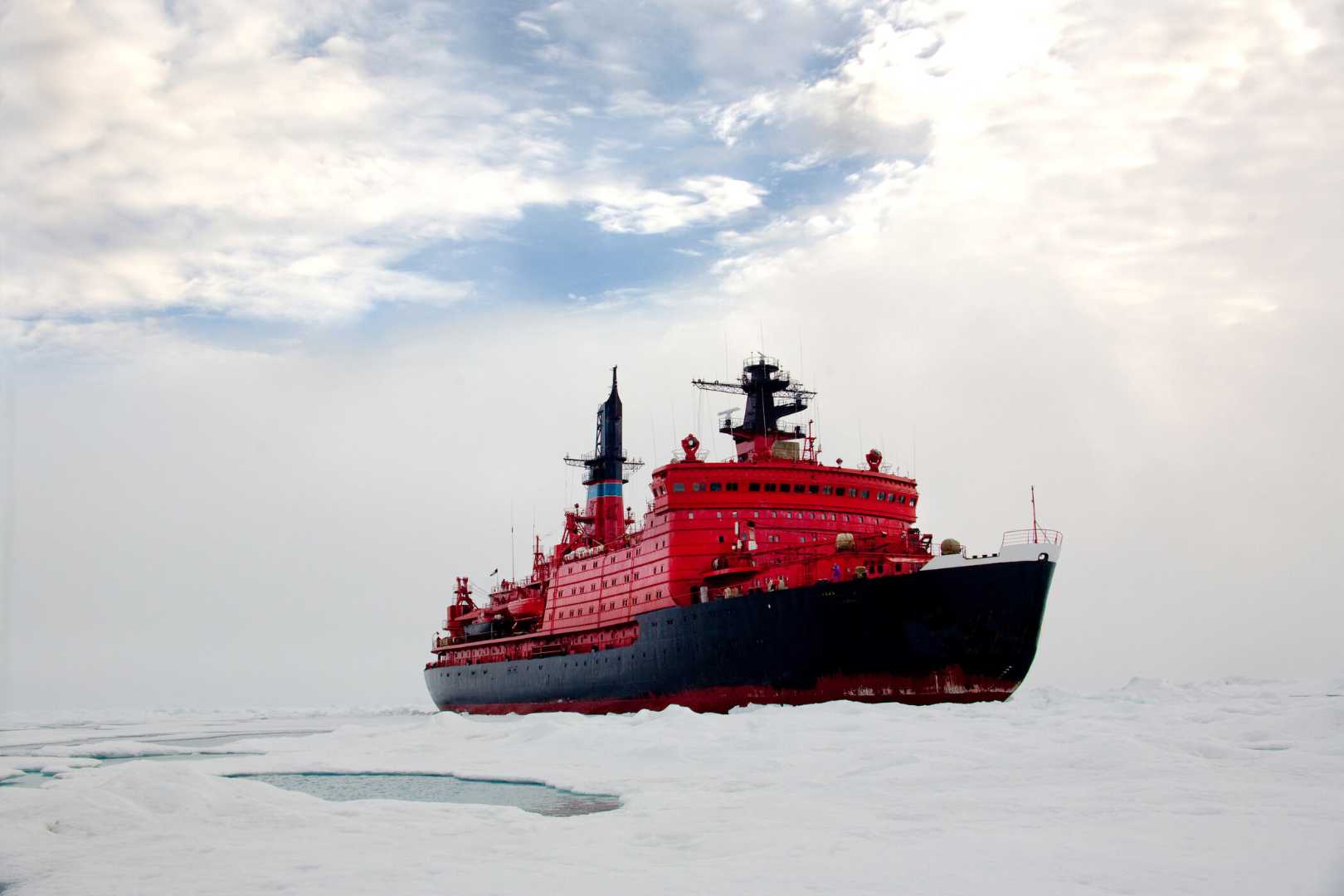
No notable power shifts are indeed registered in the High North, but it happens to be the region where President Donald Trump鈥檚 ambitions for grandeur meet President Vladimir Putin鈥檚 aspirations to assert Russia鈥檚 position of power 鈥� and exacerbate European worries about US disengagement from the collective security arrangements.
Neither of these drivers can stand a Realpolitik test of strict examination of national interests. But, in real policy-making, emotions and delusions often matter more than rigorous calculations of costs and benefits.
Climate change
One often invoked reason for rising geopolitical competition is climate change, and the Arctic ice is indeed retreating, albeit not as fast as typically perceived. The summer minimum was registered in 2012, and it is theoretically possible that the mark of 3.39 million square kilometres may be altered this year, since the is the lowest on the record.
Russian scientists have, nevertheless, recently that navigation in the Northern Seas will not be any easier by 2050, so the fleet of icebreakers needs to be modernized. The delays and cost-overruns with the construction in the Vladivostok shipyard of a new nuclear are, therefore, more than a little unfortunate.
An even greater problem for Russia is the , which causes deformations in the energy infrastructure in Siberia. on this phenomenon has been badly affected by Russia鈥檚 aggression against Ukraine, so the data on the volumes of into the atmosphere is rather approximate.
China鈥檚 activities in the Arctic
Another typical stimulus for Western attention is the alleged expansion of China鈥檚 activities in the Arctic. For several years after the publication of the White Paper in January 2018, which asserted the unique status of a 鈥淣ear Arctic State,鈥� were indeed on the rise.
In recent years, however, this trend has been reversed so that on the Norwegian Svalbard archipelago are still discussed, while the is blocked by the government in Oslo.
Beijing had explored opportunities for investing in Greenland, but has after encountering local concerns and disapproval from Copenhagen. Moscow remains the scope of cooperation with China in the Arctic, even if the need for investments is acute. China is careful to present its Arctic activities as strictly , and its interest in using the Northern Sea Route (NSR) as a transit route to the European markets is rather than acted upon.
Northern Sea Route (Sevmorput)
The expansion of this route (called Sevmorput in Russian) is one of Putin鈥檚 big ambitions for the Arctic, but his insistence on maintaining full control over the navigation is a major impediment for international investors. Investments in the port infrastructure are far below needs, so most of the on the Sevmorput is the LNG export from the Yamal Sabetta terminal.
Russian over the Arctic underpins its claim for expanding its by some 2.1 million square kilometres between the Lomonosov and Mendeleev undersea ridges and beyond the North Pole. The UN Commission on the Limits of the Continental Shelf has registered this claim. Still, it cannot issue a final because of the overlap with the claims submitted by Canada and Denmark.
Militarization of the Arctic
Instead of investing in the development of infrastructure, Moscow channeled funding into the construction of a along the Sevmorput. This course on accelerated militarization of the Arctic was a major concern for the neighbours and a , which insists on the peaceful development of the 鈥済lobal common鈥� in the High North.
Typically, this Russian military build-up is presented as a key justification for the increase of Western efforts aimed at countering this threat, but in fact, since the start of the Ukraine War, Moscow was compelled to downsize its Arctic garrisons.
The Northern Fleet has effectively lost capacity for amphibious operations as three of its landing ships were deployed to the and suffered hits from Ukrainian missiles and naval drones. Both the 61st Naval Infantry and the 80th Motorized Infantry are engaged in combat operations and have suffered heavy losses. Finland plans for along its 1.340 kilometres long border with Russia, but on the other side of this new Russian interface with NATO, hardly any troops are present.
The only element of Russian military might in the High North that is full strength and even gaining more capabilities is the squadrons of nuclear submarines, both strategic and multipurpose.
Attending the Arctic forum in Murmansk last March, Putin supervised the the Perm nuclear submarine and made time for a visit to the Arkhangelsk submarine of the same Yasen-class.
This threat needs to be monitored rigorously by the Northern European states, particularly as planted for tracking the UK nuclear submarines are discovered and duly eliminated. What makes this task feasible for the Nordics, who expand the pattern of joint exercises, like the in Northern Norway last March, is the inability of the Russian Northern Fleet to establish a 鈥� in the Barents Sea because of the lack of major surface combatants and the redeployment of most surface-to-air missile systems closer to the war zone.
Risks generated by Russia鈥檚 attempts to exploit its presumed superiority in the Arctic are serious and range from a possible catastrophic accident with a nuclear submarine, similar to the explosion that in August 2000, to a probable resumption of nuclear testing at the . Instead of examining these risks, keep speculating about the allegedly looming threats from NATO.
Even in the , the need to protect Russia鈥檚 control over the grossly exaggerated natural resources in the Arctic is presumed to be self-evident, while Western desire to gain access to these riches is depicted as the major driver of the escalating .
The new US discourse on the Arctic
These distorted assumptions are, in a peculiar way, reflected in the new US discourse on the Arctic, in which the goal of is advanced as an absolute imperative.
is invoked as the main rationale for this goal-setting, while the real value of its is unknown, and the costs of mining these minerals cannot be estimated even provisionally. The price tag is apparently not an issue in Trump鈥檚 far-fetched proposition for of 40 icebreakers. Characteristically, he is not offering to purchase Greenland but relies on crude pressure, so Denmark鈥檚 Prime Minister Mette Frederiksen cannot counter it with and has to take a firm stance.
Ensuring Arctic security is a complex task demanding the sustained efforts of many stakeholders, from experts in anti-submarine warfare to environmental activists. This collective work clashes with political agendas shaped by personal ambitions, delusional threat perceptions, and fanciful geopolitics.
- Pavel K Baev is a Research Professor at 糖心网页版
- This text was first published by
Related comments