Africa in the Global Disorder of Trumpism
Posted Monday, 7 Apr 2025 by Vamo Soko & Bintu Zahara Sakor
Africa is not a homogeneous entity. Unlike the United States or China, it does not have a unified political power capable of defending a common interest. Its cultural, economic, and political diversity presents both a complexity and a competitive advantage in globalization.
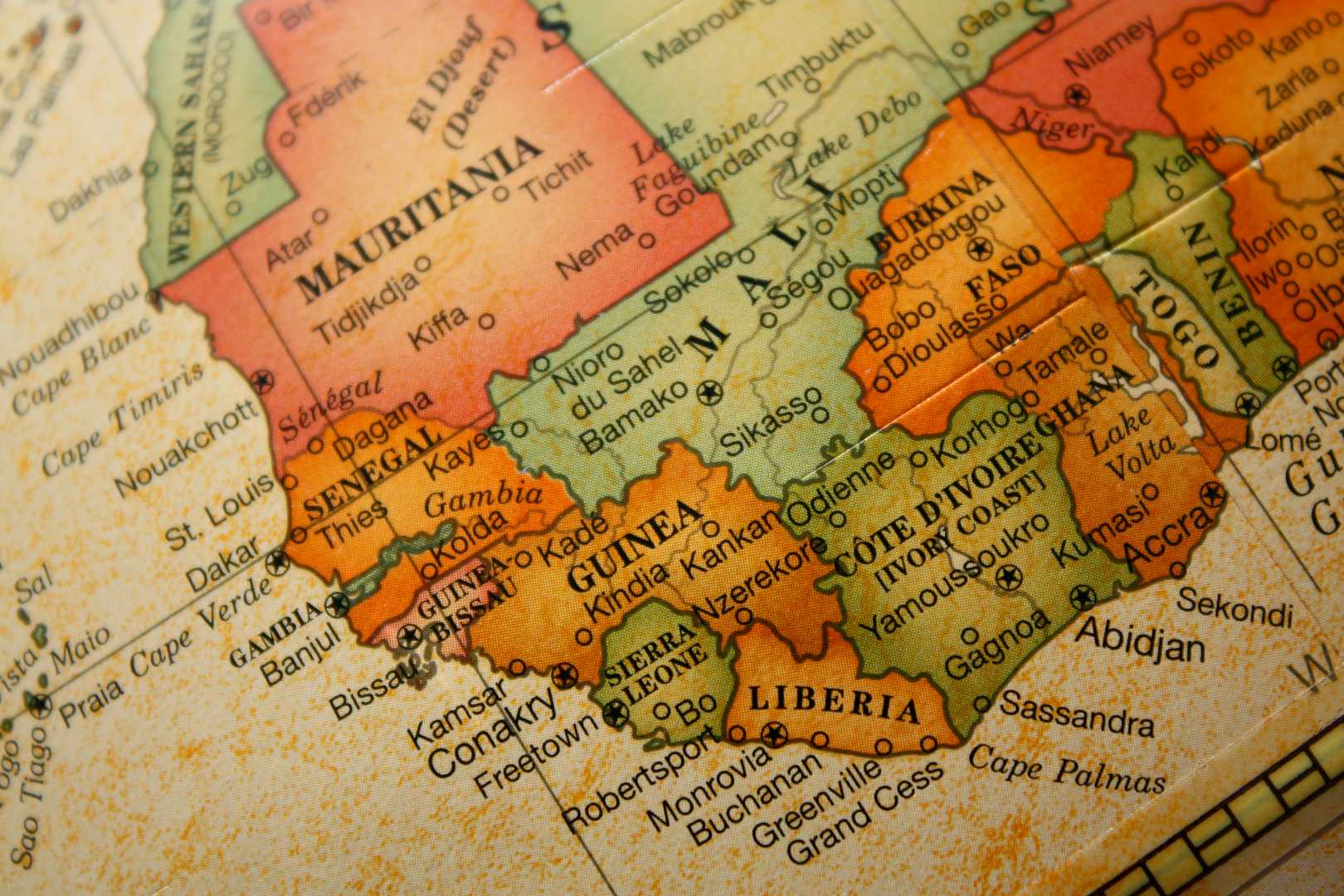
Africa is at the center of 21st-century challenges, particularly in natural resources and energy transition.
That is why many global powers (China, the United States, Russia, France, Italy, Germany, Japan, Saudi Arabia, Turkey, etc.) are courting the continent. The iPhone manufacturing process illustrates global interdependence and Africa鈥檚 role within it: the product鈥檚 R&D is carried out in the U.S., assembly and manufacturing happen in China, and raw material sourcing (coltan and cobalt, essential for modern technologies) occurs in the Democratic Republic of the Congo. This model highlights Africa鈥檚 crucial role as a supplier of strategic resources.
A World Dominated by Conquest and Expansion
We live in a world marked by territorial conquest, where major powers annex weaker nations to satisfy their thirst for power and seize their mineral resources. Today, three factors define the power of emerging neo-empires:
- Population size (for labor and talent).
- Market size (for production and capital consumption).
- Military strength (for defense and territorial expansion).
Several examples illustrate this dynamic: Putin鈥檚 Russia has annexed parts of Ukraine; Xi鈥檚 China considers annexing Taiwan; Trump鈥檚 United States has expressed intentions to integrate Canada and Greenland into its sphere of influence; and the European Union continues expanding eastward.
These conquests and annexations take different forms 鈥� political, economic, or military. This trend suggests that we are moving toward a world dominated by federations of states rather than unitary states. In this context, unitary states risk being marginalized and weakened, as their political structures no longer align with current geopolitical realities. The European Union, for example, is fragile today because its political organization is no longer adapted to global power dynamics, just as is the case with the African Union (AU). To play a strategic role in this evolving world, Africa must adopt a federalist approach.
Why Should Africa Adopt a Federal Approach?
With a population of 1.5 billion today (expected to reach 2.5 billion by 2050), a market valued at $2.9 trillion (projected to reach $10 trillion by 2050), and abundant mineral resources, Africa holds immense potential. Key figures include: 65% of the world鈥檚 arable land needed for future smart agriculture is in Africa. 40% of resources essential for the global energy transition come from Africa. Despite a challenging global economic environment, 15 African countries recorded over 5% growth in 2024. According to the African Development Bank (AfDB), Africa鈥檚 real GDP growth is projected to reach 3.8% in 2024 and 4.2% in 2025, surpassing the global average of 2.9% in 2024 and 3.2% in 2025. Africa remains the second-fastest growing region in the world after Asia.
Despite these advantages, Africa cannot play a strategic role without adopting a federal approach. The leaders must speak with one voice on the international stage. The continent must be united to become an economic and political powerhouse. Last but not less, Africa must ensure its own defense against both internal threats (terrorism) and external threats (economic and political interference).The lack of unity exposes Africa to internal divisions exploited by foreign powers, making it vulnerable to strategies of domination.
The First key Factor: Toward a New Dynamic of Federalism in Africa? (Case Study)
The Alliance of Sahel States (AES) 鈥� formed by Mali, Niger, and Burkina Faso 鈥� is a recent example of regional cooperation aimed at strengthening political and security autonomy. This alliance demonstrates a desire to break away from dependency on former colonial powers and establish a self-sufficient defense and economic framework aligned with African interests. This alliance could serve as a blueprint for a broader federal model across Africa, integrating the security aspect, through which the development of a joint military force to effectively combat regional threats. The economy, by facilitating trade, capital mobility, and workforce integration. And laste but not least, the Politics aspect, by creating shared governance structures to defend African interests globally.
If this regional federalism model succeeds, it could inspire other African economic and political blocs to follow the same path.
The Second Key Factor: Industrializing the Continent
Africa cannot carry weight on the global stage without a robust industrialization strategy. Today, the continent remains largely an exporter of raw materials, while real global wealth is derived from transformation and technological innovation. The three strategic pillars for Africa鈥檚 industrialization can be defined by developing local industries to process raw materials domestically and create added value. By increasing Investment massively in education and technical training to cultivate a skilled workforce. By creating an attractive regulatory framework to encourage investment and curb capital flight. If Africa aims to position itself as a key player in the new world order, it must transition from an extractive economy to one based on transformation and innovation.
Conclusion
Africa is a land of opportunity not only for foreign investors but also for its own entrepreneurs. Unlike past decades, when African wealth was primarily tied to politics, the rise of entrepreneurship is reshaping the landscape.
The 21st century could belong to Africa, but only if it:
- Unites under a common vision and adopts a federal approach.
- Defends its economic and geopolitical interests on the global stage.
- Industrializes its economies to break free from raw material dependency.
- Secures its territories from internal and external threats.
As Europe and the United States face existential crises, can Africa capitalize on this global chaos to establish itself as a pivotal player in the emerging world order?
- This blog post is published together with the post .
The Authors
- Bintu Zahara Sakor is a Doctoral Researcher at 糖心网页版
- Vamo Soko is a Geopolitics Analyst and Consultant at focusing on Africa. He has a Master鈥檚 degree in Political Science and International Development from University of Paris 鈥� Sorbonne. He also holds a Business Administration and Management degree from INSEAD
Sources
- and 鈥� (Posted September 17, 2022)
- and 鈥� ( Posted September 7, 2022)
- Gebeye, Berihun Adugna**.** 鈥�.鈥� Verfassung Und Recht in 脺bersee / Law and Politics in Africa, Asia and Latin America 53, no. 2 (2020): 95鈥�115
- Hansrod, Zeenat. 鈥�.鈥� RFI, July 9, 2024
- 鈥�
- The 鈥�鈥� report, published by the African Development Bank (AfDB), projects a resilient African economy with growth stabilizing at 4.0% in 2024-25, despite global challenges, and highlights the need for policy reforms to address structural issues and drive sustained growth
- World Bank (2024). Transforming African Development. World Bank, Washington, DC
Related comments