State Briefing: Lakes State
Posted Friday, 28 Nov 2014 by Fanny Nicolaisen & Øystein H. Rolandsen
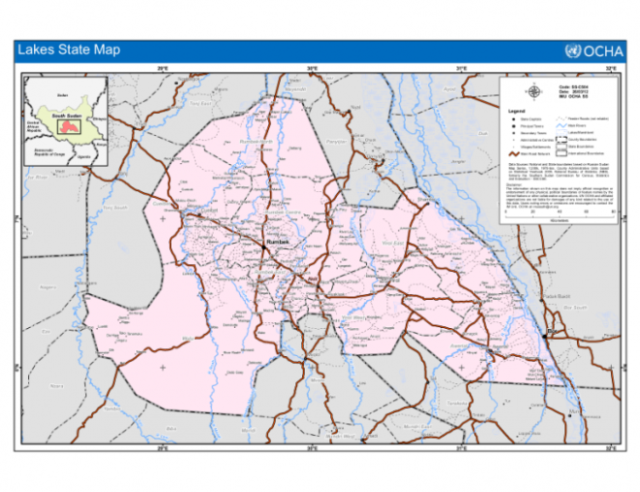
- State Capitol: Rumbek
- Approximate Population:
- Number of IDPs sheltering in the state:
Lakes State occupies approximately 40,235 sq km within the Greater Bahr el Gazal region and is bordered by Unity, Warrap, Jonglei and Western and Central Equatoria States. The majority of Lakes’ inhabitants are from the Dinka people, but Wulu county is mainly occupied by the group.
Lakes state has not been at the center of the major armed hostilities between the SPLM factions, but in January SPLA forces and defectors clashed frequently in Awerial county, as the latter were fleeing to opposition areas in Panyijar in . Local is escalating however and the security situation has deteriorated.
The main drivers of conflict in Lakes State have historically been inter- and intra county, and cross-border disputes over claims of territory and access to water and . Around 80% of Lakes states inhabitants are agropastoralists, and the state has been locked in a continuous cycle of cattle raiding and revenge killings since South Sudan’s independence in 2011. Prevalence of small arms coupled with poor relations between the general public and the contributes to the increased levels of violence.During two days in May this year, 156 people from the counties of Rumbek North (Maper) and were killed.
According to Small Arms Survey, many see the increased violence as “fuelled by a youth campaign to create insecurity and compel the president to remove caretaker Governor Matur Chut �. He was sworn in by President Salva Kiir on January 21 2013, following a Presidential Decree which removed Lakes state’s former Governor, Chol Tong Mayay. Caretaker governor Matur Chut’s has been criticized for his authoritative use of power, human rights abuses, harsh security measures and disregard for formal procedures. Civil society activists, intellectuals, lawmakers and traditional leaders have repeatedly called for Salva Kiir to remove him; even the recommended, in a unanimous vote, the removal of Matur Chut on August 25th 2014.
On 29 March, Lakes authorities introduced a dusk-to-dawn curfew and announced a forced civilian campaign to halt the violence. The disarmament process started in September across Lakes state, and also in neighboring Unity and Warrap states, and is expected to be completed within three . Previous disarmament attempts have led to clashes between SPLA forces and Lakes state, and it is reasonable to believe that some groups will continue to resist relinquishing their weapons.
The ongoing conflict in South Sudan has increased humanitarian strains on Lakes state authorities. Insecurity led to suspension of humanitarian organizations’ activities for several in some areas. Medical assistance has been hampered by lack of and staff. During the rainy season (May-October) humanitarian aid has been restricted by waterlogged roads. 20,000 IDPs fled from Jonglei to Lakes within the first couple of days of the conflict alone, most of them crossing the White Nile from . The Mingkaman camp in Awerial county, with population close to , hosts the majority of the IDPs in Lakes state. The living conditions in displacement sites have been dire due to and many IDPs have been forced to live in open areas. According to humanitarian actors in Lakes, IPDs are now increasingly fleeing from Awerial county to the southern part of , due to the intercommunal insecurity.
Fanny Nicolaisen and Øystein H. Rolandsen
Related comments