Droneland: Towards a Domestic Drone Theory
Posted Tuesday, 30 Jul 2019 by Arthur Bradley & Antonio Cerella
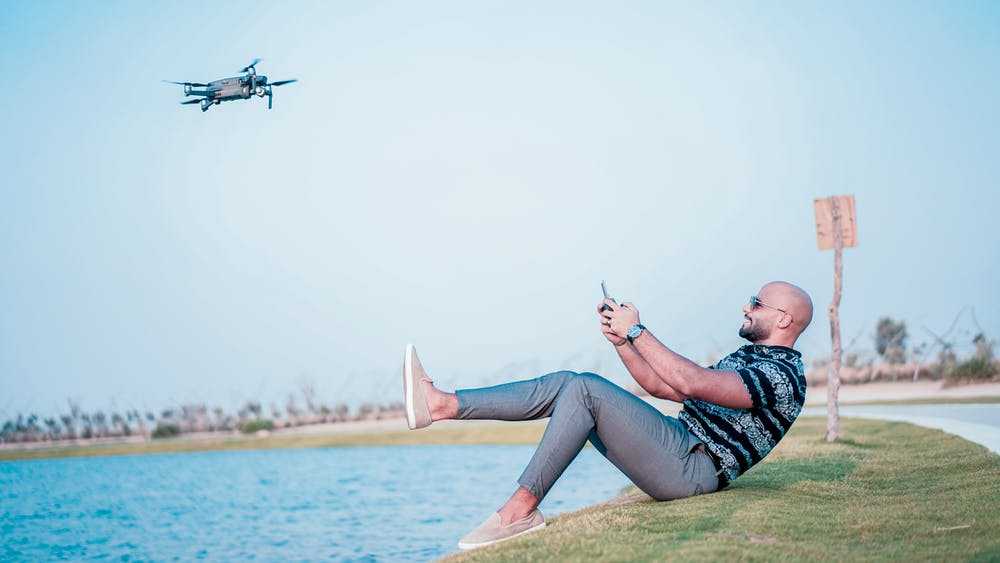
In December 2018, a civilian drone operator allegedly disrupted hundreds of flights at Gatwick Airport in the UK by flying an industrial class across the flight path of aircrafts, causing a major political and security incident. To be sure, the Gatwick drone was neither the first nor the last such incident 鈥� similar cases have since been reported at Heathrow, Newark, Dubai, and Dublin airports 鈥� but, nonetheless, it seems to represent a new moment in the (short) history of Unmanned Ariel Vehicles (UAVs). If we are all familiar with the deployment of armed predator drones in foreign battlespaces, and increasingly aware that drones are now also being deployed by domestic law enforcement and immigration authorities in Europe and North America, what happened at Gatwick Airport was the most visible sign of the emergence of a new species of non-state drone actor. In a direct reversal of the 鈥榥ormal鈥� power relation between the state and the citizen, the citizen herself is now able to deploy drones against the state 鈥� with apparent impunity.
To begin to understand what is at stake in the phenomenon of the domestic drone 鈥� a phenomenon which is by no means simply an abstract political or juridical concept, of course, but a concrete reality which is lived by citizens in their everyday lives 鈥� we now need a specifically domestic drone theory. It is revealing that most drone theory still tends to view civil drone use through the optic of its military equivalent: law enforcement UAVs are thus commonly read as a symptom of the growing 鈥渕ilitarization鈥� of police or immigration control. If this martial logic inevitably tends to reduce civilians to passive targets of state drones, we also now need to consider how civilians may actively engage with, resist or even enjoy their status as drone citizens. In such burgeoning fields as drone art, drone journalism, drone activism and the drone leisure industry, we increasingly encounter a citizen who is not simply a fearful, anxious or suspicious object, but a drone subject, actor or consumer who can exploit UAVs 聽for her own ends.
In and 鈥檚 articles in Security Dialogue, as well as in with the acclaimed artist Adam Harvey on the , we seek to begin the work of mapping the political geography of our domestic dronescape. To explore some of the complex ways in which civilian life is lived with, through and against the drone 鈥� from active or passive obedience, through complicity, to outright resistance 鈥� we focus on a range of empirical sites from the 2016 killing of by Dallas Police in what was reported to be the first domestic 鈥榙rone strike鈥� on a civilian on American territory, at one extreme, to the range of anti-drone surveillance clothing created by , on the other. What exactly, we ask, is at stake in the deployment of law enforcement, border patrol and other domestic drones? Is it a singular, exceptional and unprecedented event in the history of the modern state or the application of a pre-existent military logic? To what extent, finally, does it foreclose upon individual or collective citizen agency 鈥� or might it also make possible new species of civil participation, resistance and freedom? In all these ways, the domestic drone must remain under our critical surveillance.
This introduction is a part of the聽Security Dialogue special compilation 鈥楧roneland鈥� edited by Arthur Bradley and Antonia Cerella. An interview with Adam Harvey by Antoinio Cerella accompanies this compilation and can also be found on this blog, and two peer reviewed full-length articles:聽**by Arthur Bradley and聽**by Oliver Davis were published in the 2019聽聽50(4) of聽Security Dialogue.
Related comments