‘May peace not cost us our lives’: Reading Colombia’s peace process as hegemonic crisis
Posted Tuesday, 7 Jun 2022 by Richard Georgi
The Colombian government and the guerrilla group FARC-EP envisioned to make history when they sealed , which ended one of the longest standing armed confrontations in human history and promised the cessation of protracted violence. In post-accord Colombia, however, this promise has been eclipsed by . In my research, I encountered HRDs across the country to get their perspective on the significance and prospects of the peace process amidst societal conflicts and political violence.
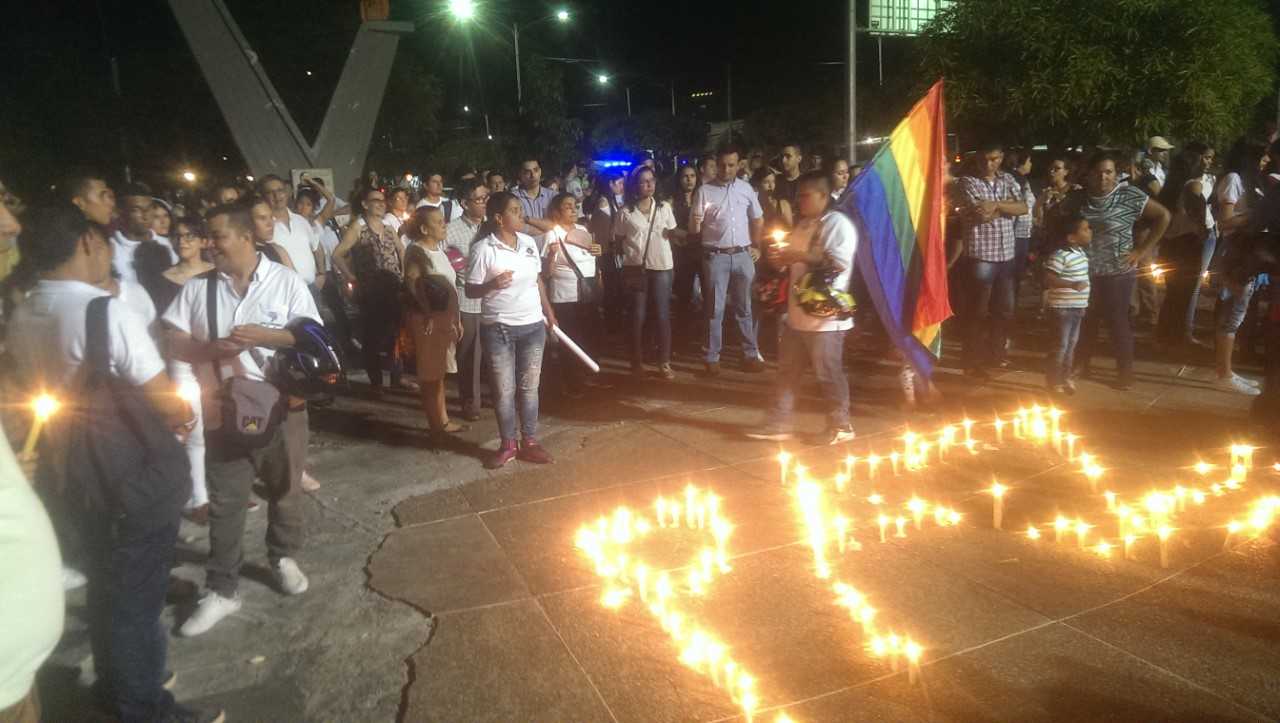
HRDs represent a key oppositional voice in Colombia for the transformative agenda of the 2016 Peace Agreement, . Yet, despite the significance of human rights organizations for Colombia’s political landscape, research has, so far, only engaged little with their evaluation of a peace process that is at risk of dying down even before it has been fully born.
Based on fifty qualitative, in-depth interviews with representatives of human rights organizations, I propose understanding the peace process as a ‘’, a term that I borrow from on . What the term helps us understand is that HRDs do not perceive of the peace process as ‘the passage’, or transition out of armed conflict towards a distant, and perhaps utopian, yet aspired state of peace. Instead, they foreground that the 2016 Peace Agreement came to unsettle a narrative, which the to bolster their policies: that is, that the sole reason for conflict and ravaging violence lies with the ‘terrorist threat’ posed by left-wing guerrillas. This has led to a crisis of commonly accepted imaginaries about violence and injustices that plague the country, and, thus, opened a window of opportunity for HRDs, who have historically argued that the path to social justice must recognize the violence perpetrated outside the scope, yet under the pretext of the armed conflict.
‘HRDs teach us that linear conceptualizations of war-to-peace transition can obscure how violence results from underlying political conflicts, where imaginaries of the past, present, and future are at stake’
In the eyes of HRDs, however, the recognition of structural causes and shared historical guilt in the 2016 Peace Agreement has posed a threat to those elites and societal sectors who have economically and politically benefitted from an . Under the banner of former hard-line President Uribe and his party, the Democratic Centre, the political right-wing in Colombia mobilized against the vision of peace expressed in the Peace Agreement, gathering sufficient support to and . According to HRDs, ‘peace’ itself has turned into the subject of fierce contention, ‘antagonizing’, or conjuring up political hostilities in post-accord Colombia between those who demand a profound transformation of the political order to guarantee justice, and those who want to restore the old order as a mere ‘farce of peace’. In this time of crisis—in-between the declared end of armed conflict and the deferred dawn of a new post-conflict order—violence against HRDs qualifies as political in the sense that its objective is to silence oppositional voices and, thus, to impose a docile consent for the vision of peace embodied by the political right-wing.
The testimonies of HRDs suggest an alternative view on the peace process that neither depoliticizes violence as common crime and a mere challenge of post-accord governance, nor reduces it to the mere harbinger of yet another bloody ‘graveyard peace’ in Colombia. HRDs teach us that linear conceptualizations of war-to-peace transition can obscure how violence results from underlying political conflicts, where imaginaries of the past, present, and future are at stake.
Related comments