Spectre of Escalation Over the Ukraine War
Posted Monday, 23 Sep 2024 by Pavel K. Baev
The first striking sentence of the issued in 1848 鈥� A spectre is haunting Europe 鈥� the spectre of communism 鈥� has long become a historical anecdote. Even the leftist fringe cherishes no illusions about the unity of the proletariat.
A different spectre, however, is looming over Europe 鈥� the spectre of nuclear escalation of the Ukraine War.
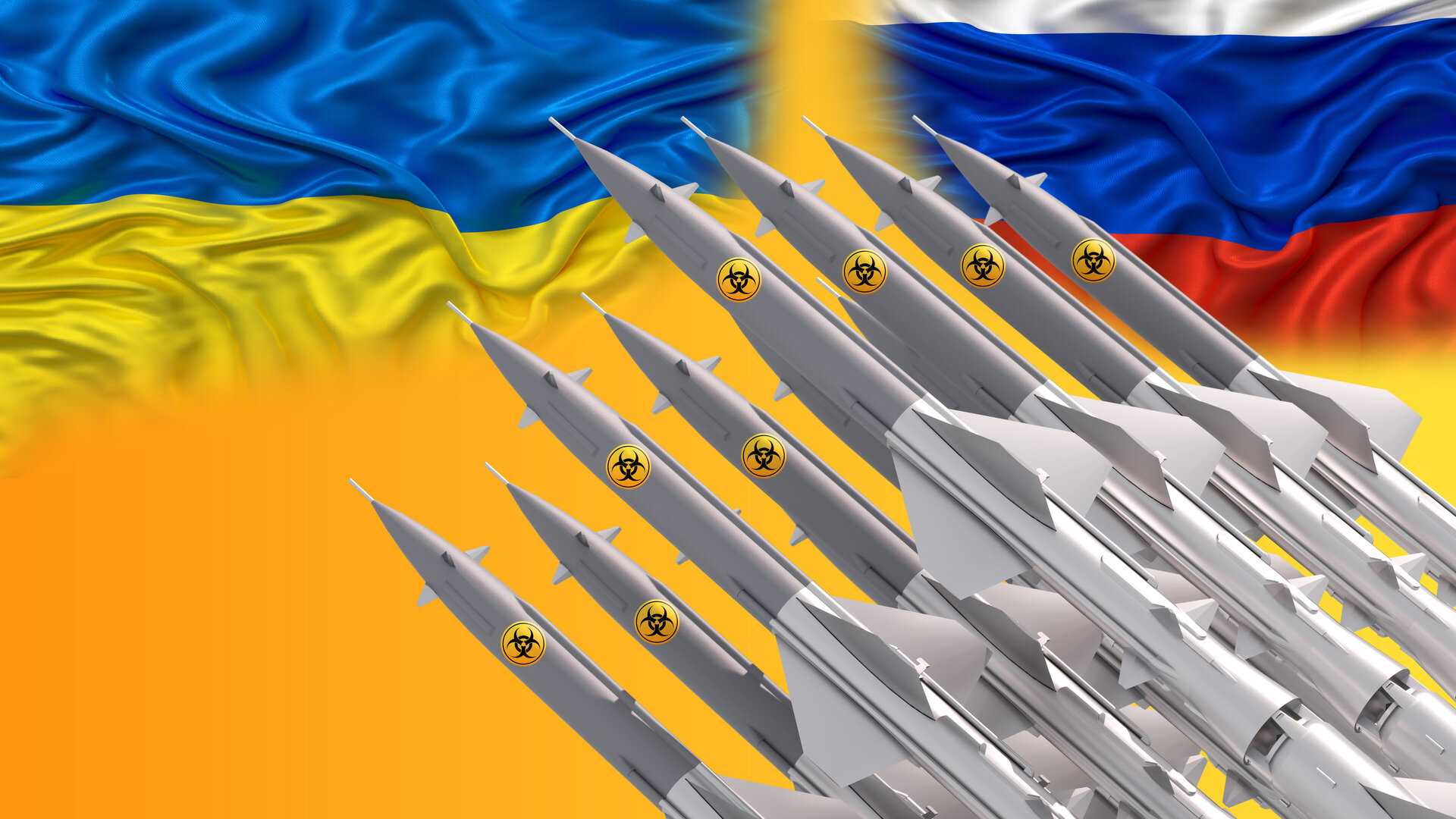
It bedevils the workings of the EU bureaucracy, not even a moderately efficient machine in the best of times. It determines the increase of spending on defence in every state budget, at the expense of priorities dear to many lobbyists and activist. It even interferes with the long-promised visit of President Vladimir Putin to Ankara, prompting him to demand an .
Oscillation rather than escalation
Putin himself summoned this spectre at the very start of the war threatening the West with the consequences 鈥溾�� if it would try to interfere with his aggression. Large-scale exercise of Russian strategic forces, re-scheduled to February 2022 from the usual window in October, were supposed to add convincing power to that warning. The West, nevertheless, rallied in support of Ukraine with determination and unity entirely unexpected by Moscow, and Putin鈥檚 further attempts at in brinksmanship have been no more impressive than his initial demarche. Oscillation rather than escalation has been the trend in Russia鈥檚 resorts to nuclear threats, and the latest peak in this trajectory was reached on 12 September 2024, as Putin promised to 鈥溾�� in response to what he described as NATO entering into a war with Russia.
Putin鈥檚 reasoning that the forthcoming decision on granting Ukraine the right to use Western longer-range missiles for strikes into Russia would amount to altering dramatically 鈥溾�� is dubious in strategic terms and nonsensical as political discourse. The Kremlin still refuses to call the war by its name instructing its propaganda machine to stick to the term 鈥渟pecial military operation鈥� (typically abbreviated as SVO), and it is inconceivable how one or a series of missile strikes might change its vague nature. The US-supplied MGM-140 ATACMS tactical missile has a range of 300 km and can target some Russian , but it certainly cannot reach such strategic bases as or , repeatedly hit by Ukrainian drones. Oil refineries deep in Russia鈥檚 territory are increasingly often, and the remnants of the Black Sea Fleet are forced to abandon not only Sevastopol but also the main base in .
The Ukrainian offensive into the Kursk region
What has really changed the course and even the character of the long war is the Ukrainian offensive into the Kursk region launched on August 6 and leaving a sizeable part of Russia鈥檚 territory under . Instead of calling for aimed at liberating homeland, Putin opted for downplaying the debacle. Obsessed with the notion of controlling the strategic initiative, Russian Commander-in-Chief ordered to continue attacks on Pokrovsk in Donbass and to push out the 鈥溾�� from the Kursk region. Six weeks into implementation, this strategy has failed on both counts: Ukrainian defences around Pokrovsk still hold, while Russian counter-attacks in the are facing stiff resistance.
Neither this embarrassing fiasco nor Ukrainian strikes on are deemed by Putin worthy of issuing a threat of nuclear escalation. His propensity to invoke the image of 鈥溾�� has backfired, and President Volodymyr Zelensky made many international headlines with his mockery of 鈥溾�� attempting to draw such boundaries. Foreign Minister Sergei Lavrov tried to warn against about Russian 鈥渞ed lines鈥�, but his diplomatic posturing rang hollow, particularly as China persisted with promoting its initiative on of nuclear weapons.
The lull in Russian brinksmanship ended with Putin鈥檚 demarche aimed at distorting Western decision-making on Ukrainian missile strikes and between US President Joe Biden and UK Prime Minister Keir Starmer centred on this issue. Biden found it opportune to dismiss the blackmail by asserting that he wasn鈥檛 鈥溾��, but the decision remains pending, much to Kyiv鈥檚 . There is certainly no need in making a big announcement about granting Zelensky his plea, but careful practical work with the Ukrainian forces on precise targeting of forthcoming strikes and minimizing civilian casualties is necessary.
Unity among NATO allies
The best response to Putin鈥檚 new resort to nuclear threats would be a strong show of unity among NATO allies, and the US-UK meeting of minds, important as it is, cannot quite deliver on this demand. Germany鈥檚 stance is important and remains ambivalent, as Chancellor Olaf Scholz, shaken by the defeats in regional elections in Saxony and Thuringia, keeps on supplying the Taurus KEPD 350 missile to Ukraine. are examining the political battles in Germany with utmost attention, checking whether this weak link in the pro-Ukraine coalition might give up.
Transformation of nuclear deterrence is a theme of far more prominence in Russian expert debates than one would expect of a matter of such sensitivity and secrecy. Characteristically, , who positions himself as champion of the cause of nuclear escalation, remained silent on the issue of Ukrainian offensive in the Kursk region, but has instantly reinstated his claim after Putin鈥檚 remarks on a looming direct confrontation with NATO. Even such sober and respected experts as are warning about the mistake that Western policy-making might make in assuming that Russia would never resort to delivering a nuclear strike.
Over-estimating Russia鈥檚 readiness to unleash a nuclear war and yielding to Putin鈥檚 blackmail would indeed be a greater mistake than ignoring the threat and assuming that common strategic sense will always prevail in Moscow.
Multi-optional risk assessments must be updated with every twist and turn in the trajectory of the ever-changing war, and messaging, which is the key instrument in the of deterrence, needs to be fine-tuned accordingly. Putin is an anxious, ambitious and often misinformed counter-part in the fluid confrontation, in which his grasp on power is staked against the survival of humankind. NATO can master resources for denying him a victory in the war of his making, but a much broader coalition needs to be built for exorcising the spectre of nuclear catastrophe.
- Pavel K Baev is a Research Professor at 糖心网页版
- This text was first published by 20 September 2024
Related comments