Peacemaking for Ukraine: The Swiss Track, the Chinese Pretence, and the Antalya Diplomacy Forum
Posted Monday, 11 Mar 2024 by Pavel K. Baev
Battles in the Donbas trenches and across the Black Sea waters keep raging as the belligerents persist with their strategies of attrition. Neither President Volodymyr Zelensky鈥檚 at the Munich Security Conference, nor President Vladimir Putin鈥檚 to the Federal Assembly contained any indication of readiness to compromise.
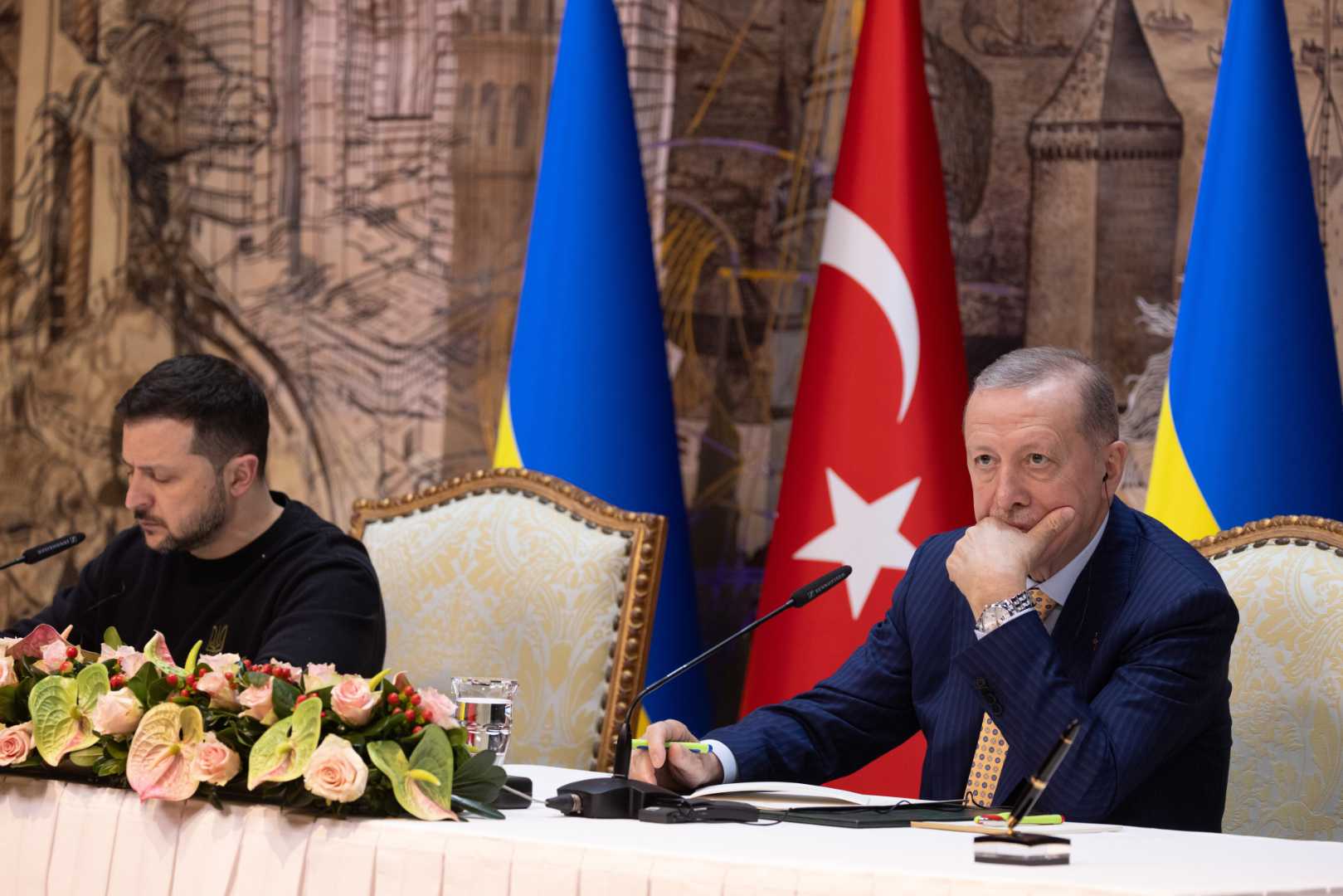
Notwithstanding this determination to keep the war going, three separate tracks for exploring the options for peace talks are showing new signs of activity.
The 鈥溾�� suggested by Zelensky back in October 2022, is elaborated by various international working groups in preparations for a high-level conference, which Switzerland aims to stage 鈥�.鈥� Li Hui, China鈥檚 government special representative for Eurasia, performed a new European tour, . He missed Russian Foreign Minister, however, because Sergei Lavrov in the Antalya Diplomacy Forum. This high-profile event had many issues, besides the Ukraine war, on its . The Chinese envoy, apparently, didn鈥檛 deliver any new incentives for the year-old 鈥溾��, which wasn鈥檛 exactly conducive to bringing the parties to the conflict to a common ground. A moderate success of the conference in Switzerland is by no means guaranteed as Moscow to undermine it.
What is then the rationale behind the competing peacemaking efforts?
The beginning of the answer may be found in the fact that the three tracks lead to very different peace arrangements.
The Chinese initiative appears to presume that the deadlocked war would compel the exhausted parties to agree on a ceasefire, which would then mature to a stable cessation of hostilities more or less along the existing trench-lines. The 鈥溾�� would provide the general parameters for such pacification, but there are two obvious problems with this proposition. The first one is that it is the presence of US troops in South Korea that ensures the stability of the ceasefire, while the permanent basing of NATO forces in Ukraine is hardly feasible. The second issue is that North Korea has mutated into a dangerous rogue state, and the prospect of Russia following a similar path is very disturbing for its European neighbors.
In a sharp contrast, the Ukrainian diplomacy starts from the imperative of full liberation of all territories occupied by Russia, which at the moment may appear rather theoretical. The deliberations on Zelensky鈥檚 plan have, nevertheless, engaged remarkably wide circle of international stakeholders, and if the discussions at the last October were perhaps less productive than at the previous in August, preparations for the summit in Switzerland are intense and meticulous.
Turkish diplomacy maneuvers somewhere between these two tracks. While Ankara is committed to the common NATO position on supporting Ukraine for 鈥溾�� to restore its territorial integrity, it also suggests that this long-term goal by political, rather than exclusively military means. Restoration of the status quo ante bellum could be a useful provisional goal in this process, and this proposition was actually on the table of the in spring 2022, derailed by the exposure of war crimes after the retreat of Russian troops from the suburbs of Kyiv.
Progress on the road to peace depends decisively, if not entirely, upon the course of on-going high-intensity battles, and the three competing initiatives envision different outcomes.
China presumes that the war has taken its definite stalemate shape and that no more surprises are in the making. Ukraine believes that the nadir in its capacity to withstand Russian attacks was marked with the fall of Avdiivka and the new increases in Western military support will empower its forces to re-capture the strategic initiative. T眉rkiye is a of weapons to the unsteady flow of aid to Ukraine, but it appears to assume that while Russian attacks yield scant results, its defenses are solid.
Putin鈥檚 perspective
The perspective that differs starkly from these dissimilar views is the one that President Putin sticks to. He may declare about peace, meaning discussing conditions of Ukraine鈥檚 surrender, but in fact believes that a answers the goal of ensuring survival of his regime just fine.
Beijing may insist that negotiations on a peace settlement must , and Putin may show deference to Chinese opinions, but in reality, he is not subscribing to the plan that Li Hui tried to . Neither is he interested in Turkish initiatives, and while he President Recep Tayyip Erdogan with the 70th anniversary, the of his visit to Ankara is just one sign on growing strains in bilateral relations.
Ukraine insists that peace negotiations with Putin make no sense whatsoever.
This position may appear radical, but the clearly expressed determination of Western leaders to hold Putin for the murder of Alexei Navalny, the defiant leader of the Russian opposition, has added credibility to this ostracism. Only a few keep advocating for reopening channels of communication with the Kremlin, and Hungary鈥檚 Prime Minister Viktor Orban argues, , for ending the war by granting Russia a victory in Ukraine.
Time in the long war of attrition may appear to be in plentiful supply, but it tends to run unevenly and reach turning points at unpredictable moments. Putin radiates confidence that time is on his side, but even China doesn鈥檛 share this self-serving delusion, and so has opted to give a new impetus to its peace plan. Typically, it is the mutual exhaustion of the warring parties that makes a conflict ripe for a pause, in which a search for compromises becomes fruitful. In Ukraine鈥檚 war of liberation from the Russian aggression, signs of exhaustion are plentiful, but external mediators are watching more for risks of a possible escalation.
The tide of war may shift in Ukraine鈥檚 favor as Europe gathers resources and resolve to address both the in ammunition and the mid-term demand for expanding the . This change of fortune is certain to caught Putin unprepared and to make disgruntled Russian elites desperate. Neither China, nor Russia鈥檚 Western and Southern neighbors are ready to face the risks generated by such crisis, but their efforts at preventing it by promoting peace initiatives are still half-hearted, incoherent and under-funded.
- Pavel K Baev is a Research Professor at 糖心网页版
- This text was first published by the
Related comments