Forgotten Victims: Gaza's Journalists & UN Workers
Posted Tuesday, 13 Feb 2024 by Jørgen Jensehaugen
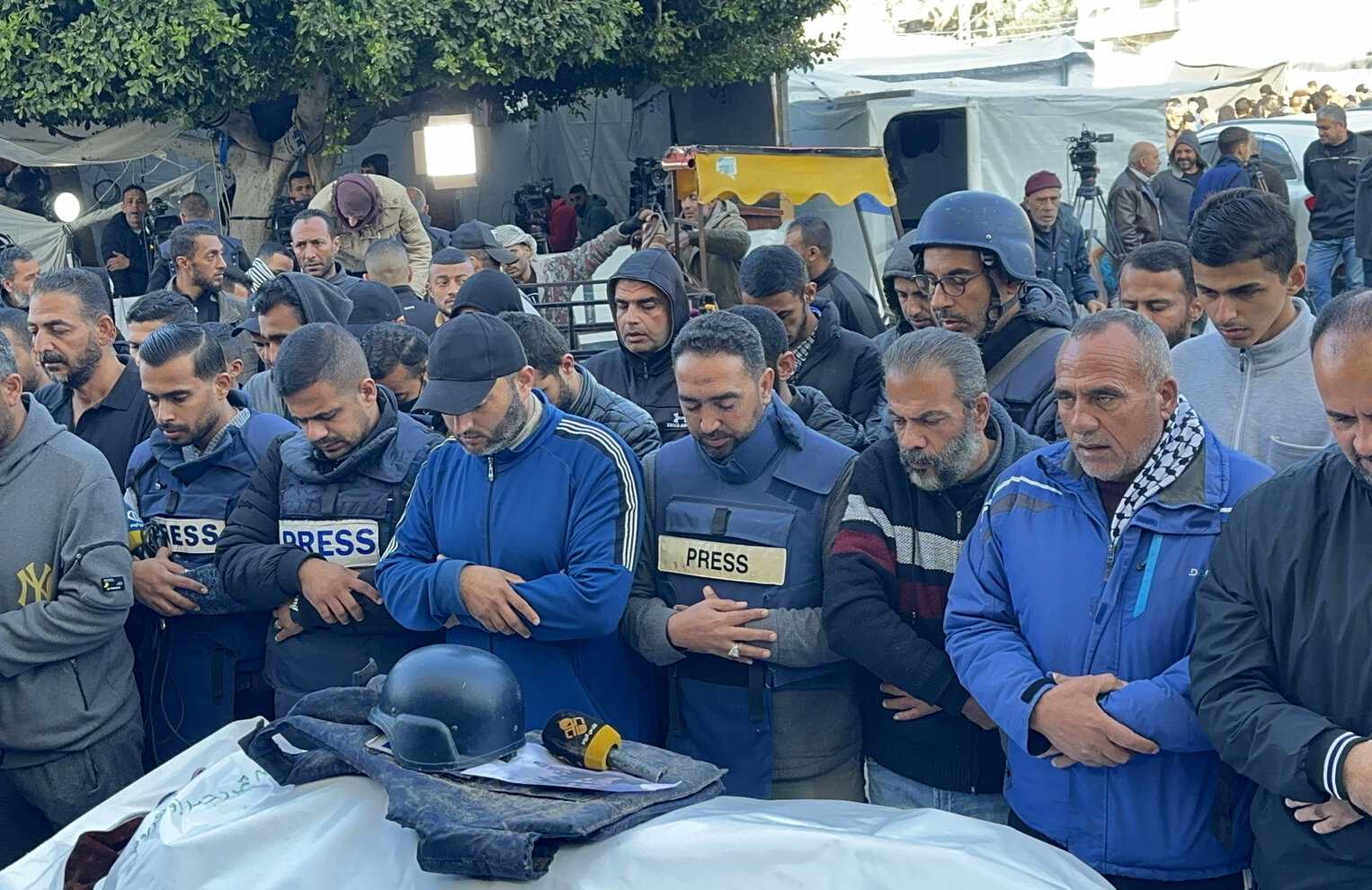
The war in Gaza is the most deadly in modern times for journalists and UN personnel. Despite the seriousness of the situation, these killings are under-reported.
The war in Gaza is an exceptionally gruesome conflict, as shown by all the relevant statistics. Since . This estimated death toll is conservative. Bodies still buried under ruined buildings are not included. Moreover, the statistics do not include deaths caused indirectly – people dying of diseases left untreated due to the destruction of hospitals and the non-availability of medicines.
This is an extremely grim status report. But in the absence of a drastic change, the outlook is getting even worse. Since the war started, In early February, , with the result that even supplies that had been approved by the Israeli authorities were halted. With destroyed hospitals and continuing shortages of food, water and medicines, it is only a matter of time until ‘indirect deaths’ increase dramatically.
Behind the enormous figures that illustrate the catastrophe as a whole, we can find two less well-known statistics that tell their own story: up to and have been killed.
A record for killings of journalists
Murders of journalists are increasing all over the world, but the war in Gaza stands out because of the quantum leap in killings. The UN puts the number of journalists killed in Gaza at 122, while the that they are able to document.
For comparison, , while . During the whole have been killed. In other words, it is only when we compare the war in Gaza to a longlasting war in a country as large as Syria that the number of journalists killed in Gaza is exceeded.
The reason that these killings have received so little attention is unfortunately that the victims were local journalists. While Israeli politicians and military leaders have scrambled to claim that there are no civilians in Gaza, the Western media organizations have far too often operated on the assumption that a story can be covered properly only if their teams are allowed direct access, with local journalists usually being assigned to supporting roles. Western media have become far better at using Palestininian voices, but there is a long way to go.
, signalled all too clearly that Palestian journalists are not protected. If Israel could get away with killing such a high-profile American journalist, what kind of protection could unknown Palestinian journalists in Gaza expect? We are seeing the answer all too clearly now.
The combination of the mass killings of Palestian journalists and the fact that Israel is basically preventing other journalists from entering Gaza has sharply reduced the flow of information, making it extremely difficult to verify claims by the warring parties, whether these claims are made by Israel or Hamas.
Killings of UN personnel
On . The claims were shocking and caused many Western countries to halt their support for UNRWA. These actions put UNRWA, which is the most important humanitarian organization in Gaza, in danger of running out of money by the end of February. UNWRA being forced to cease operations would have enormous negative consequences and it is difficult to see how any other organization could fill its place in the short term.
The accusations against UNRWA and the ensuing debate completely overshadowed the fact that in the , mainly schools. The . Just one month into the war,
In an interview early in the war, UNWRA’s secretary-general, Philippe Lazzarini, was confronted with President Biden’s sceptical remarks about the reported Palestinian death toll. . The same is true today. As of 13 February 2024, approximately 1.2 percent of all UNRWA workers on the Gaza Strip had been killed. The same percentage applies to Gaza’s population as a whole.
No one is safe
The fact that both journalists and UN workers are being killed on such a large scale tells us much about Israel’s military tactics. No one is safe from the Israeli bombs, and there is no protection for population groups that should be protected. First and foremost, Israel’s tactics are causing an acute crisis and tragedy in Gaza, but in the worst case, they could go on to infect other conflicts. The global community must do everything it can to prevent this type of warfare from having consequences that will encourage other warring parties to learn from and emulate Israel. Such an outcome would endanger countless journalists, UN workers and civilians. And it would make it even more difficult to ensure that wars are subjected to appropriate critical coverage and that humanitarian aid can reach the worst affected areas.
- Jørgen Jensehaugen is a Senior Researcher at ÌÇÐÄÍøÒ³°æ
- This text is an updated version of a Norwegian-language article in
- Translation from Norwegian: Fidotext
Related comments