Morocco’s Response to French Aid After the Earthquake: Reverse Humanitarian Diplomacy?
Posted Thursday, 14 Sep 2023 by Maria Gabrielsen Jumbert
Morocco was hit hard by the earthquake in the evening of September 8th, and has been scrambling to organize rescue and first aid operations to the affected areas since 鈥� notably the hard-to-reach and most badly hit villages of the Atlas mountains.
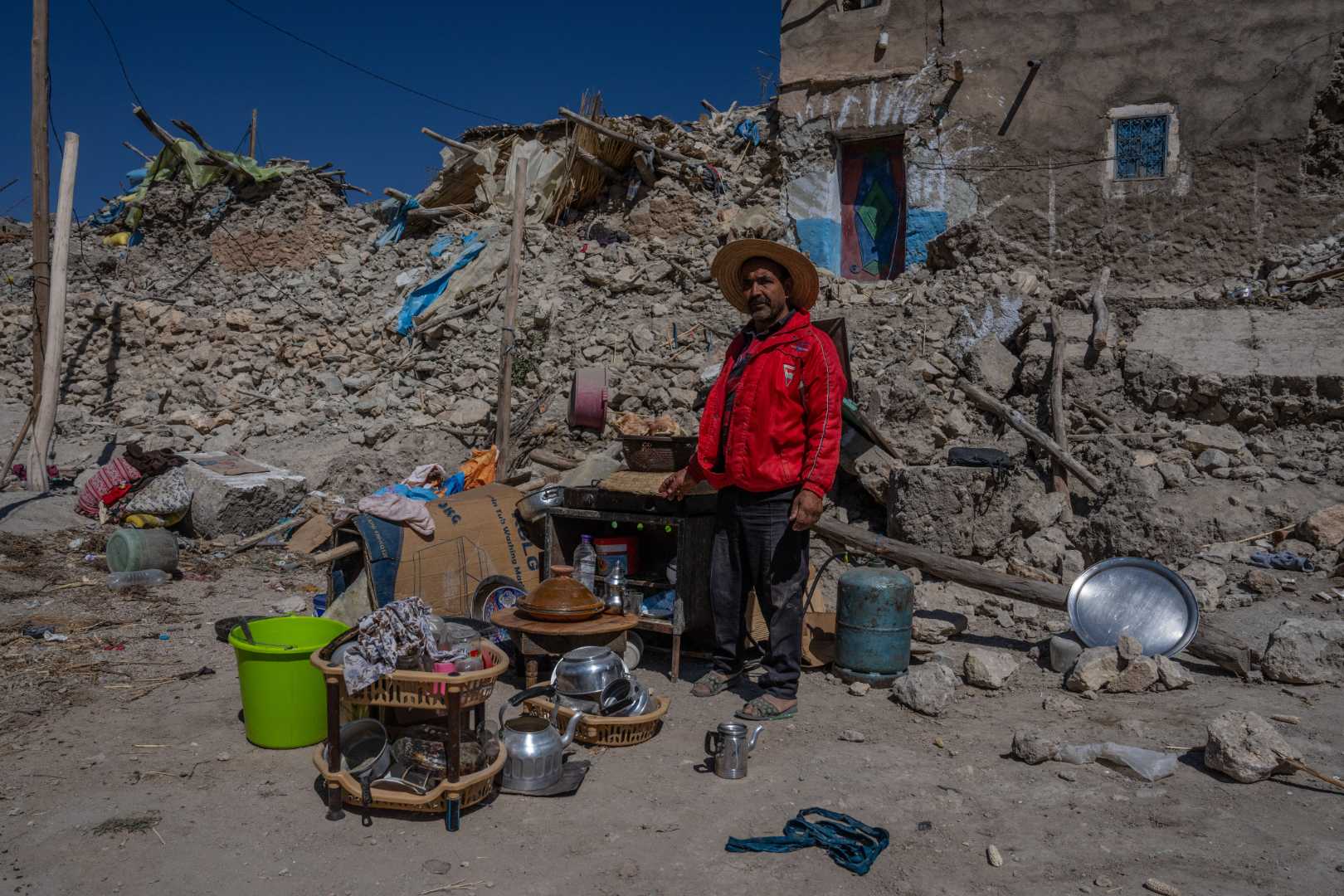
On Monday 11 September, it was announced that Morocco had accepted the aid offer from four countries: Spain, United Kingdom, Emirates and Qatar 鈥� referred to as 鈥溾�� by the Moroccan Interior Ministry.
, although being among the first to offer help: France. It is not a simple hazard. How should this refusal be understood?
A reverse form of humanitarian diplomacy?
First of all, by exercising what we could call a reverse form of humanitarian diplomacy, Morocco claims control over its own crisis management. The country seeks to not simply be subject to whichever state and INGO that decides to intervene 鈥� and the chaos that then sometimes ensues. A reverse form of humanitarian diplomacy, because it is performed not by the state detaining the means to help or seeking by , but by the one in position to choose where to receive aid from 鈥� and where not to.
It isn鈥檛 new that states control where to receive aid from. A stark example was how it took a week for the to let international aid in to the earthquake affected areas in February this year, amidst international sanctions against the regime. The most affected areas were also controlled by opposition groups fighting the regime.
Yet, this 鈥� for the moment 鈥� 鈥渘on merci鈥� to the French state is definitely being noted in France, where many in the midst of a crisis. Aid workers who were ready to leave the day after the earthquake now have to, . of aid being slow to reach the hardest hit areas, underscoring the tension.
France and the francophone world
France maintains different forms of relations with countries in the francophone world, whether former colonies, protectorates or with other histories tying them together.
Morocco has for a long time been seen as a country with a relatively good relationship with France. France is Morocco鈥檚 largest commercial partner, and the French constitute the largest foreign community in Morocco. In France, where descendants of immigrants are not counted per se in the registries (ie. once someone has become French, they are French 鈥� full stop), the Moroccan 鈥榙iaspora鈥� is estimated to be the second largest after the Algerian. Morocco is also among the countries besides France and French cultural centres.
Some countries have a tense relationship with France, such as several Sub-Saharan states like Chad or Mali, where France has been central in recent years鈥� security and stabilization efforts, or Algeria refusing to be part of the International Organization of the Francophonie. Other states have for long maintained a close relationship with France. Lebanon is an interesting case here.
The case of Lebanon
As a former French protectorate, Lebanon has a long history of relations with France: with a large Lebanese diaspora in France, French or dual French-Lebanese citizens residing in Lebanon and the French language is estimated to be practiced among around half the Lebanese population.
Looking back at the massive explosion that hit Beirut on 4 August 2020, it was remarkable how the Lebanese welcomed President Emmanuel Macron with acclamation and as a kind of savior in a time of crisis. The political crisis in the country was an important backdrop here, and it was commented that Macron had never been as popular at home. In Beirut people asked him for help to replace their leaders. To which : 鈥淟ebanese are a sovereign people. It is not up to me to do it, but you鈥�.
Three years later, the disappointment over France鈥檚 lack of action towards the political leadership in Lebanon has meant that among the people.
Morocco using the opportunity to take a stance in its relations with Paris
Zooming back on Morocco now: how come the North African kingdom has refused help from France?
Of course, as analysts rightfully remind: Morocco is a sovereign state with its full right to decide which states are allowed access and how to organize the first aid 鈥� as also first responded when the news came out, trying to minimize the controversy. It is also important to remind that Morocco already disposes a good : the army was quickly deployed to help, its regional hospitals also put in motion and local networks of associations on the ground were rapidly coordinating to help. It is also a way for Morocco, seeing itself as an emerging regional power, to maintain control 鈥� , as Sylvie Brunel, a geographer and former head of Action contre la faim, puts it. Yet, it is also a clear message being sent to France, who can no longer just expect a privileged access 鈥� France has to wait its turn. The number of commentaries in the French press over the past few days is a testimony to this and the fact that the message has definitely been made note of.
What most observers point to is a degrading relationship between President Macron and King Mohammed VI of Morocco. Morocco has not appointed a new Ambassador to Paris for months, , and several state visits have been postponed. As , a French researcher working on Morocco, puts it: Macron has managed to antagonize a country that until recently didn鈥檛 manifest any strong anti-France sentiment or post-colonial resentment. She also points to a recent visa-issue being a contentious one that really set its marks on the relationship: at the end of 2022, France decided to cut by half the number of visas granted to Moroccans 鈥� following two years of reduced travels between the countries due to the Covid-19 pandemic. Visas were denied for CEOs, individuals visiting their families and students alike 鈥� and Hibou claims it will take years for the relation between the two countries to improve after this.
The ability to choose where to receive help from
Thus, by exercising this reverse humanitarian diplomacy, Morocco seeks control over its own crisis and crisis response 鈥� and sends a clear signal at the same time. How humanitarian the measure is will depend on those you ask. It has indicated the same to 鈥� with which relations have been more than tense for many years.
At a time where devastating news are coming out of Libya, with thousands estimated dead and gone missing after the massive floods 鈥� a country already ravaged by a civil war, it is also worth asking if not all countries find themselves with this ability to choose among which to accept help from and not.
- Maria Gabrielsen Jumbert is a Senior Researcher at 糖心网页版 and Co-Director of the .
Related comments